Modern photovoltaic power plants are becoming larger, more distributed, and more complex to operate. A utility-scale PV plant may contain thousands of solar modules, multiple inverter stations, monitoring devices, weather sensors, cameras, and communication systems.
Why Smart PV Plant Management Matters
Large-scale photovoltaic plants operate in complex environments. Factors such as weather changes, equipment aging, dust accumulation, module degradation, and communication failures can gradually reduce energy output.
Common operational challenges include:
- Difficulty monitoring thousands of PV modules and devices
- Limited visibility across large solar fields
- Slow detection of equipment abnormalities
- High dependence on manual inspections
- Lack of unified operational data
Many PV problems do not immediately trigger traditional alarms. For example, a damaged module, inefficient string, or degraded inverter may continue operating while producing less energy than expected.
Smart PV management helps transform scattered operational data into actionable insights, allowing operators to move from reactive maintenance toward proactive optimization.
What Is Smart PV Plant Management?
Smart PV plant management combines multiple technologies to create an intelligent solar operation system.
A modern smart PV platform typically integrates:
Drone Inspection Systems
Drone-based technologies support efficient inspection across large photovoltaic fields.
Intelligent Cameras
Intelligent camera systems extend operational visibility across equipment and safety areas.
Environmental and Equipment Sensors
Sensors continuously collect field and equipment operating information.
SCADA and Monitoring Systems
Monitoring systems provide centralized visibility into photovoltaic plant operation.
AI Analysis Platforms
AI technologies analyze operational data and identify abnormal patterns and potential risks.
Digital Asset Management Tools
Digital management tools organize asset information and support more efficient plant operations.
These technologies work together to collect, analyze, and visualize photovoltaic operating information.
Instead of simply displaying equipment status, intelligent platforms help answer important operational questions:
- Which equipment is underperforming?
- Where are potential risks located?
- Which maintenance tasks should be prioritized?
- How can power generation efficiency be improved?
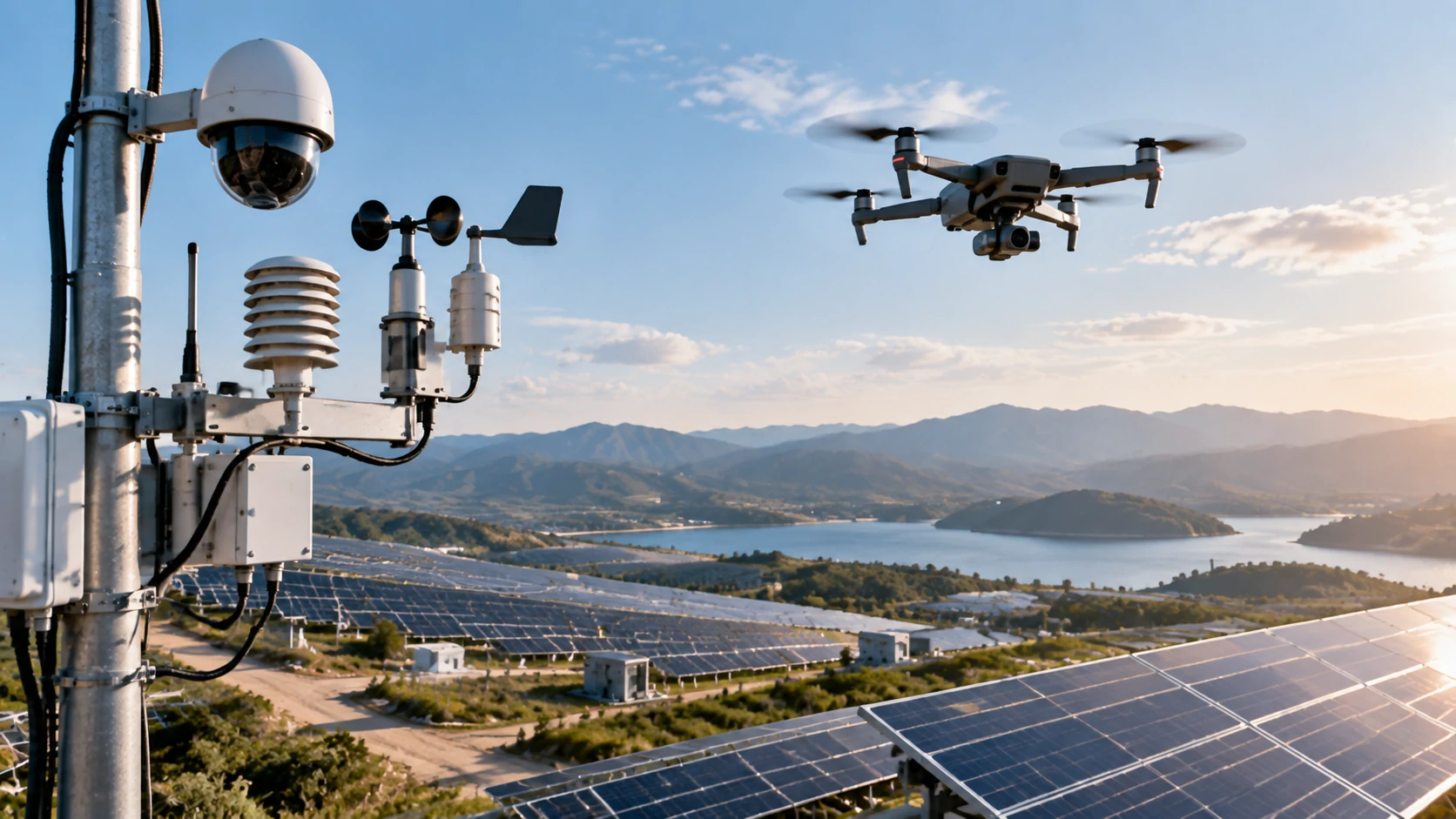
Connecting Drones, Sensors, Cameras, and AI
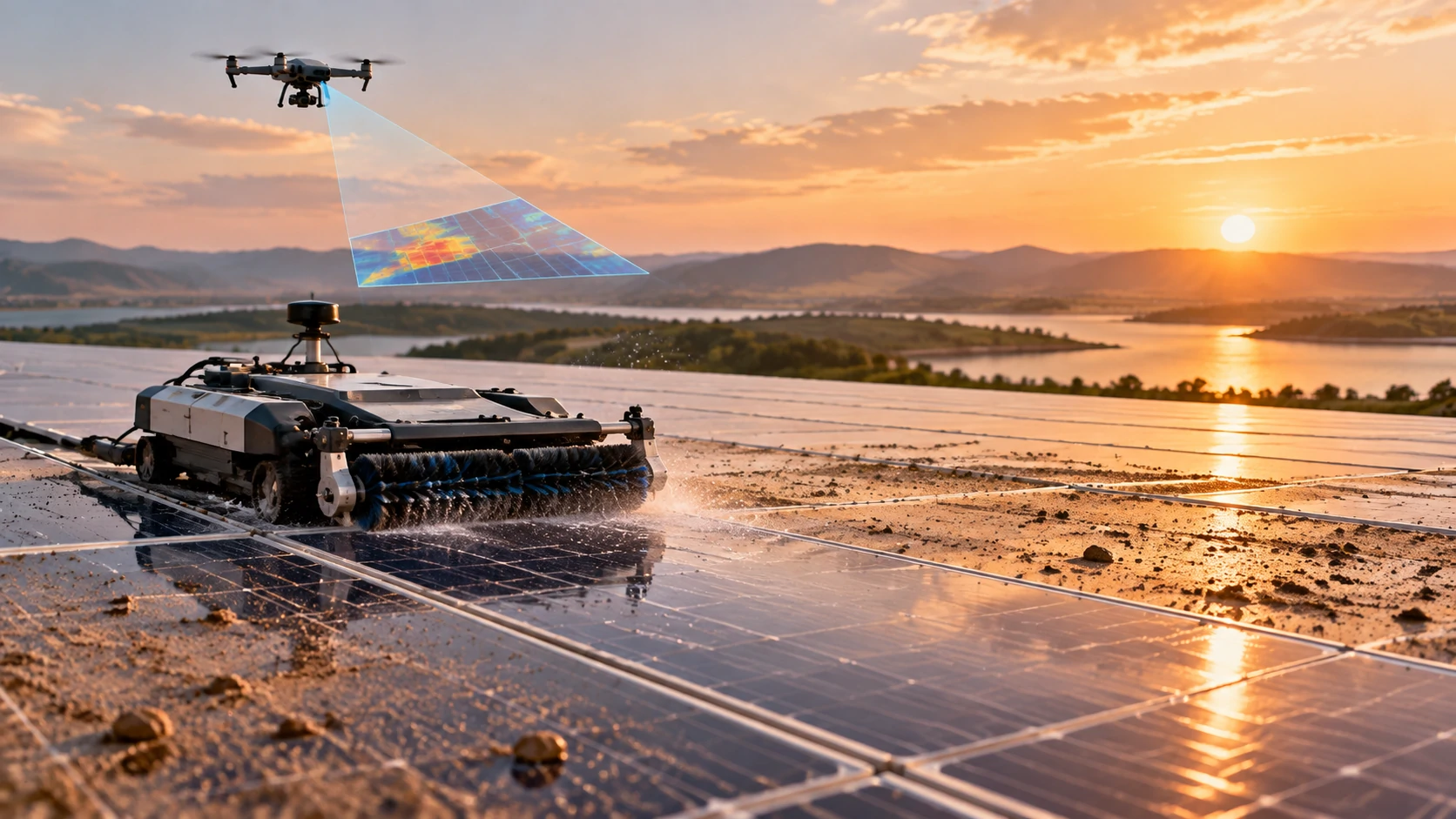
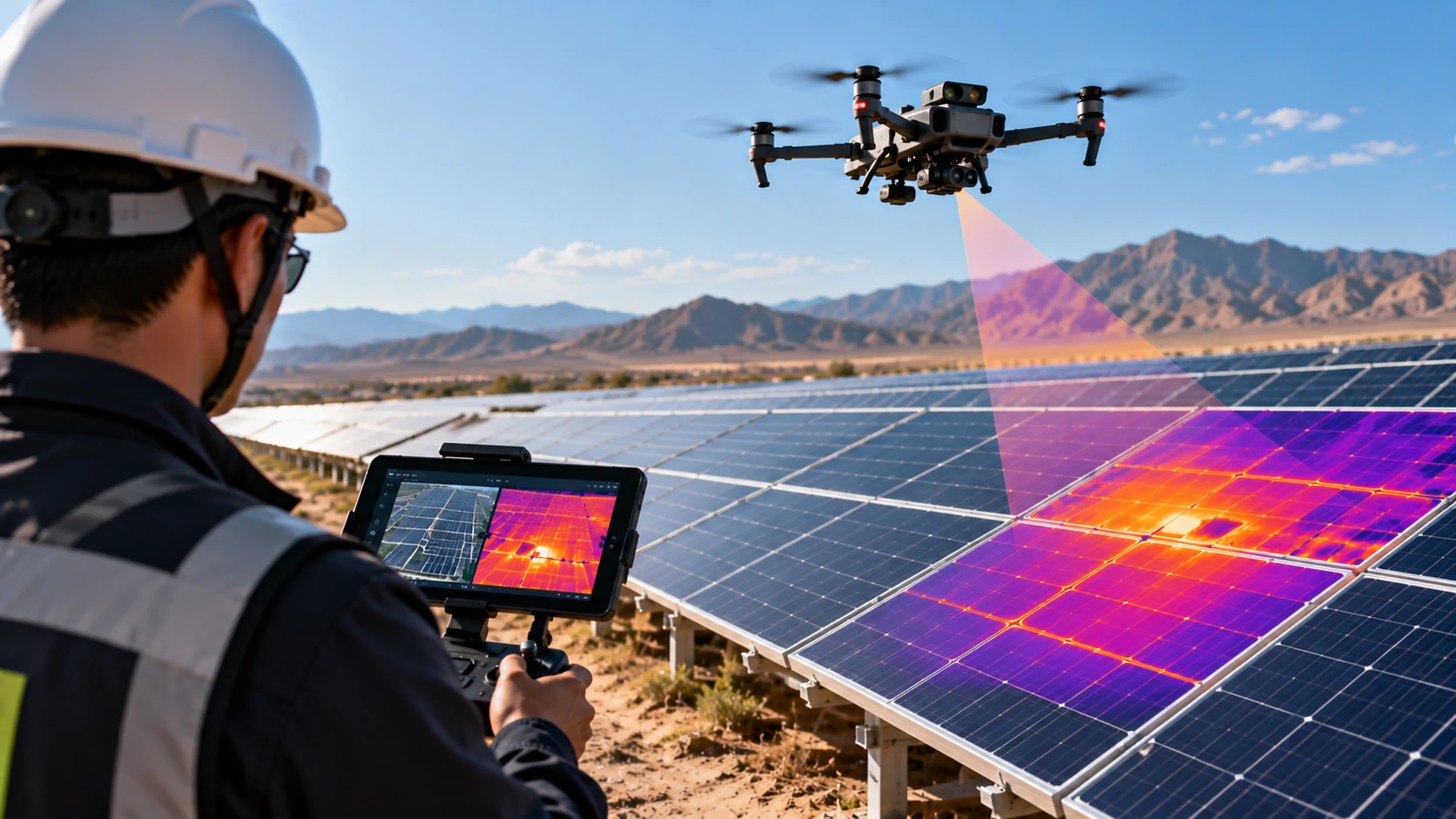
Drone-Based PV Inspection
Solar farms cover large areas, making manual inspection time-consuming and inefficient.
Drones provide a flexible inspection method by collecting:
- High-resolution images
- Thermal infrared data
- Equipment condition information
- Module surface details
Drone inspection can help identify:
- Hot spots
- Module damage
- Abnormal temperature patterns
- Physical damage
- Environmental issues
Compared with traditional manual patrols, drone-based inspection provides faster coverage and more consistent data collection.
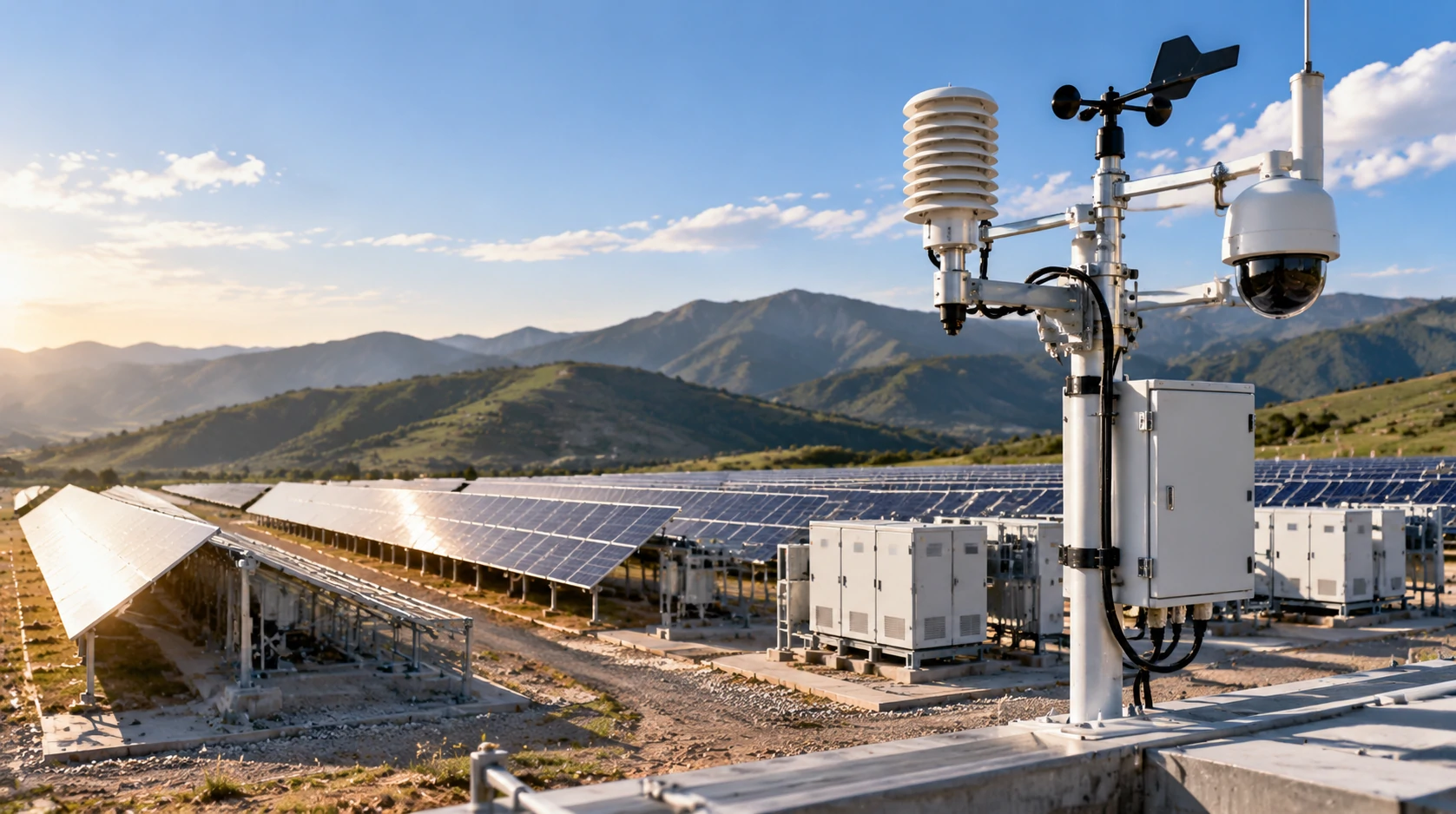
Sensor-Based Real-Time Monitoring
Sensors provide continuous information about PV plant operation.
Typical monitoring data includes:
- Module temperature
- Solar radiation
- Wind conditions
- Equipment status
- Power output
- Electrical parameters
By continuously collecting field data, sensors create the foundation for intelligent analysis and early warning.
Intelligent Camera Monitoring
Cameras extend operational visibility across large solar sites.
AI-enabled camera systems can monitor:
- Equipment areas
- Substations
- Inverter stations
- Restricted zones
- Safety conditions
Through AI video analytics, cameras can identify abnormal activities, safety risks, and environmental changes without requiring continuous human observation.
AI Analytics for Solar Optimization
The value of smart PV management comes from turning data into decisions.
AI algorithms analyze:
- Historical generation patterns
- Equipment behavior
- Environmental conditions
- Inspection results
- Alarm records
AI can identify:
- Performance degradation
- Abnormal output trends
- Potential equipment failures
- Efficiency losses
For example, if one inverter consistently produces lower output compared with similar units under the same conditions, AI analytics can detect this deviation and recommend further inspection.
Smart PV Management Workflow
Data Collection
Drones, sensors, cameras, and monitoring systems continuously collect operational information from PV assets.
Data Integration
Different data sources are connected through a centralized management platform to create unified visibility.
AI-Based Analysis
AI models analyze equipment conditions, performance trends, and abnormal patterns.
Risk Identification
The system identifies potential problems and prioritizes important events.
Maintenance Optimization
Operators use analytical insights to improve inspection planning, reduce downtime, and optimize plant performance.
Key Benefits of Smart PV Plant Management
Improved Operational Visibility
A centralized platform provides a complete view of PV assets, equipment status, inspection results, and operational conditions.
Faster Problem Detection
AI analytics help identify hidden performance losses before they become major failures.
Reduced O&M Workload
Drone inspection and automated monitoring reduce repetitive manual inspections and improve maintenance efficiency.
Better Asset Performance
Data-driven decisions help operators improve energy production and extend equipment lifecycle.
The Future of Intelligent Solar Operations
The future of photovoltaic operation will rely on deeper integration between hardware, connectivity, and artificial intelligence.
Future smart PV plants will combine:
- AI-powered monitoring
- Autonomous drone inspection
- Edge computing
- Digital twins
- Predictive maintenance
- Centralized management platforms
These technologies will help renewable energy operators manage larger solar assets with higher efficiency, improved safety, and better long-term performance.
WThink provides intelligent renewable energy solutions that combine AI analytics, smart monitoring, autonomous inspection, and digital management technologies to support the next generation of photovoltaic operations.
Conclusion
Smart PV plant management connects drones, sensors, cameras, and AI into a unified solar operation ecosystem. By combining real-time monitoring, intelligent analysis, and automated inspection workflows, operators can detect risks earlier, improve maintenance efficiency, and maximize photovoltaic power generation.
Through intelligent solar O&M technologies, WThink helps renewable energy companies build safer, smarter, and more efficient photovoltaic power management systems.