Modern photovoltaic power plants are becoming larger and more complex, with thousands or even millions of solar modules distributed across wide areas. Maintaining reliable performance requires more than traditional manual inspections. Operators need faster, safer, and more accurate methods to identify equipment problems before they reduce energy production.
Solar power plant inspection with drones, thermal imaging, and AI provides a smarter approach by combining aerial data collection, infrared analysis, and intelligent defect recognition. This integrated inspection method helps operators detect hidden problems, improve maintenance efficiency, and optimize long-term PV asset performance.
Why Solar Power Plant Inspection Is Important
Utility-scale photovoltaic plants operate under constantly changing environmental conditions. Over years of operation, solar modules and related equipment can experience performance degradation caused by:
- Hot spots
- Module cracks
- Cell damage
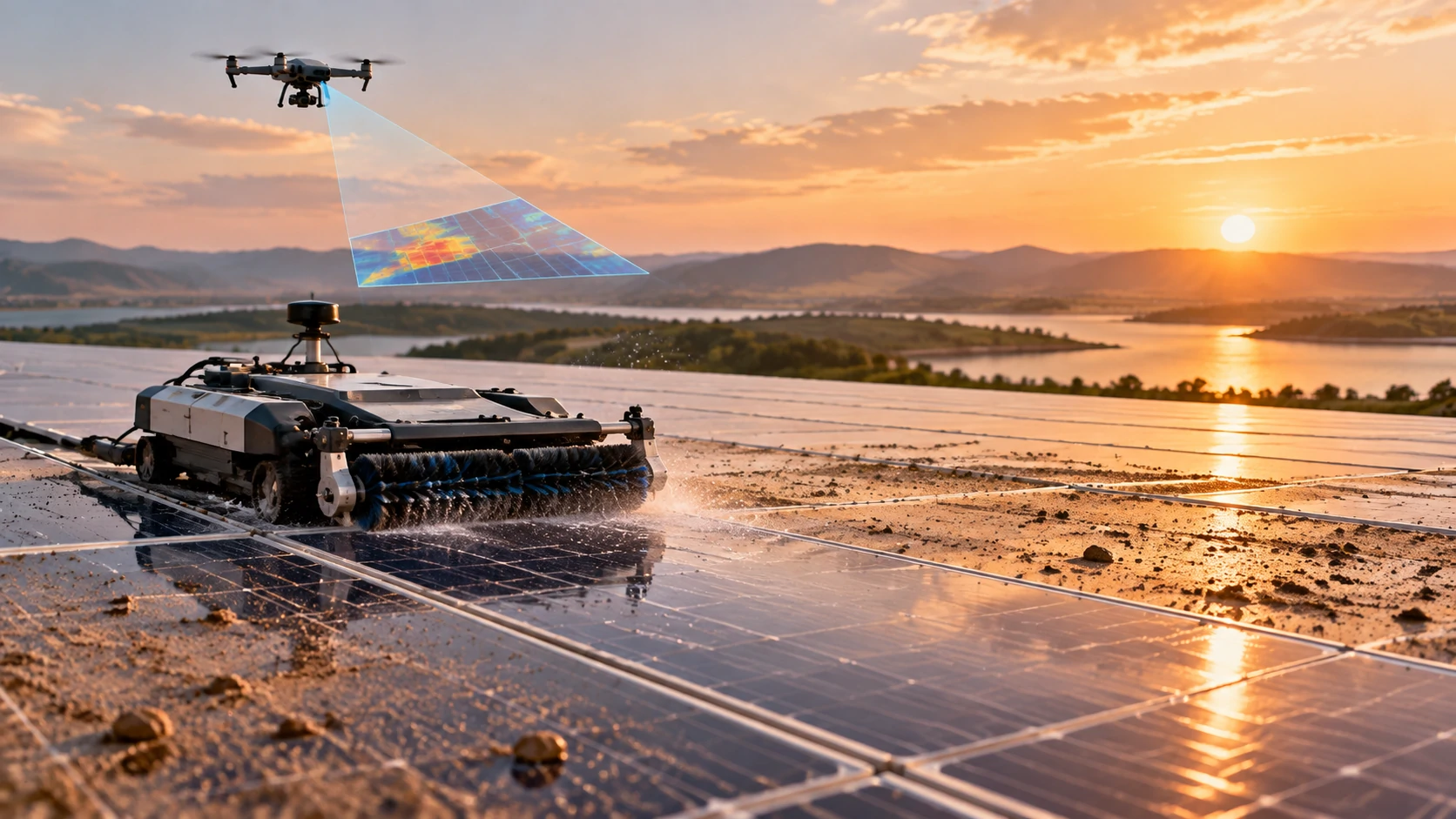
- Dust and soiling
- Shading issues
- Connector failures
- Inverter abnormalities
- Environmental impacts
Some faults are not immediately visible through standard monitoring systems. A PV module may continue producing electricity while gradually losing efficiency, creating hidden generation losses.
Traditional inspection methods often rely on manual checks or sample-based testing. However, large solar farms may cover hundreds of hectares, making complete inspection time-consuming and difficult.
Drone-based inspection provides a scalable solution by covering large PV areas quickly while collecting consistent visual and thermal information.
What Is Drone-Based Solar Inspection?
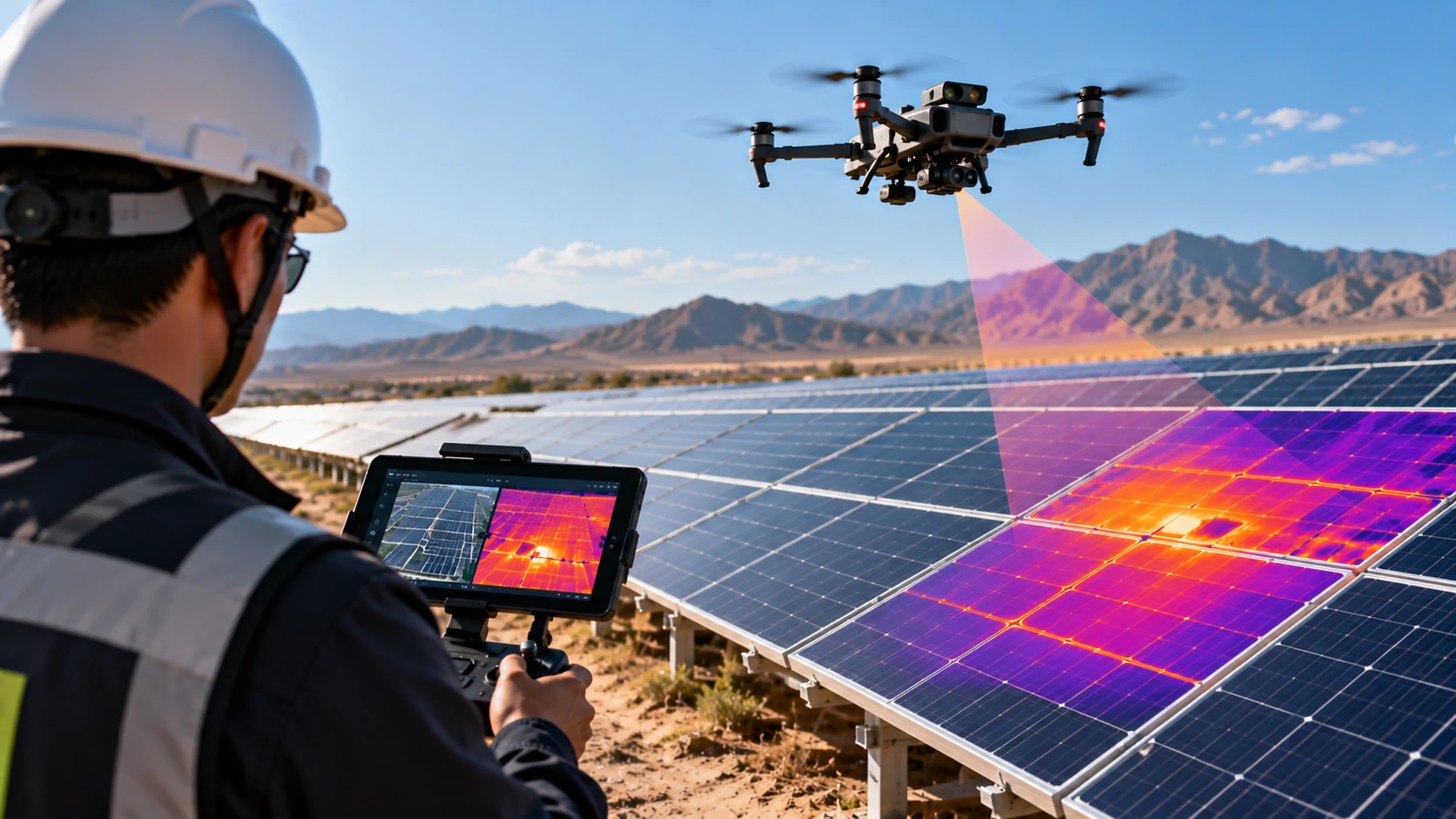
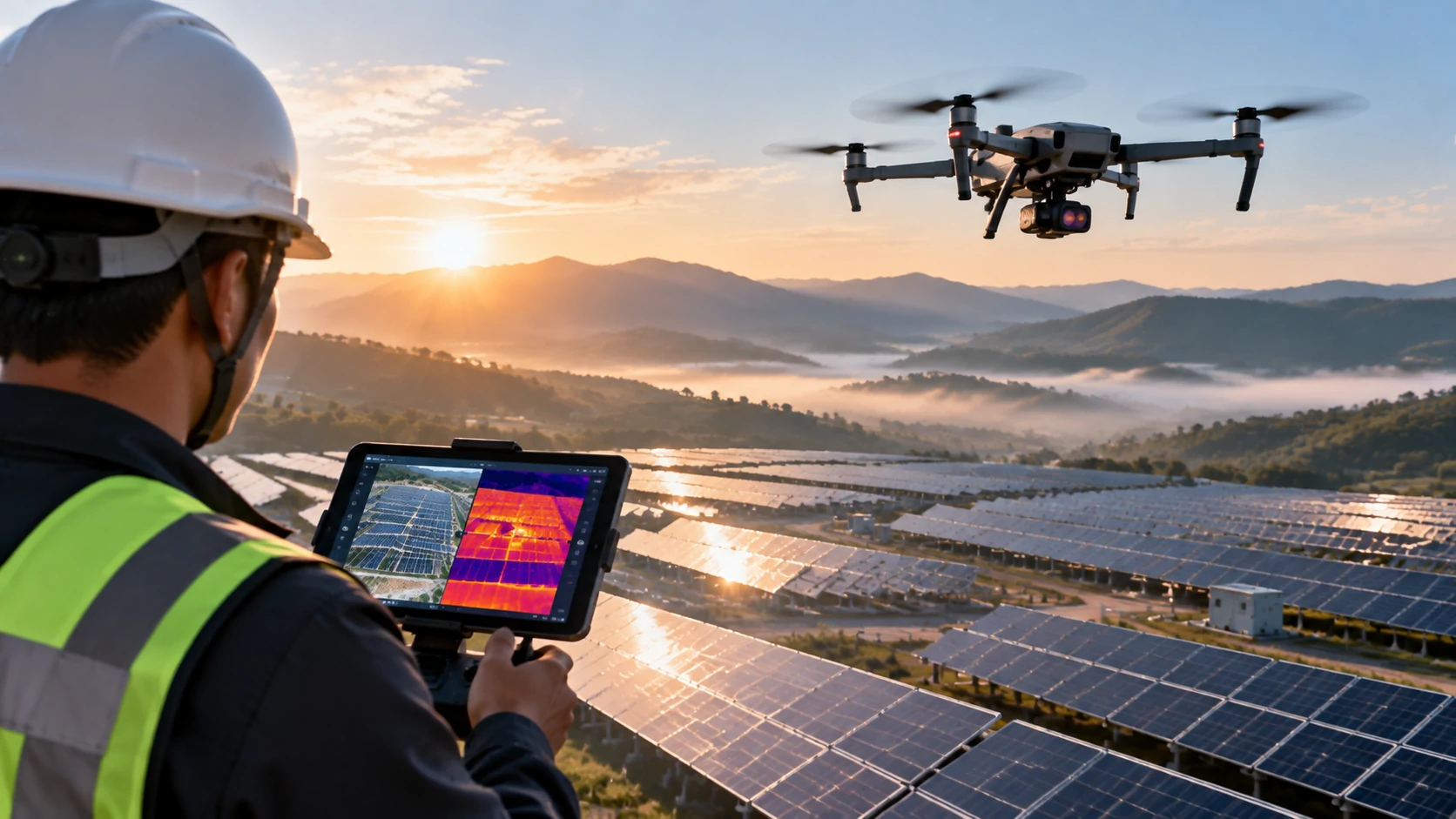
Drone-based solar inspection uses industrial drones equipped with high-resolution cameras and thermal sensors to collect detailed information from photovoltaic assets.
Unlike ground inspection methods, drones can quickly capture:
RGB Visual Images
High-resolution visual data for examining module and equipment conditions.
Thermal Infrared Images
Infrared information helps reveal abnormal temperature patterns.
Module Surface Conditions
Detailed inspection information covering photovoltaic module surfaces.
Equipment Location Information
Location data helps connect inspection findings with specific PV assets.
Large-Scale Site Coverage Data
Broad aerial inspection data supports efficient coverage of large solar fields.
Thermal imaging is especially valuable because electrical problems often create abnormal heat patterns before visible damage appears.
For example:
- A defective cell may generate a localized hotspot
- A damaged bypass diode may create abnormal temperature differences
- A poorly performing module may show different thermal behavior compared with surrounding modules
By identifying these thermal differences, operators can locate potential problems more efficiently.
How Thermal Imaging Improves PV Inspection
Detecting Hidden Module Defects
Traditional visual inspection can identify obvious physical damage, but many electrical problems are invisible.
Thermal cameras detect temperature variations across PV modules and help identify:
- Hot spots
- Abnormal heating areas
- Cell-level problems
- Connection issues
This allows maintenance teams to investigate problems before they significantly affect energy production.
Improving Fault Localization
A large solar plant may contain thousands of modules. Finding a defective component manually can require significant time.
Drone thermal inspection combines:
- GPS positioning
- Thermal images
- Visual images
- Digital mapping
to help operators quickly locate the affected module or area.
Instead of searching through an entire solar field, maintenance teams can directly access the specific location requiring attention.
How AI Improves Solar Inspection
Thermal imaging generates large amounts of inspection data. Reviewing thousands of images manually can be slow and inconsistent.
AI analytics improves this process by automatically analyzing inspection data and identifying abnormal patterns.
AI can help detect:
- Thermal hotspots
- Abnormal module temperature
- Damaged panels
- Performance differences
- Potential maintenance risks
By combining computer vision and machine learning algorithms, AI transforms inspection images into structured maintenance information.
Smart Solar Inspection Workflow
Inspection Planning
The inspection system defines flight routes, inspection areas, and data collection requirements according to the PV plant layout.
Drone Data Collection
Industrial drones capture high-resolution RGB images and thermal infrared data across the solar plant.
AI-Based Data Analysis
AI algorithms process inspection data, identify abnormal patterns, and classify potential defects.
Risk Assessment
The system evaluates defect locations, severity levels, and potential impact on power generation.
Maintenance Decision
Operators use inspection results to prioritize repairs, improve maintenance planning, and reduce unnecessary field inspections.
Key Capabilities of Intelligent Solar Inspection Systems
Drone Inspection
Drones provide flexible and efficient coverage for large photovoltaic sites.
They enable:
- Faster inspection cycles
- Safer data collection
- Consistent image capture
- Reduced manual workload
Thermal Imaging Analysis
Infrared cameras reveal temperature differences that are difficult to detect through traditional visual inspection.
Thermal analysis helps identify:
- Hotspots
- Abnormal heat distribution
- Electrical performance issues
AI Defect Recognition
AI models analyze large inspection datasets and automatically highlight potential defects.
This reduces manual review time and improves inspection consistency.
Digital Inspection Reports
Inspection platforms organize findings into structured reports, including:
- Defect location
- Thermal images
- Visual evidence
- Risk classification
- Recommended actions
Benefits of Solar Power Plant Inspection with AI
Higher Inspection Efficiency
Drones can inspect large photovoltaic areas faster than traditional manual patrol methods.
Earlier Problem Detection
Thermal imaging and AI analysis help identify hidden risks before they become major failures.
Reduced O&M Costs
Targeted maintenance reduces unnecessary inspections and improves resource allocation.
Improved Asset Reliability
Continuous inspection data supports long-term PV performance management and predictive maintenance.
The Future of Solar Inspection Technology
The future of photovoltaic inspection will combine multiple intelligent technologies:
- Autonomous drones
- Thermal imaging
- AI analytics
- Edge computing
- Digital twins
- Centralized O&M platforms
These technologies will allow solar operators to move from periodic inspections toward continuous, data-driven asset management.
By connecting inspection data with operational systems, PV operators can improve efficiency, reduce risks, and maximize renewable energy production throughout the asset lifecycle.
Conclusion
Solar power plant inspection with drones, thermal imaging, and AI provides a smarter way to manage modern photovoltaic assets.
By combining aerial inspection, infrared analysis, and intelligent defect detection, operators can identify problems earlier, improve maintenance efficiency, and protect long-term solar power generation.
WThink provides intelligent renewable energy solutions that integrate autonomous inspection, AI analytics, and digital management platforms to support safer and more efficient photovoltaic operations.