WThink helped an oil and gas pipeline operator build an integrated air-space-ground inspection and early warning system by combining drones, docking stations, heavy-duty PTZ cameras, fiber sensing, GIS platforms, and AI analytics to improve pipeline security and risk response.
Project background
Long-distance oil and gas pipelines often cross remote regions, mountains, and complex environments where traditional inspection methods cannot provide continuous and efficient monitoring. Limited inspection frequency makes it difficult to quickly identify third-party construction, natural hazards, leakage risks, and unauthorized activities along pipeline routes.
Different monitoring technologies also have their own limitations. Video surveillance provides visual confirmation but usually covers specific areas, while sensing systems can detect abnormal signals but require additional verification. The project required a multi-source inspection system that could combine wide-area monitoring, accurate positioning, and rapid response capabilities.
The project focused on building an integrated pipeline protection system that combines intelligent sensing, automated inspection, and AI-based risk analysis to improve safety management for critical energy infrastructure.
Integrated inspection and warning solution
WThink developed an integrated inspection platform that combines drone patrols, intelligent cameras, distributed fiber sensing, communication infrastructure, and GIS-based management capabilities. The system provides continuous monitoring for long-distance pipelines, high-consequence areas, and key protection zones.
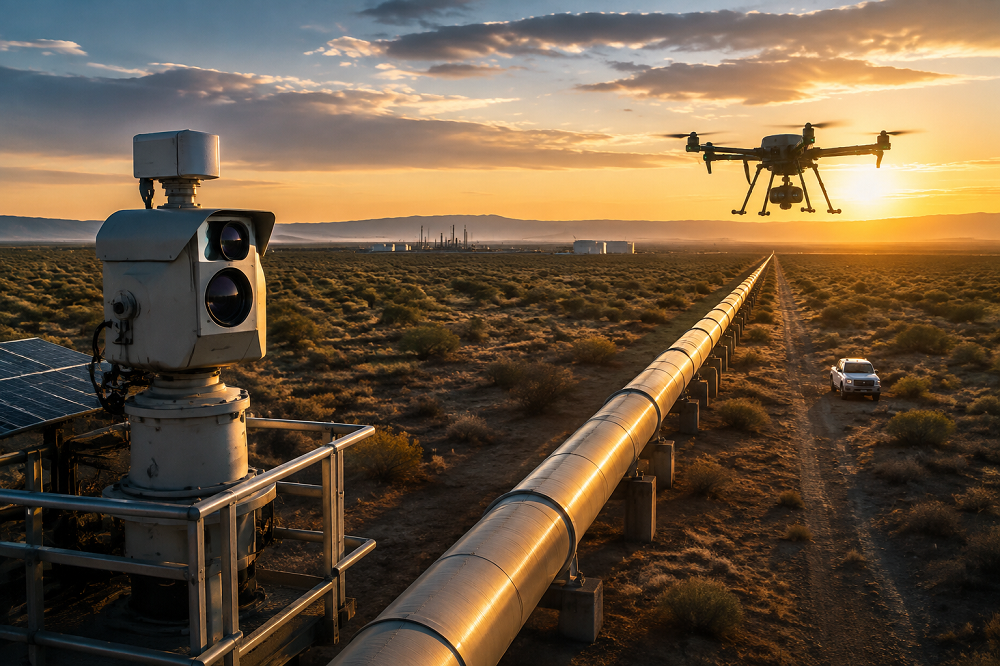
Industrial drones perform flexible patrol missions along pipeline routes, collecting visible and thermal images for remote inspection. Heavy-duty dual-spectrum PTZ cameras provide continuous monitoring of important areas, while fiber sensing technology detects abnormal vibration and leakage-related signals along the pipeline.
All inspection data, alarm information, geographic locations, and video resources are integrated into one platform. When an abnormal event occurs, operators can quickly identify the affected area, review related information, and coordinate response actions.
Key capabilities
Drone-based pipeline inspection
Industrial drones perform scheduled and emergency inspections, capturing visible and thermal images of pipelines, facilities, and surrounding environments.
Fiber sensing and anomaly detection
Distributed fiber sensing technology identifies abnormal vibration and leakage signals while providing location information for further verification.
AI-based risk identification
AI algorithms analyze construction equipment, vehicles, temporary structures, dangerous operations, personnel activity, and environmental changes.
GIS-based integrated management
The platform combines pipeline assets, inspection routes, alarms, video resources, and response records into one visual management system.
Air-space-ground inspection workflow
The integrated system combines fixed monitoring, mobile inspection, and distributed sensing technologies to create a complete pipeline security workflow.
Drone inspection provides flexible coverage for long-distance pipeline sections and can be quickly deployed after sensor alarms or emergency events. Heavy-duty PTZ cameras continuously monitor high-risk areas, construction zones, and critical facilities.
Fiber sensing systems provide continuous monitoring of vibration and leakage-related events. When abnormal signals are detected, the platform links GIS positioning, video resources, and drone missions to accelerate field verification and improve response efficiency.
Project value
Improved pipeline visibility
Multiple sensing technologies provide broader monitoring coverage for long-distance pipelines and critical protection areas.
Faster risk response
Automated alerts and linked inspection resources help operators quickly locate and verify potential safety risks.
Reduced manual inspection pressure
Drone patrols and intelligent monitoring reduce dependence on frequent manual pipeline walking inspections.
Unified security management
Pipeline assets, inspection records, alarms, and response workflows are managed through one integrated platform.
From traditional patrols to intelligent pipeline protection
For modern oil and gas operators, pipeline security requires more than periodic manual inspection. The combination of intelligent sensing, automated patrols, AI analytics, and GIS visualization enables earlier risk detection and more efficient response.
By integrating drones, fiber sensing, intelligent cameras, and digital management platforms, WThink helps energy companies build scalable pipeline inspection systems for safer and smarter infrastructure management.
This oil and gas pipeline inspection project demonstrates how air-space-ground integrated technologies can improve pipeline monitoring and risk prevention. By combining drone inspection, fiber sensing, AI analytics, and GIS-based management, WThink supports proactive detection, faster response, and intelligent protection of critical energy infrastructure.