AI-powered solar farm inspection gives PV operators a smarter way to manage large-scale assets. By combining drones, thermal imaging, AI vision, edge computing, and centralized O&M workflows, operators can find issues earlier, reduce manual review, and make better maintenance decisions across the entire plant.
Why solar farm inspection needs to get smarter
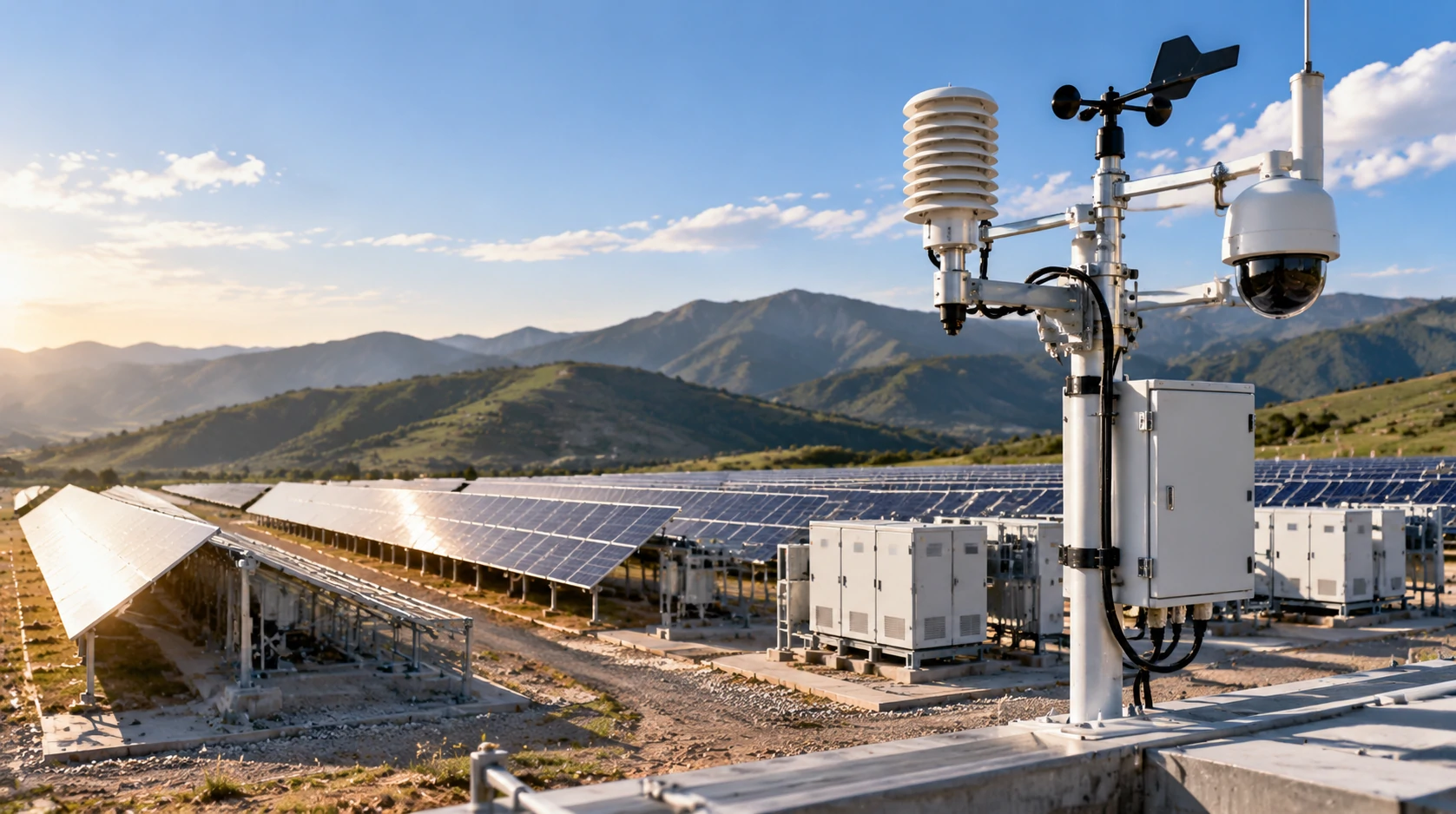
Utility-scale solar farms cover large open areas and include thousands of PV modules, long electrical runs, inverter stations, access roads, weather sensors, cameras, and field equipment. From a distance, the site may look stable and predictable. In daily operation, however, small defects can appear in many different places at the same time.
A hotspot, cracked module, soiling pattern, loose connection, shading issue, or abnormal inverter trend may not create an obvious site-wide alarm right away. Over time, those small issues can reduce energy output, increase O&M costs, and weaken long-term asset performance.
Traditional inspection methods often rely on manual patrols, scheduled sampling, delayed drone reports, or separate equipment dashboards. These methods still have value, but they are not always fast enough or consistent enough for modern PV asset management.
AI-powered inspection helps solar operators move from broad manual checks to targeted, data-driven asset management.
What is AI-powered solar farm inspection?
AI-powered solar farm inspection is a connected inspection workflow that uses artificial intelligence to analyze data collected from drones, thermal cameras, field cameras, sensors, and solar monitoring systems. Instead of asking engineers to review every image and data point manually, AI helps identify abnormal conditions and organize findings into a more useful maintenance workflow.
In a solar farm, AI can help detect PV hotspots, module defects, soiling, shading, abnormal temperature patterns, safety events, site intrusion, and equipment risks. When those findings are linked to plant zones, asset records, historical inspections, and O&M tasks, inspection becomes more than a one-time report. It becomes part of a smarter PV asset management system.
WThink’s AI-powered solar farm inspection solution supports this connected approach by combining Industrial AI, drone inspection, edge computing, 5G IoT, video analytics, and centralized solar O&M management.
Why manual inspection alone is not enough
Manual inspection is still useful for close verification, repair, cleaning, and field service. The challenge is scale. A large PV site may require teams to walk long rows, inspect specific equipment zones, compare module surfaces, review thermal conditions, and document findings across a wide area.
Consistency is another challenge. Different technicians may capture different photos, apply different judgment standards, or document the same issue with different levels of detail. Some defects may also be missed because they are small, intermittent, hidden by viewing angle, or only visible under thermal imaging.
Manual review takes time as well. A drone flight can produce thousands of images. A camera network can generate continuous video. A solar monitoring platform can create frequent alarms. Without AI, the O&M team may spend too much time filtering data and not enough time acting on the findings that matter most.
What AI can detect during solar farm inspection
AI-powered inspection is valuable because it can analyze large volumes of visual, thermal, and operational data more consistently. For solar farms, the most useful AI inspection tasks are usually tied to performance loss, equipment health, and site safety.
PV hotspots
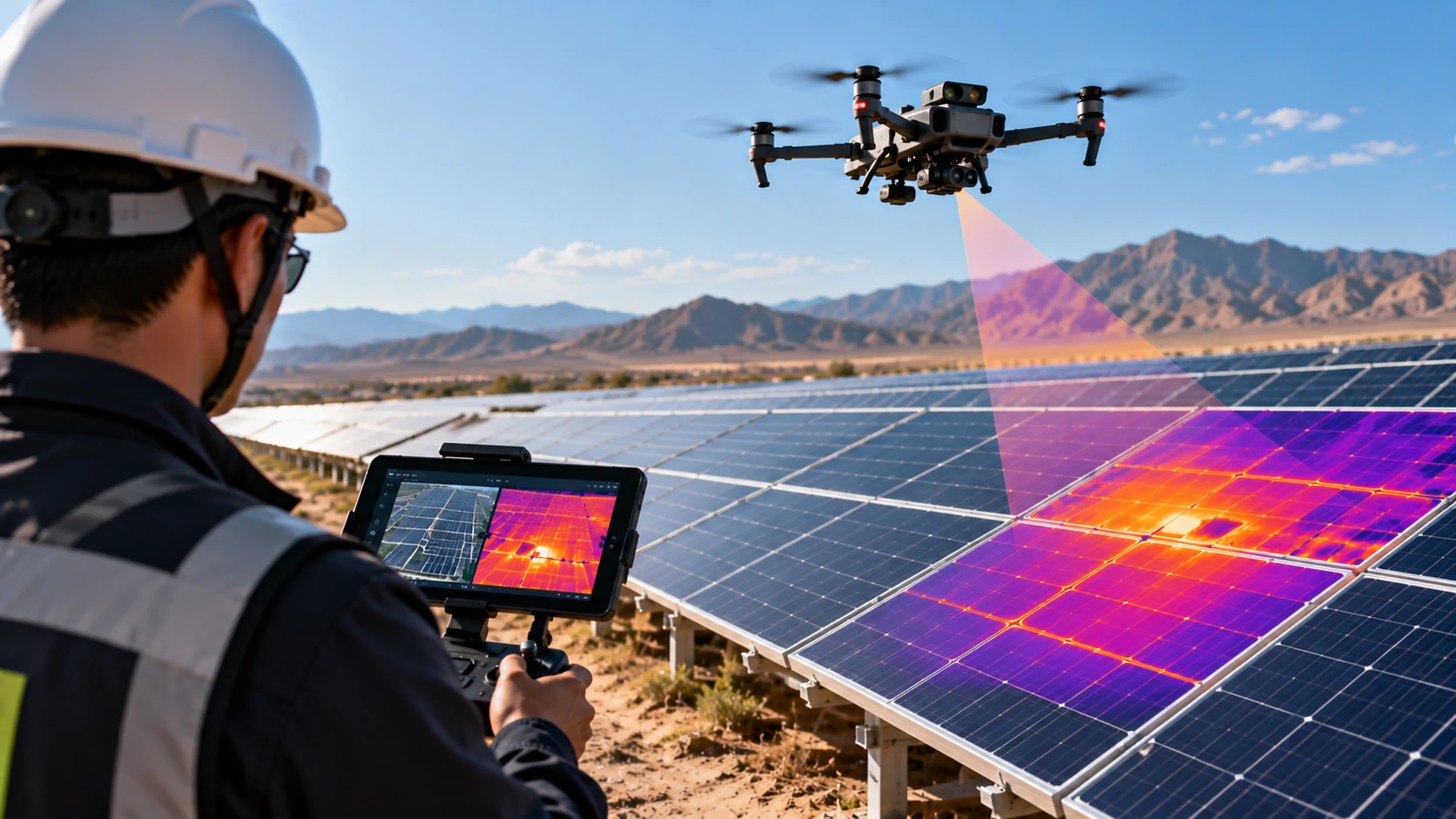
Thermal analysis helps identify abnormal heat patterns that may indicate module defects, cell damage, string issues, or localized performance loss.
Module defects
AI vision can help detect cracked glass, broken cells, discoloration, delamination signs, frame damage, and abnormal module surfaces.
Soiling and shading
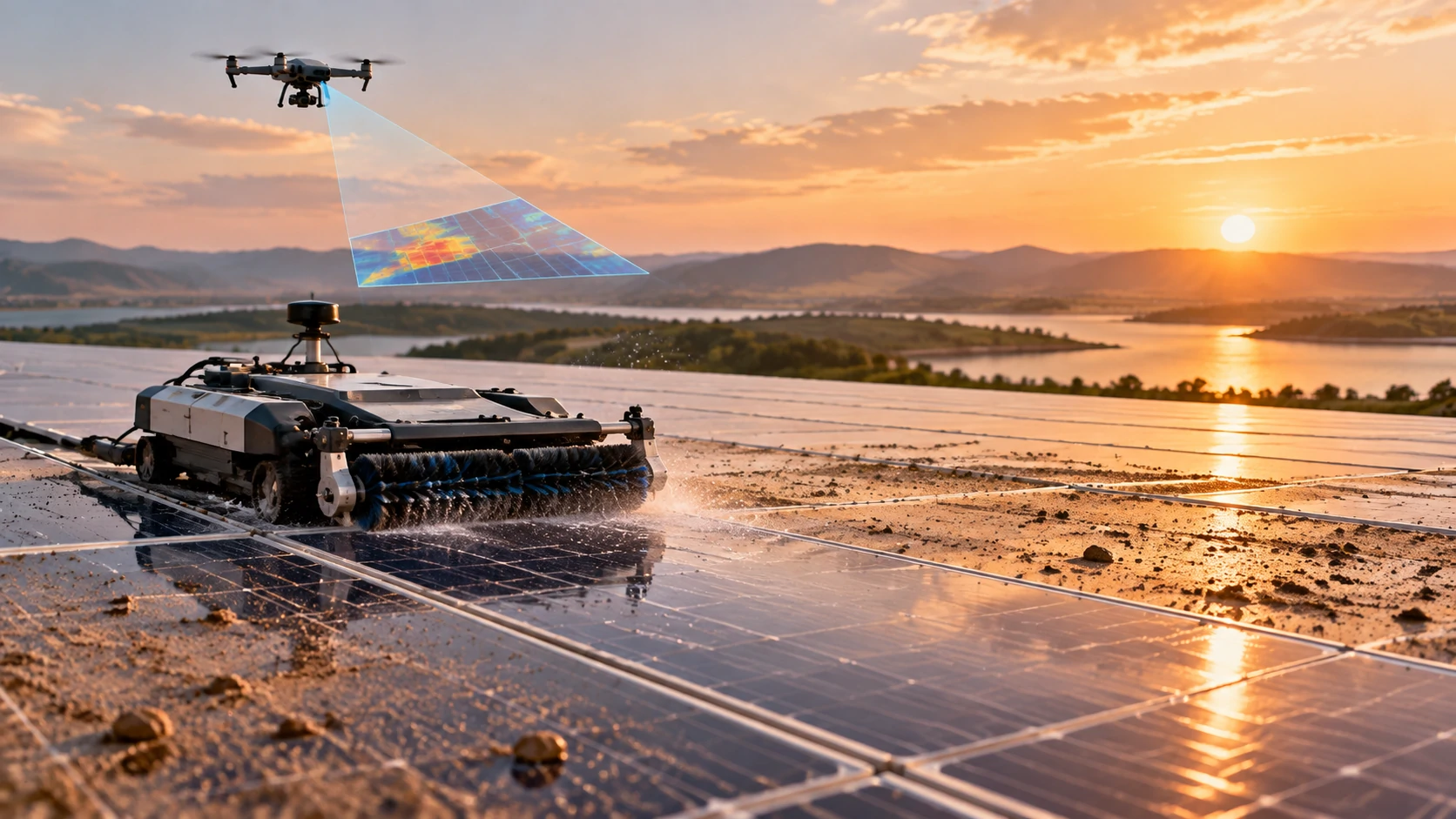
AI can identify dust buildup, bird droppings, vegetation shadows, row shading, uneven cleaning results, and other causes of energy loss.
String and inverter-side risks
Inspection findings can be compared with generation data and inverter alarms to support faster root-cause analysis.
Fire and smoke events
AI video analytics can help detect smoke, flame, abnormal temperature, or risk events near field equipment and power conversion areas.
Security and site activity
AI can support intrusion detection, restricted-area monitoring, abnormal movement alerts, and remote visibility for unmanned PV sites.
How drones improve PV asset inspection
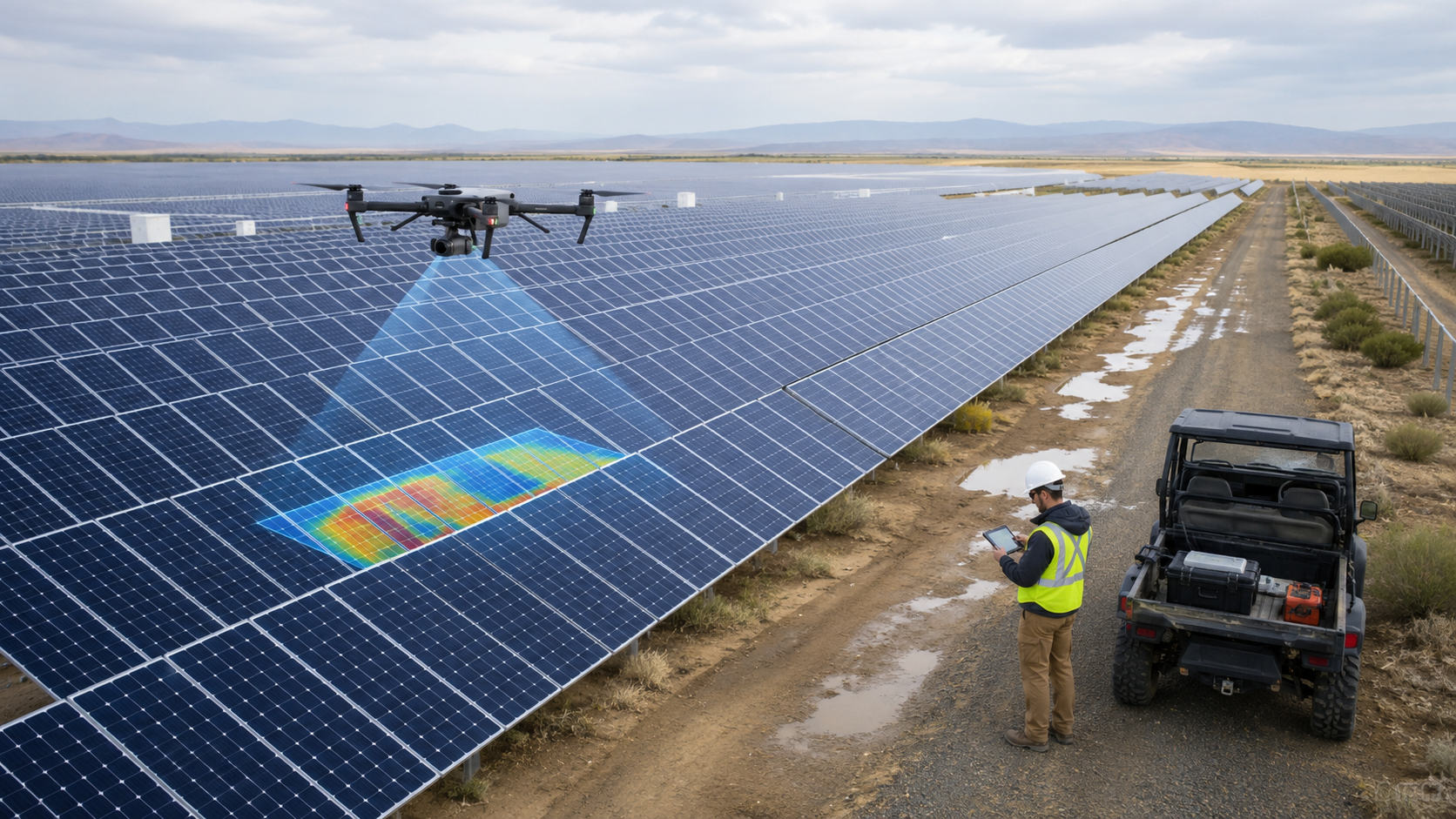
Drones are one of the most practical tools for inspecting large solar farms. They can fly over PV rows, capture visual images, collect thermal data, and cover field zones much faster than ground patrols. This makes them useful for routine inspections, post-event checks, commissioning reviews, and targeted fault investigations.
The value of drones increases when flights are planned consistently. If the same field sections are inspected from similar angles across different cycles, operators can compare findings over time. They can see whether a hotspot is new, whether soiling is spreading, whether a repaired area remains stable, or whether certain field zones repeatedly underperform.
Drones provide the field data, but AI makes that data easier to use. Instead of storing images in separate folders, AI-powered workflows help classify defects, locate affected assets, and connect findings with maintenance priorities.
From inspection images to asset management
The biggest weakness of traditional inspection is that results often remain disconnected from asset management. A report may show a problem, but the finding may not be linked to a specific module group, inverter zone, task owner, repair history, or long-term performance trend.
AI-powered solar farm inspection helps close that loop. Findings can be structured by location, defect type, severity, asset category, and likely operational impact. This gives O&M teams a clearer path from detection to response.
A smarter inspection workflow does not stop at finding a defect. It connects the defect to the asset, the risk level, the work plan, and the performance record.
For PV asset managers, that connection is important. It helps teams understand which assets are aging faster, which zones require repeated attention, which issues are affecting yield, and whether maintenance actions are actually solving the problem.
How edge AI and 5G IoT support real-time inspection
Solar farms are often built in remote areas where field access, network quality, and response time can be challenging. If every image, video stream, and alarm must wait for cloud upload and manual review, inspection may become too slow for real operations.
Edge AI helps process data closer to the field. It can support preliminary defect recognition, image quality checks, fire and smoke detection, intrusion alerts, and abnormal event filtering at the site level. 5G IoT or industrial wireless communication helps transmit inspection data, device status, video streams, telemetry, and alerts back to a centralized platform.
This connected structure allows operators to combine field-side intelligence with central management. Local systems can detect and filter events faster, while the control center manages tasks, reporting, and long-term asset performance.
A practical AI-powered inspection workflow
Define inspection zones and asset priorities
Operators identify field areas, inverter zones, module groups, historical risk points, and inspection objectives before the mission begins.
Collect visual and thermal data
Drones and cameras capture module images, thermal views, equipment conditions, field zones, and site activity for AI-assisted analysis.
Use AI to identify defects and risks
AI helps detect hotspots, module damage, soiling, shading, fire risk, intrusion, abnormal equipment behavior, and performance loss.
Group findings by location and severity
Inspection results are organized by field area, asset type, defect category, severity level, and likely O&M impact.
Turn findings into maintenance tasks
Operators assign follow-up work, verify high-risk findings, plan repairs, schedule cleaning, or update asset records.
Monitor results over time
Historical inspection data helps teams compare inspection cycles, verify maintenance outcomes, and improve future asset planning.
Benefits for PV asset managers
Faster defect discovery
AI helps identify hotspots, module defects, soiling, and other field issues before they create larger performance losses.
Reduced manual review
AI filters large image, video, and inspection datasets so teams can focus on the findings that deserve attention first.
Better maintenance prioritization
Findings can be ranked by severity, location, asset type, safety risk, and likely effect on energy generation.
Improved asset visibility
Inspection data can be linked to field zones, asset records, historical results, and maintenance actions.
Safer field operations
Drones and AI reduce unnecessary broad patrols and help teams focus field work on confirmed high-value tasks.
Stronger long-term planning
Historical inspection records help owners identify recurring issues, validate repairs, and plan asset maintenance more intelligently.
What operators should consider before deployment
AI-powered inspection works best when it is planned around real O&M needs. Operators should define what they want to improve first: faster inspection, hotspot detection, module defect tracking, cleaning strategy, safety monitoring, fire prevention, security response, or asset performance visibility.
Data structure is also important. A good inspection workflow should not produce a pile of images without context. Each finding should be tied to location, asset category, defect type, severity, review status, and maintenance action.
Operators should also think about inspection frequency, drone route consistency, thermal imaging conditions, edge computing needs, network coverage, AI review rules, and how findings will enter the existing solar O&M process.
Where WThink fits in
WThink supports AI-powered solar farm inspection through Industrial AI, drone inspection, edge computing, 5G IoT, AI video analytics, and centralized software platforms. These capabilities help PV operators connect inspection data, detect field risks, prioritize maintenance, and manage solar assets more intelligently.
For repeatable solar inspection workflows, WThink’s Autonomous Inspection System helps connect route planning, image capture, AI analysis, reporting, and O&M decision-making.
AI-powered solar farm inspection gives PV operators a smarter way to manage large solar assets. By combining drones, thermal imaging, AI vision, edge computing, 5G IoT, and centralized O&M workflows, operators can detect defects earlier, reduce manual review, improve maintenance prioritization, and build stronger long-term asset visibility. For utility-scale solar farms, inspection is no longer just about finding problems. It is about turning field data into better asset management decisions.
Frequently asked questions
What is AI-powered solar farm inspection?
AI-powered solar farm inspection uses drones, cameras, thermal imaging, and AI analysis to detect PV hotspots, module defects, soiling, safety risks, and performance issues across solar farms.
How does AI improve solar farm inspection?
AI helps analyze large volumes of inspection images and field data, identify abnormal conditions, classify findings, and prioritize maintenance actions more efficiently.
Why are drones useful for solar farm inspection?
Drones can inspect large PV fields faster than manual patrols and capture visual or thermal data from consistent angles for better defect detection.
What defects can AI detect in solar farms?
AI can help detect PV hotspots, cracked modules, discoloration, delamination signs, soiling, shading, fire risk, intrusion, and abnormal site activity.
Does AI-powered inspection replace solar O&M teams?
No. AI supports O&M teams by improving visibility, reducing manual review, and helping prioritize maintenance. Human teams still verify findings and perform field work.