Solar plant performance isn’t decided by module efficiency alone. Industrial AI ties PV monitoring, drone inspection, thermal imaging, inverter data, field safety, edge computing, and O&M workflows into a single operating system — sharper visibility, faster decisions, better numbers.
Why solar plant performance is hard to manage at scale
Utility-scale solar plants are built to generate clean energy reliably for decades. In daily operation, though, performance loss rarely shows up as one big failure. It creeps in through a few underperforming strings, a patch of dirty modules, a developing hotspot, a communication fault, or an inspection report that took two weeks to reach the maintenance team. Output slips without any single alarm going off.
The larger the plant, the harder it gets to manage that drift by hand. Operators are tracking modules, strings, inverters, weather, field activity, security, fire risk, cleaning schedules, and maintenance records — all spread across miles of desert or farmland. When those systems aren’t connected, the ops team knows generation is down but can’t say why with any real confidence.
Industrial AI closes that gap. It brings equipment data, imagery, thermal data, video analytics, and maintenance logic together so operators catch performance issues earlier — and act on them with real context instead of guesswork.
The real payoff of Industrial AI isn’t just detecting faults. It’s telling solar operators which faults matter, where they are, and what should happen next.
What Industrial AI means for solar power plants
Industrial AI is artificial intelligence built for real industrial environments — not a consumer chatbot dressed up for the plant. In a solar power plant, that means AI models and edge systems applied to PV monitoring, thermal inspection, video surveillance, field safety, equipment status, and O&M decision-making.
Unlike general software analytics, Industrial AI has to survive the field. Big outdoor sites. Shifting sunlight. Dust, weather, camera angle drift, communication drops, device failures, and maintenance crews doing real work in real time. If the system doesn’t help operators make better calls under those conditions, it doesn’t matter how clever the model is.
WThink’s Industrial AI solar power plant solution is built for exactly that reality — supporting solar inspection, AI-powered PV defect detection, real-time monitoring, safety alerts, autonomous inspection, and centralized O&M management.
How Industrial AI improves solar performance
Solar performance optimization starts with better visibility. Industrial AI gives operators a clearer view of where energy is being lost, which assets need attention, and which maintenance actions are actually worth doing first.
Traditional monitoring flags an underperforming field zone. Industrial AI takes it further — connecting that production dip with thermal inspection results, drone imagery, inverter alarms, weather data, or soiling patterns. Instead of pulling up five different tools to piece the story together, operators see the whole picture in one place.
The result is targeted optimization. Teams stop wasting time on broad manual sweeps and focus on the specific modules, strings, inverters, or site areas where the data is pointing to a real problem.
Key ways AI optimizes PV operations
Industrial AI drives solar performance improvement across inspection, monitoring, safety, maintenance, and long-term asset management.
PV hotspot detection
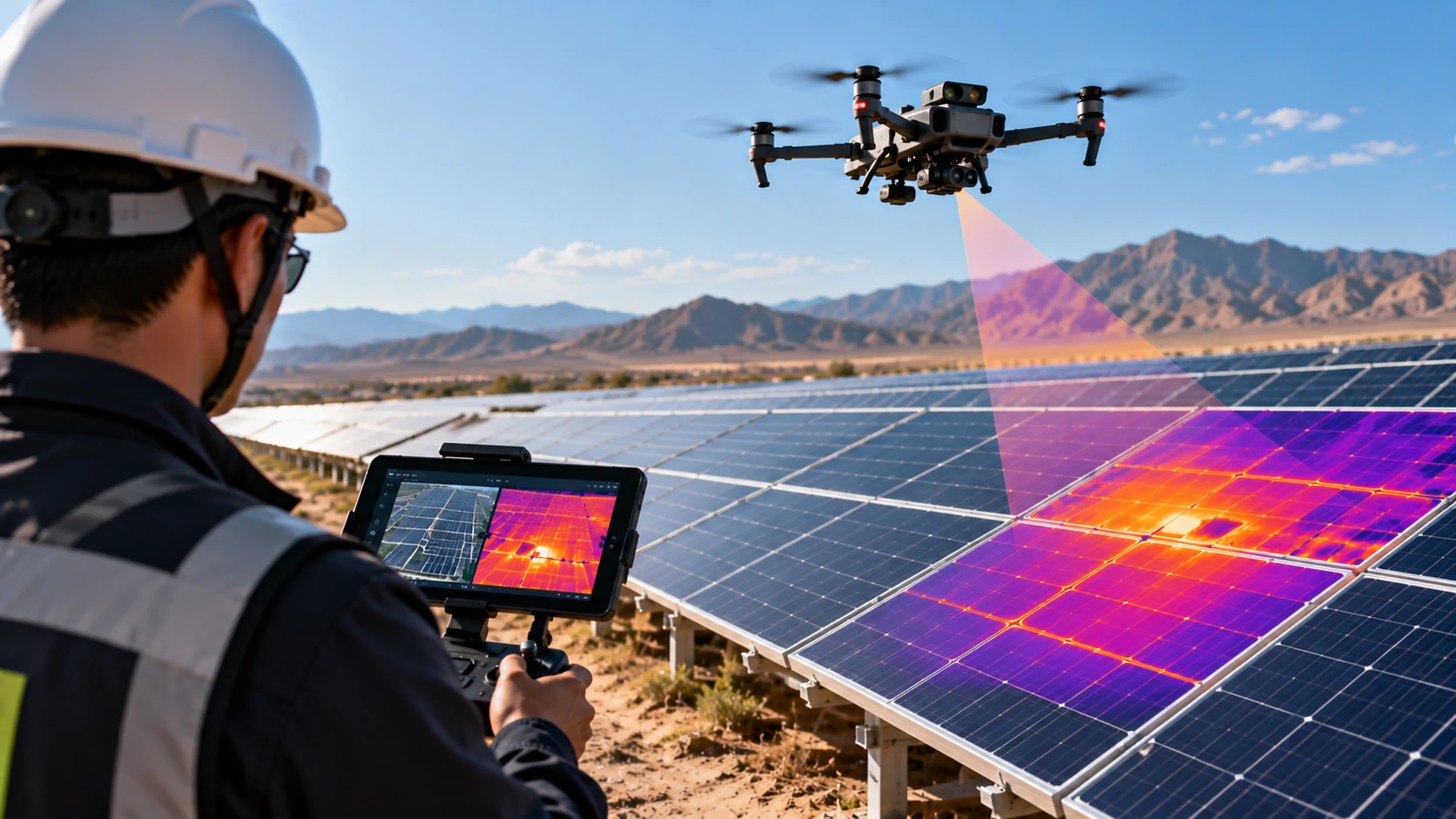
AI-driven thermal analysis flags abnormal heat patterns pointing to module defects, string issues, cell damage, or localized performance loss.
Module defect recognition
AI vision catches cracked glass, discoloration, delamination signs, broken cells, frame damage, and abnormal module surface conditions.
Soiling and shading analysis
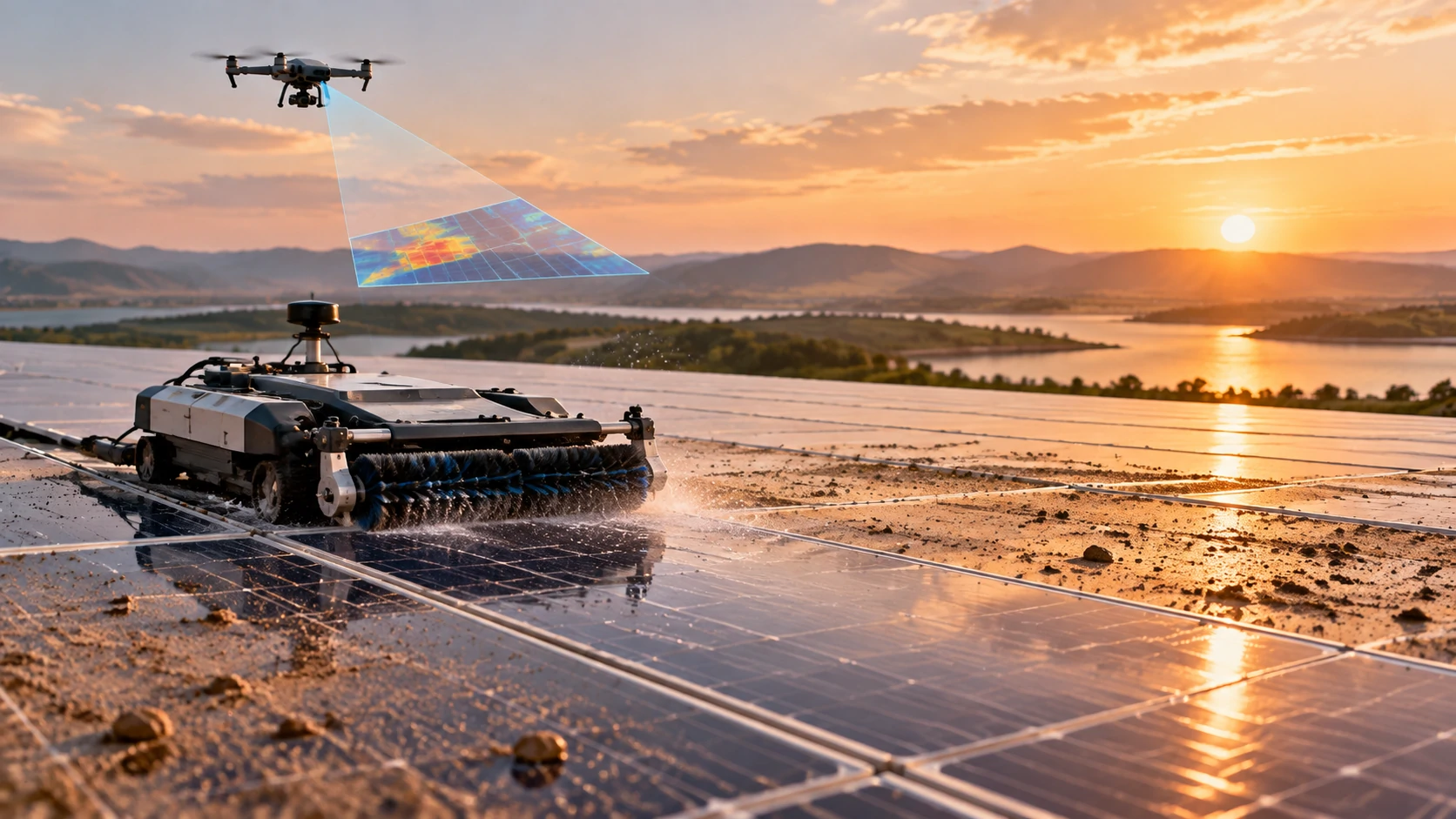
AI catches dust buildup, bird droppings, vegetation shadow, row shading, and other environmental issues quietly cutting into energy yield.
Inverter and string diagnostics
AI speeds up root-cause analysis by connecting inverter alarms, generation trends, field imagery, and inspection findings.
AI safety monitoring
Video analytics detect fire, smoke, intrusion, restricted-area entry, missing PPE, and abnormal activity across the solar site.
Maintenance prioritization
AI findings grouped by location, severity, generation impact, asset type, and recommended response priority — ready to dispatch.
AI turns inspection data into performance intelligence
Drone inspection and thermal imaging are already valuable for solar plants — but the data volume they generate is a problem in its own right. A single inspection produces thousands of images across different field zones, module rows, and temperature conditions. Without AI, engineering teams end up buried in review time and short on action time.
Industrial AI structures that data into practical performance intelligence. It flags suspected defects, groups findings by field location, compares conditions across inspection cycles, and ranks severity — turning inspection into something repeatable and directly tied to O&M planning.
Drones collect the field data. Industrial AI turns that data into maintenance priorities and performance decisions.
Connect inspection results to plant monitoring and asset records, and operators see not just what defect exists, but how it affects generation, safety, and long-term asset health.
How AI sharpens solar energy analytics
Solar energy analytics is about understanding how a plant is performing and why. Industrial AI sharpens that process by connecting production data with field conditions and inspection results. Instead of staring at an energy output chart in isolation, operators can read performance against equipment status, weather, module condition, inverter behavior, and site events — all together.
That reveals patterns manual analysis misses. A recurring output dip in one section may align with soiling. A string-level issue may correlate with a thermal hotspot. A field zone may show repeated security or safety events that quietly cost the crew maintenance access. AI pulls those patterns into the operating workflow instead of leaving them buried in separate systems.
For solar plant owners, the long-term payoff is real. Historical inspection and performance data become a tool for tracking recurring issues, validating maintenance outcomes, and sharpening future O&M planning — cycle after cycle.
The role of edge AI and 5G IoT
Most solar plants get built in remote areas where network quality, site access, and response time all work against you. If every video stream, inspection image, and alarm has to survive a round-trip to the cloud before anyone can act, the system’s already too slow.
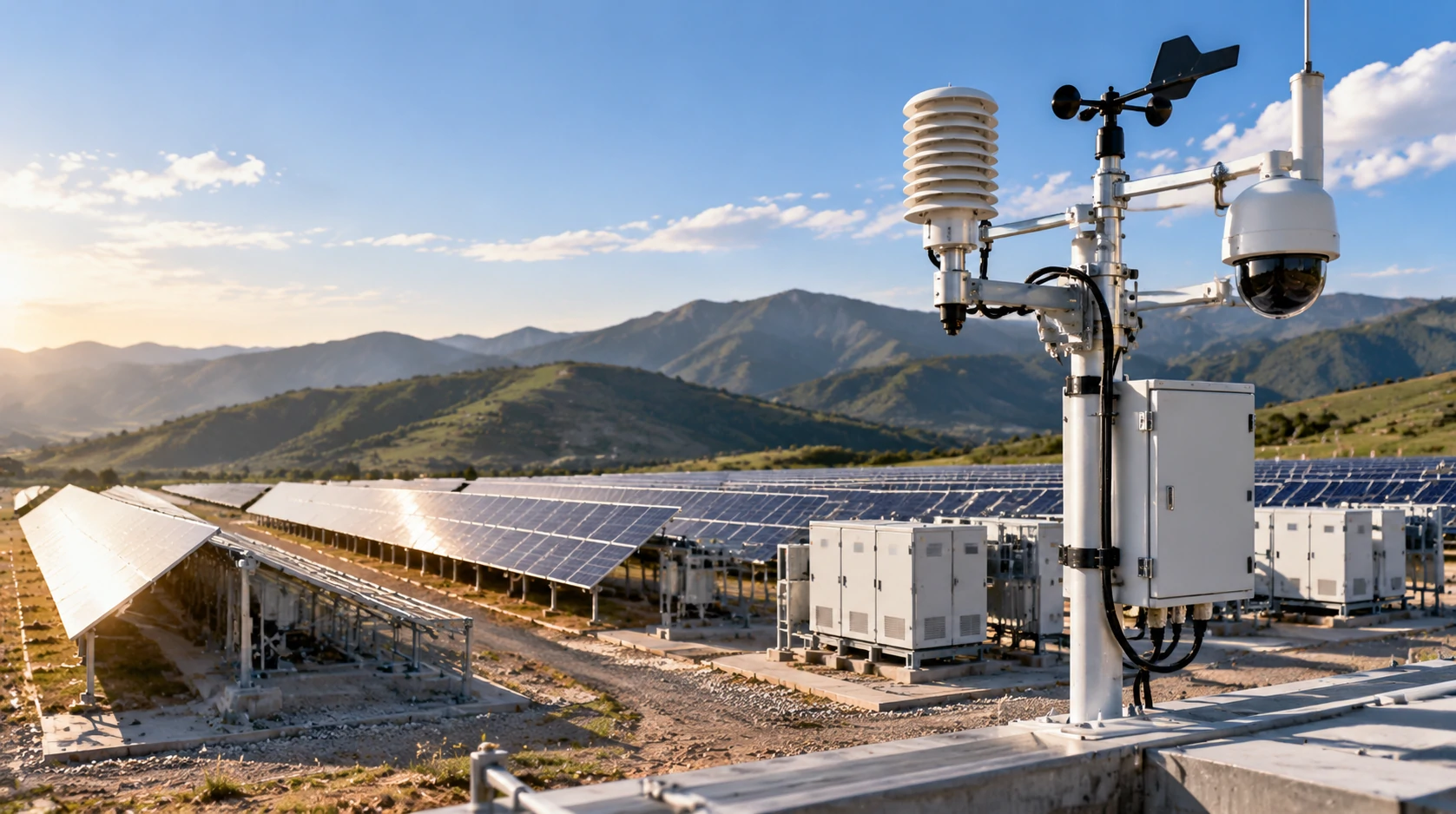
Edge AI moves the first pass of processing closer to the field. It handles preliminary image analysis, video event detection, fire and smoke alerts, intrusion detection, and abnormal condition filtering right at the site. 5G IoT or industrial wireless then carries the results, alerts, device status, and inspection data back to the centralized platform without the usual bandwidth headaches.
That cloud-edge split matters. Solar operators need both local responsiveness and centralized oversight. Field-side AI catches problems fast. The central platform handles tasks, cross-site comparisons, and long-term asset tracking.
A practical Industrial AI workflow for solar plants
Bring field data into one operating layer
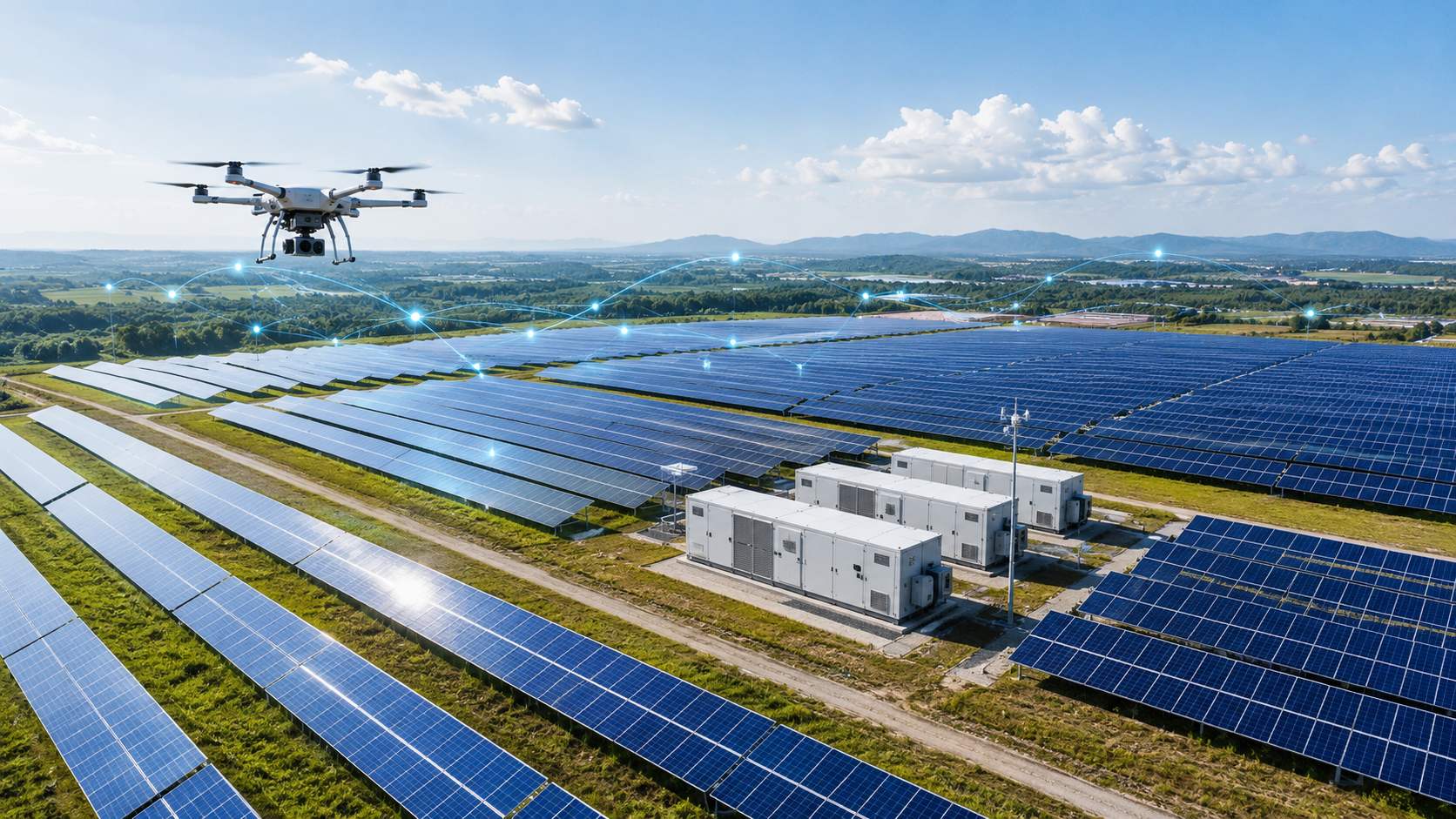
PV equipment, cameras, drones, weather stations, sensors, edge AI devices, and communication systems tie into a unified monitoring workflow.
Track generation and site conditions
Operators watch inverter status, output trends, alarms, field activity, device health, weather impact, and safety events from a centralized platform.
Collect visual and thermal data
Drones and cameras capture field imagery, thermal data, equipment views, module conditions, and site activity for AI analysis.
Use AI to catch performance risks
AI catches hotspots, module defects, soiling, shading, fire risk, intrusion, inverter-related issues, and abnormal field conditions.
Rank issues by impact
Findings organized by location, severity, asset type, safety risk, generation impact, and recommended O&M priority — ready to dispatch.
Track outcomes over time
Historical data shows recurring issues, confirms maintenance results, cuts repeat faults, and sharpens long-term plant performance.
Performance problems Industrial AI cuts down
Solar plant performance loss rarely traces back to one issue. Industrial AI helps operators handle the whole spread of conditions eating into generation, reliability, and O&M efficiency.
Hidden module faults
AI-assisted inspection surfaces defects that don’t stand out in ground patrols or basic performance monitoring.
Slow fault response
Real-time alerts and AI ranking cut response time when a problem starts affecting output or site safety.
Unplanned energy loss
AI connects production drops back to their physical causes — hotspots, soiling, shading, string faults, inverter behavior.
Manual review overload
AI filters massive image and video datasets so engineers work on high-value findings instead of grinding through every file.
Safety blind spots
AI video analytics watch for fire, smoke, intrusion, restricted-area breaches, and abnormal activity at remote or unmanned PV plants.
Weak historical visibility
Structured inspection and performance records let operators compare issues over time and understand the recurring risks on the site.
Benefits for solar plant owners and operators
Higher performance visibility
Generation trends, inspection data, device status, and site events all connected in one operating view — not scattered across tools.
Faster defect detection
AI catches hotspots, module defects, soiling, shading, and abnormal equipment conditions long before they hit generation numbers.
Smarter O&M planning
Maintenance teams prioritize by location, severity, generation impact, and safety risk — so crews go where they’ll do the most good.
Lower manual workload
Drones, AI vision, and centralized monitoring take routine screening off the O&M crew’s plate.
Improved site safety
AI video analytics catch fire, smoke, intrusion, restricted-area entry, and abnormal activity faster than any patrol schedule.
Better long-term asset management
Historical performance and inspection data help owners track recurring faults, verify repairs, and sharpen future maintenance planning.
What to think about before deployment
Industrial AI earns its keep when it’s deployed around real operational goals — not tacked on because it sounds modern. Solar operators need to be clear on what they’re solving for first: energy yield, inspection speed, fault detection, safety monitoring, cleaning strategy, fire prevention, security response, or multi-site management. Chasing everything at once usually delivers nothing well.
AI findings also need to land in the existing O&M workflow. A defect alert only matters if the team knows where it is, how serious it is, who owns the response, and how results get tracked after the maintenance is done. Anything else is noise.
Data integration is the other big one. A strong system connects plant monitoring, drone inspection, AI analysis, edge devices, and maintenance records — instead of adding one more isolated dashboard to the pile.
Where WThink fits in
WThink builds solar performance optimization on Industrial AI, 5G IoT, edge computing, autonomous inspection, AI video analytics, and centralized software platforms. Together they help solar operators connect field data, catch risks, sharpen inspection workflows, and manage PV assets with the kind of visibility manual O&M can’t match.
By tying drones, cameras, sensors, edge AI devices, communication modules, and software platforms into one system, WThink helps operators move from manual solar plant management to genuinely automated PV operations. Explore WThink’s Industrial AI and 5G IoT products to see what’s available for smart field deployment.
Industrial AI optimizes solar power plant performance by connecting PV monitoring, drone inspection, thermal imaging, video analytics, edge computing, 5G IoT, and O&M workflows into a single intelligent operating system. For utility-scale PV plants, the payoff is real: earlier defect detection, faster maintenance decisions, better site safety, and stronger long-term asset visibility. As solar plants get bigger and more distributed, Industrial AI becomes a core lever for improving energy yield, cutting manual workload, and running smarter solar operations at scale.
Frequently asked questions
How does Industrial AI optimize solar power plant performance?
By connecting PV monitoring, drone inspection, thermal imaging, video analytics, and O&M workflows so operators catch problems earlier and prioritize maintenance with the data — not guesswork.
What solar plant issues can AI catch?
PV hotspots, module defects, soiling, shading, inverter-side issues, fire and smoke risk, intrusion, and abnormal site activity — plus the patterns manual review tends to miss entirely.
Why are drones useful for AI solar inspection?
Drones capture visual and thermal data across massive PV fields quickly and repeatably, feeding AI systems the coverage they need to catch defects and performance risks at scale.
What role does edge AI play in solar plants?
Edge AI processes data close to the field — powering faster alerts, video analytics, preliminary defect detection, and local event filtering without waiting on cloud round-trips.
Does Industrial AI replace solar O&M teams?
No. It sharpens their visibility, triage, and maintenance prioritization. Humans still own the final calls and the field work.