Utility-scale PV plants can’t be run on panels, inverters, and alarms alone anymore. Smart solar power plant solutions bring AI, drones, edge computing, 5G IoT, video analytics, and centralized monitoring together into one operating layer — safer, faster, and dramatically more efficient PV operations.
Why PV operations need a smarter system
From a distance, a large solar plant looks straightforward: rows of PV modules, inverter stations, combiner boxes, access roads, fences, cameras, weather stations, and a control room. On the ground, every piece of that site is generating data, creating risk, and driving maintenance decisions in real time.
Operators have to track generation efficiency, inverter status, module condition, field safety, cleaning demand, weather impact, fire risk, security events, inspection records, and maintenance response — all across a physical footprint that can stretch for miles. When those workflows aren’t connected, small issues hide in the gaps for way too long.
Traditional solar O&M leans on manual patrols, scattered alarms, delayed drone reports, and a mess of separate dashboards. That gets the job done on a small site. It falls apart when the plant covers hundreds or thousands of acres — or when one operations team is running multiple PV power stations at once.
A smart solar power plant solution isn’t just another monitoring dashboard. It’s a connected operating system that helps teams see what’s happening, understand why it matters, and decide what to do about it.
What actually makes a solar plant “smart”?
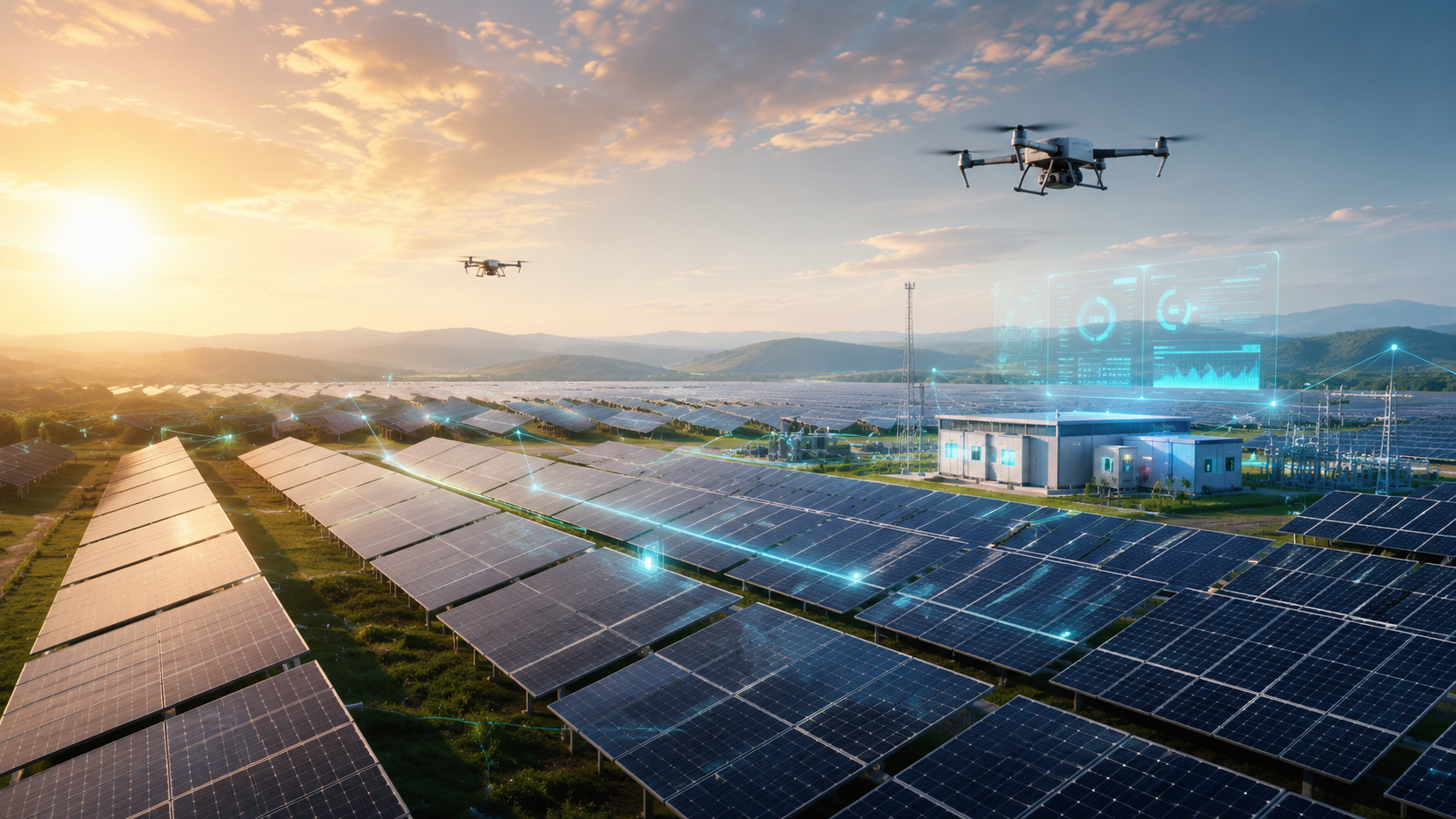
A smart solar plant wires field equipment, inspection tools, AI models, communication networks, and O&M workflows into one coordinated system. Instead of managing every device and every report in isolation, operators get one clear view of site performance, safety, inspection, and maintenance.
Generation data shows a zone is underperforming. Thermal imaging reveals a PV hotspot. Drone inspection catches module damage or heavy soiling. AI video analytics flags fire, smoke, intrusion, or unsafe activity. Edge computing processes it all closer to the site. A centralized platform turns the whole picture into prioritized maintenance work — automatically.
WThink’s smart solar power plant solution is built around exactly this connected logic — helping operators move from manual O&M toward intelligent field operations powered by Industrial AI, 5G IoT, autonomous inspection, and edge intelligence.
Core capabilities of a smart solar solution
For utility-scale PV, a smart solution has to do more than push alarms to a screen. It has to help operators catch problems earlier, cut manual workload, improve safety, and tie inspection data directly to the maintenance decisions that follow.
Centralized PV monitoring
Generation data, inverter status, alarms, inspection records, video feeds, and site conditions all in a single solar monitoring workflow.
AI defect detection
AI vision and thermal analysis catch hotspots, module damage, soiling, string issues, and abnormal equipment behavior.
Drone-based inspection
Faster field coverage with aerial imagery, thermal data, route-based inspection, and repeatable PV plant inspection records.
AI safety monitoring
Fire and smoke detection, intrusion alerts, PPE monitoring, restricted-area alerts, and abnormal activity flagged across the site.
Edge AI processing
Video, imagery, and field data processed close to the site for faster preliminary alerts — no waiting on cloud upload cycles.
Smart O&M workflows
Inspection findings, alarms, and analytics converted into maintenance priorities, review tasks, work orders, and long-term performance tracking.
How AI actually improves PV operations
AI improves PV operations by catching problems that are easy to miss across a large solar field. A patrol crew won’t spot a small cluster of underperforming modules three rows deep. A traditional alarm shows output dropped but can’t tell you why. AI connects the dots between field imagery, thermal data, video feeds, device status, and operating patterns.
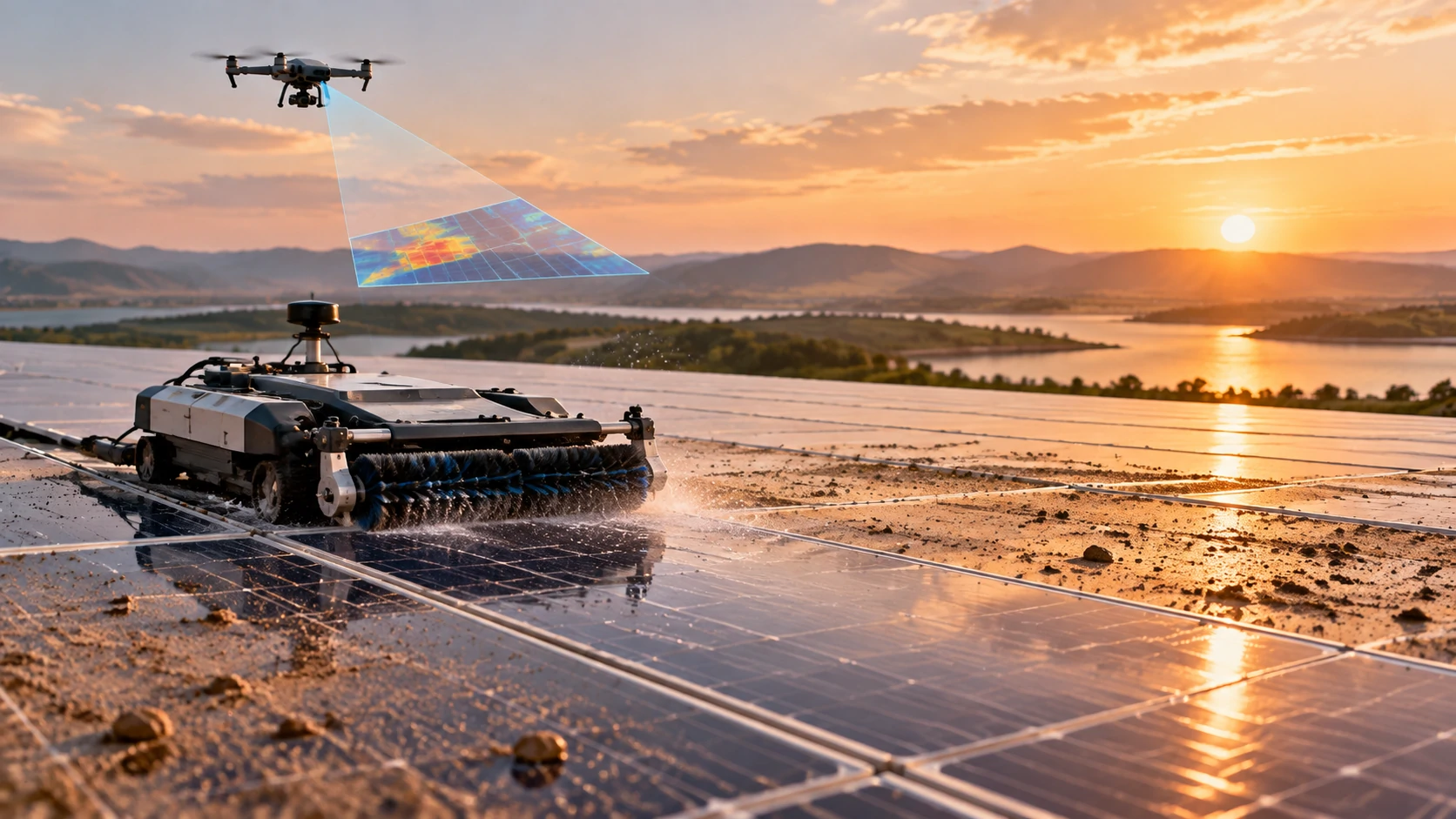
In practice: AI flags PV hotspots from thermal imagery, catches surface damage in drone photos, recognizes soiling and shading patterns, and picks up abnormal activity near equipment zones. It also filters massive inspection datasets down to the images engineers actually need to review — instead of every frame from the flight.
AI doesn’t replace the O&M team. It gives them better visibility, faster triage, and a clearer path from problem detection to action.
Bake AI into a smart solar plant system and operators move from reactive maintenance to genuinely data-driven decision-making.
Where smart field station systems fit in
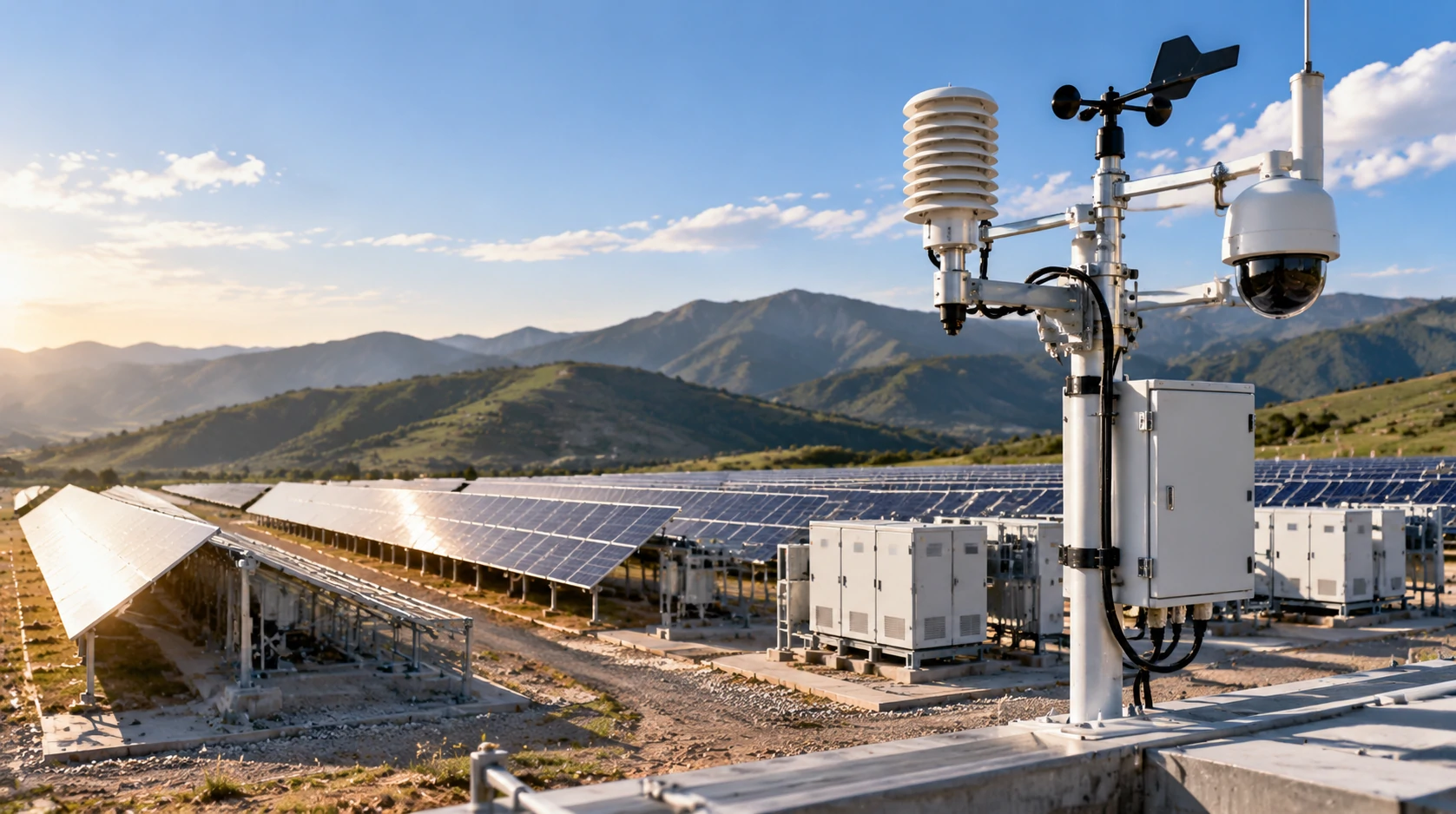
A smart field station system is the operational backbone of a modern PV site. It ties field devices, cameras, communication modules, edge AI hardware, drones, sensors, and software platforms together so the plant can be monitored and managed as one thing — not a dozen disconnected systems.
Instead of shipping every image, video stream, and alarm back for later review, a smart field station handles local processing, real-time alerts, device connectivity, video analysis, and data forwarding right on-site. That matters most at remote solar plants where bandwidth, site access, and response time all work against you.
This direction is central to how WThink thinks about solar optimization. Better PV operations aren’t only about squeezing more efficiency out of the modules. They’re about making the whole field operation smarter — inspection, safety, communication, maintenance, and centralized management, all pulling in the same direction.
What AI can catch in solar plants
Solar plant performance loss comes from a lot of directions. Some of it’s electrical. Some of it’s environmental. Some of it’s safety-related. Smart solar solutions bring AI and connected inspection tools to bear on every category — so operators can find and prioritize problems faster.
PV hotspots
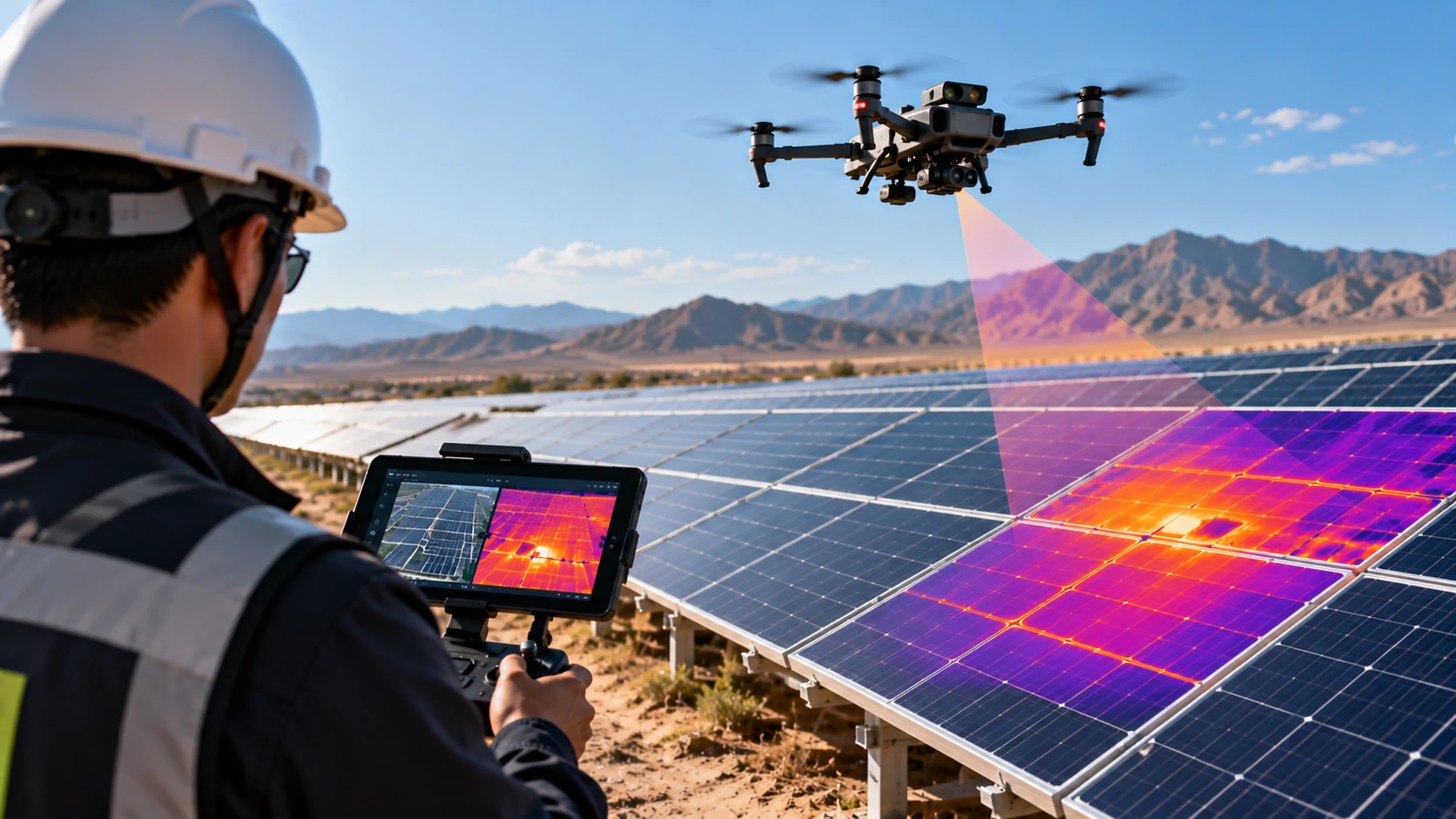
Thermal imaging and AI analysis flag abnormal heat patterns pointing to module defects, string issues, or localized performance loss.
Module damage
AI vision catches cracked glass, broken cells, discoloration, delamination signs, frame damage, and abnormal surface conditions.
Soiling and shading
Dust buildup, bird droppings, vegetation shadow, row shading, and other conditions quietly eating into generation numbers.
Inverter-side issues
Alarm data, generation trends, and inspection records combined to surface abnormal inverter and string-level behavior.
Fire and smoke risks
AI video analytics detect smoke, flame, abnormal temperature, and risk events near equipment zones and field stations.
Site security events
Intrusion detection, perimeter monitoring, restricted-area alerts, and abnormal movement flagged across remote PV facilities.
The role of drones in smart PV operations
Drones are one of the most practical tools in utility-scale solar. They cover large fields far faster than manual patrols and capture both visual and thermal data from consistent angles — the kind of coverage that makes it possible to actually detect module defects, hotspots, soiling, row-level anomalies, and field-wide patterns.
The real payoff shows up when drone data isn’t treated as another isolated folder of images. In a smart solar plant, drone inspection connects directly to AI analysis, asset location, field zone, historical inspection records, and the maintenance actions that follow.
WThink’s Autonomous Inspection System is designed for exactly that workflow — turning inspection routes, image data, AI findings, and reporting into a repeatable solar O&M process instead of a one-off flight.
Why edge AI and 5G matter for solar plants
Most solar plants get built where the sun is — often remote, often with spotty coverage, often with real limits on site access and response time. If every image, video stream, and alarm has to survive a round trip to the cloud, the whole workflow slows to a crawl.
Edge AI moves the first pass of analysis closer to the field. It handles preliminary video analytics, image quality checks, defect recognition, fire and smoke detection, intrusion alerts, and abnormal event filtering right at the site. 5G and industrial wireless carry inspection data, telemetry, device status, and alerts back to a centralized platform without the usual bandwidth bottleneck.
WThink supports these connected solar inspection workflows with products like the M3X 5G drone data link module and WD5500 edge AI module — helping field devices, drones, AI systems, and operators work as one unit.
A practical smart solar power plant workflow
Link field devices and plant systems
Cameras, sensors, inverters, drones, edge AI devices, and monitoring platforms tie together into a unified smart field station workflow.
Track plant status in real time
Generation data, video streams, alarms, device status, weather info, and inspection records all monitored from a single platform.
Collect visual and thermal inspection data
Drones and cameras capture field imagery, thermal data, equipment views, and site activity for AI-assisted analysis.
Use AI to catch risks and performance loss
AI catches hotspots, module defects, soiling, shading, fire risk, intrusion, abnormal equipment conditions, and safety events.
Rank maintenance tasks by impact
Findings get organized by location, severity, equipment type, generation impact, and recommended O&M priority — ready to dispatch.
Track results across inspection cycles
Historical data shows recurring issues, confirms maintenance outcomes, and sharpens long-term PV performance over time.
What owners and operators actually get
Better performance visibility
Generation issues, equipment risks, inspection findings, and safety events viewed together instead of stitched from separate systems.
Faster fault detection
AI surfaces hotspots, module defects, soiling, and abnormal equipment behavior long before they turn into serious performance drops.
Less manual workload
Drones, AI vision, and centralized monitoring take routine screening off the O&M crew’s plate.
Smarter maintenance planning
Inspection results and AI findings ranked by urgency, location, and operational impact — so crews go where they’ll do the most good.
Improved site safety
AI video analytics watch for fire, smoke, intrusion, restricted-area breaches, and abnormal activity across remote plants.
Stronger long-term asset management
Historical inspection and performance data helps owners track plant condition, recurring faults, and maintenance effectiveness over years — not just quarters.
What to think about before rolling this out
A smart solar solution earns its keep when it’s built around real operating needs — not the technology in isolation. Operators need to be clear on what they want to improve first: generation, inspection speed, safety, O&M efficiency, fire prevention, security, centralized control, multi-site management. Trying to fix everything at once usually fixes nothing well.
Data integration matters just as much. A smart system shouldn’t be another isolated dashboard. It should hook into existing plant data, field devices, inspection workflows, and maintenance processes — the value is in making operations easier to understand and easier to act on, not adding another screen to check.
For large portfolios, scalability is where the math actually pays off. A single-site monitoring project solves the immediate problem. A unified smart PV platform manages every plant in the portfolio with consistent standards and reporting.
Where WThink fits in
WThink supports smart solar power plants with Industrial AI, 5G IoT, edge computing, autonomous inspection, AI video analytics, and centralized software platforms. Together they help PV operators connect field data, catch risks, sharpen inspection workflows, and manage solar assets with the kind of visibility manual O&M can’t match.
For solar projects, WThink’s Solar Power solution covers PV inspection, AI defect detection, real-time monitoring, smart field station systems, safety monitoring, and centralized O&M management under one roof.
Bring drones, cameras, sensors, edge AI devices, communication modules, and software platforms together, and WThink helps operators move from manual solar plant management to genuinely automated PV operations. Explore WThink’s Industrial AI and 5G IoT products to see what’s available for smart field deployment.
Smart solar power plant solutions help PV operators lift performance, safety, and maintenance by connecting AI, drones, edge computing, 5G IoT, video analytics, and centralized monitoring into a single operating workflow. For utility-scale solar, the payoff is real: faster defect detection, clearer maintenance priorities, better site safety, and stronger long-term asset visibility. As solar portfolios grow, smart field station systems and AI-powered PV operations become core infrastructure — not optional add-ons — for anyone serious about running reliable, efficient, and intelligent solar assets at scale.
Frequently asked questions
What is a smart solar power plant solution?
It’s a connected system that ties PV equipment, drones, cameras, sensors, edge AI, communication devices, and monitoring platforms together to sharpen solar plant operations, inspection, safety, and maintenance.
How does AI improve PV operations?
AI catches hotspots, module defects, soiling, shading, fire risk, intrusion, abnormal equipment behavior, and performance loss — making maintenance decisions faster and far more consistent than manual review.
Why are drones useful for solar plant inspection?
Drones cover large PV fields faster than any ground crew and capture visual and thermal data that surfaces module defects, hotspots, soiling, and field-level anomalies you’d never spot on foot.
What is a smart field station system?
It connects field devices, cameras, edge AI hardware, drones, sensors, and software platforms to support local processing, real-time alerts, and centralized plant management — the operational backbone of a modern PV site.
How do 5G and edge AI support smart solar plants?
5G moves video, inspection data, telemetry, and alerts in real time. Edge AI processes it close to the site for faster detection and quicker decisions. Together they cut the lag that used to define remote solar operations.