Real-time drone inspection takes more than a good drone. 5G connectivity brings low-latency video, remote control, live telemetry, edge AI processing, and faster decisions to inspections across energy, utilities, transportation, and industrial infrastructure.
Why real-time inspection matters
Drones have quietly become one of the most important tools in modern infrastructure monitoring — flying solar farms, wind turbines, transmission corridors, substations, thermal plants, industrial sites, and the kind of remote assets that used to eat up days of manual inspection time. They capture what ground crews can’t: high-resolution imagery, thermal data, video, sensor readings, and precise location data from places that are hard to reach, dangerous to walk, or simply too spread out to cover on foot.
But there’s a catch. A drone that collects data offline and hands it off after landing is only half of an inspection system. Delayed workflows still generate useful reports, but they can’t drive the decisions that matter in the moment — during an urgent safety check, a live troubleshoot, or an autonomous mission that needs to react to what it’s seeing.
That’s where 5G comes in. With the high bandwidth, low latency, and reliable coverage to link drones, edge devices, control centers, and cloud platforms in real time, 5G turns drone inspection from an offline data-gathering task into connected industrial intelligence.
Real-time inspection isn’t just about watching live video. It’s about wiring the drone, the field device, the AI model, and the operations team into a single responsive workflow.
The limits of traditional drone communication
Plenty of drone inspection workflows still lean on local radio links, Wi-Fi, offline storage, or someone walking a memory card back to the truck. That’s fine for small sites and short flights. It falls apart the moment you need long-distance coverage, continuous video streaming, remote command, or coordination across multiple sites.
Utility-scale operations rarely fit in a small footprint. Inspection teams are monitoring assets across sprawling solar farms, remote wind sites, hundreds of miles of transmission corridor, substations, industrial parks, ports, mines, and oil and gas facilities. Local links buckle under terrain, distance, interference, and bandwidth limits.
Offline inspection also introduces a time gap that never entirely closes. The drone flies. The team lands. Then someone downloads the footage. Then someone reviews it. By the time an engineer sees the issue, hours or days have passed — and fast response was never really on the table.
How 5G changes drone inspection
5G gives drones and inspection systems the communication backbone they’ve been missing. Instead of an isolated data collector, the drone becomes a connected field node inside a larger Industrial AI system.
With 5G in the picture, drone inspection supports real-time video, remote monitoring, control-center collaboration, live telemetry, AI-assisted alerts, and near-instant reporting. For infrastructure operators, that means inspection data reaches the right people while the mission is still in the air — not after it lands.
WThink builds this connected inspection model into products like the M3X 5G drone data link module, WD5500 edge AI module, and Autonomous Inspection System.
What 5G unlocks for drone inspection
5G enables a handful of capabilities that directly affect inspection speed, accuracy, safety, and operational value.
Low-latency video streaming
Live HD or 4K video that lets operators watch inspection details unfold while the drone is still in flight.
Remote drone control
Command and oversee inspection missions from anywhere — no need for an operator on-site next to the asset.
Real-time telemetry
Flight status, GPS location, altitude, battery, device health, sensor readings, and mission progress streamed live to the control center.
Edge AI collaboration
Field-side AI devices and cloud platforms working in sync for faster defect detection, live alerts, and streamlined processing.
Multi-site monitoring
Centralized inspection management across distributed solar, wind, power, transportation, and industrial assets.
Faster incident response
Spot abnormal conditions as they happen and coordinate maintenance, safety checks, or emergency response without delay.
Real-time video transmission
Live video is the most obvious win with 5G drone inspection. The old workflow stores footage locally and reviews it after the flight. 5G streams that same footage to remote teams, command centers, and inspection platforms while the mission is still in progress.
That matters most for power line inspection, wind turbine blade checks, substation monitoring, construction safety, emergency response, and industrial risk assessment. Engineers and decision-makers can watch the feed live, direct the inspection team, and call for a second look before the drone comes home.
For high-value assets, live video also changes who’s in the room. An inspection isn’t limited to one field operator anymore. Specialists join remotely, weigh in during the flight, and catch things the ground team might miss.
Remote control and BVLOS operations
As drone inspection gets more automated, more operators want to run remote missions and beyond-visual-line-of-sight (BVLOS) workflows where regulations and project scope allow it. Rock-solid connectivity is non-negotiable for that.
5G delivers the remote control, command transmission, live status feedback, and mission supervision those workflows need. It’s what makes drone docks, autonomous inspection routes, remote substations, long-distance power corridors, offshore wind farms, and wide-area industrial sites practical to run at scale.
Pair 5G with route planning, edge AI, drone docks, digital twin platforms, and inspection management software, and you’re no longer running a series of one-off manual flights — you’re operating an inspection system.
How edge AI fits into 5G inspection
5G is the communication layer. Edge AI is the intelligence layer. In real-time drone inspection, some data belongs at the edge — analyzed on-site instead of shipped to the cloud and reviewed later.
Edge AI handles preliminary defect recognition, safety alerts, object detection, abnormal behavior detection, equipment status analysis, and image quality checks. Response time drops. Field teams know what’s happening while the drone is still working the site.
5G moves inspection data faster. Edge AI turns that data into decisions faster.
Concrete examples: on a power line inspection, edge AI flags damaged insulators, foreign objects, vegetation encroachment, or abnormal equipment conditions. On a wind turbine inspection, it catches blade cracks, erosion, coating loss, or lightning damage. On a solar farm inspection, it spots PV hotspots, module defects, or string-level anomalies.
A practical 5G drone inspection workflow
Link the drone to the inspection network
A 5G communication module hooks the drone into the control center, edge device, or inspection management platform.
Collect video, image, and sensor data
The drone captures high-resolution visuals, thermal data, live video, telemetry, and precise location data throughout the mission.
Stream mission data in real time
5G pushes inspection data straight to remote operators, field platforms, and centralized monitoring systems as it’s captured.
Run AI-assisted inspection analysis
Edge AI or platform-based AI surfaces defects, safety risks, abnormal conditions, and inspection priorities on the fly.
Coordinate maintenance or safety action
Teams use real-time findings to trigger follow-up inspection, maintenance planning, emergency response, or reporting — without the usual lag.
Applications across critical infrastructure
5G drone inspection earns its keep across a wide range of industrial and infrastructure environments — anywhere real-time awareness and remote coordination make the difference.
Solar power plants
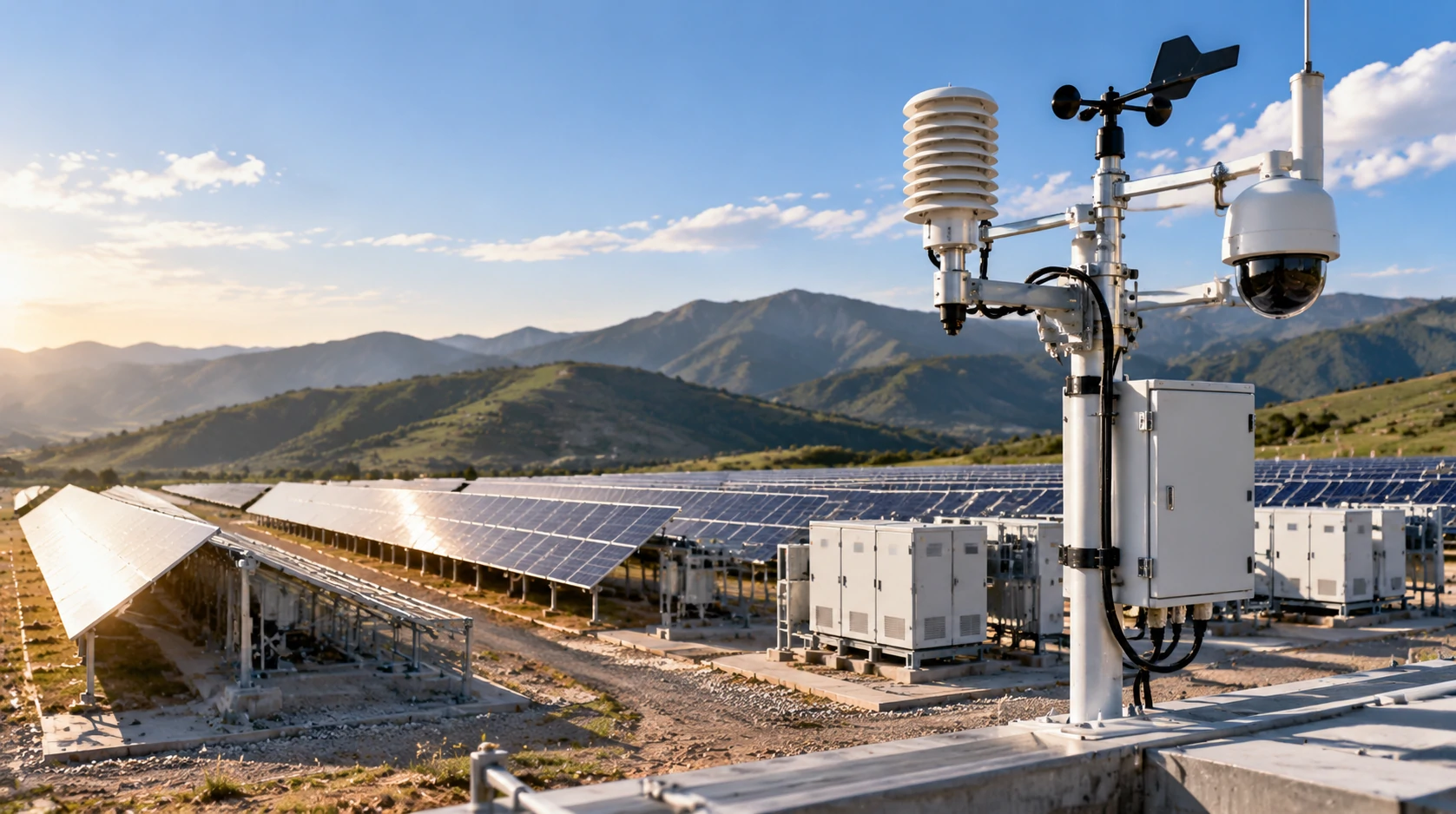
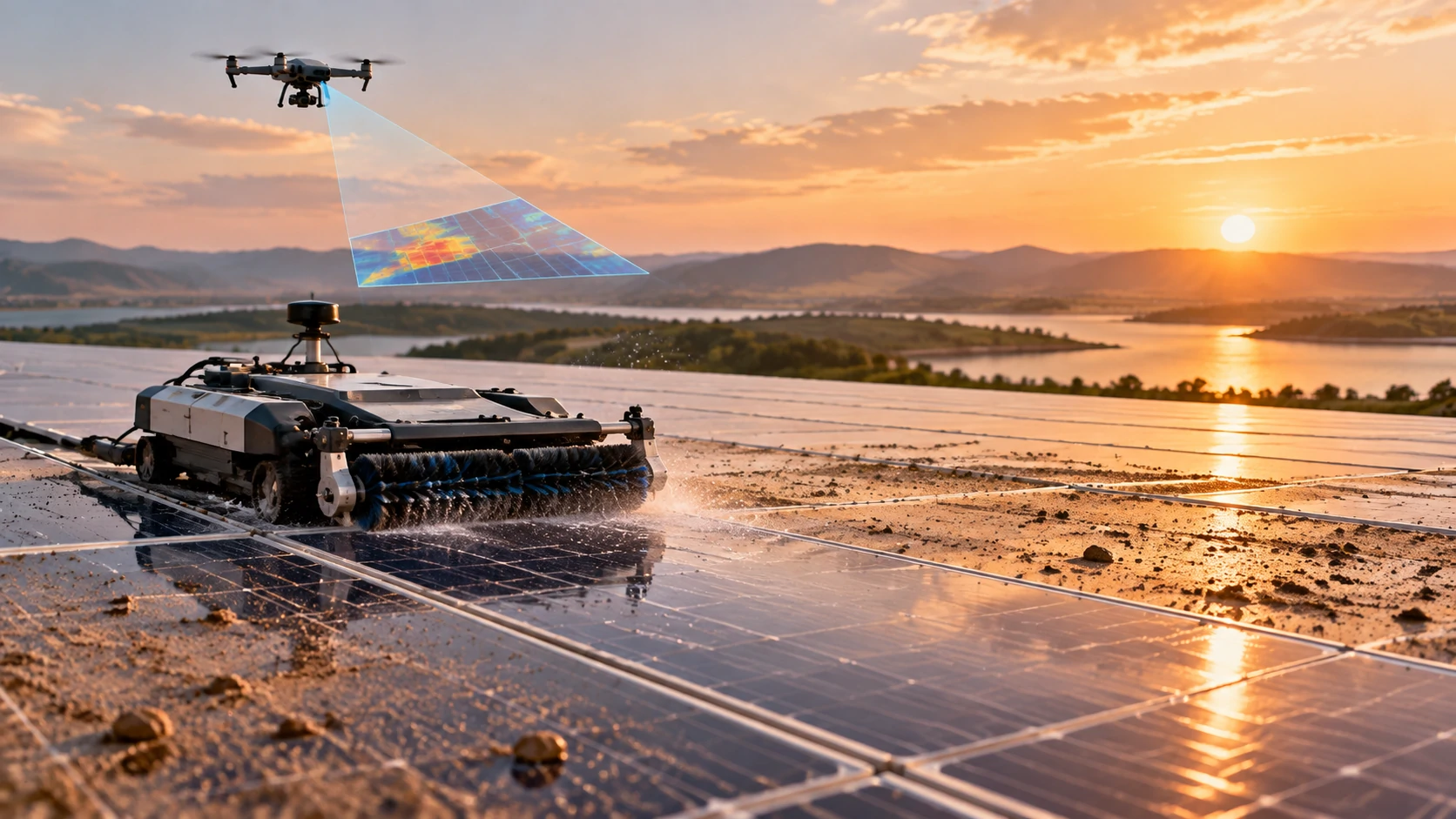
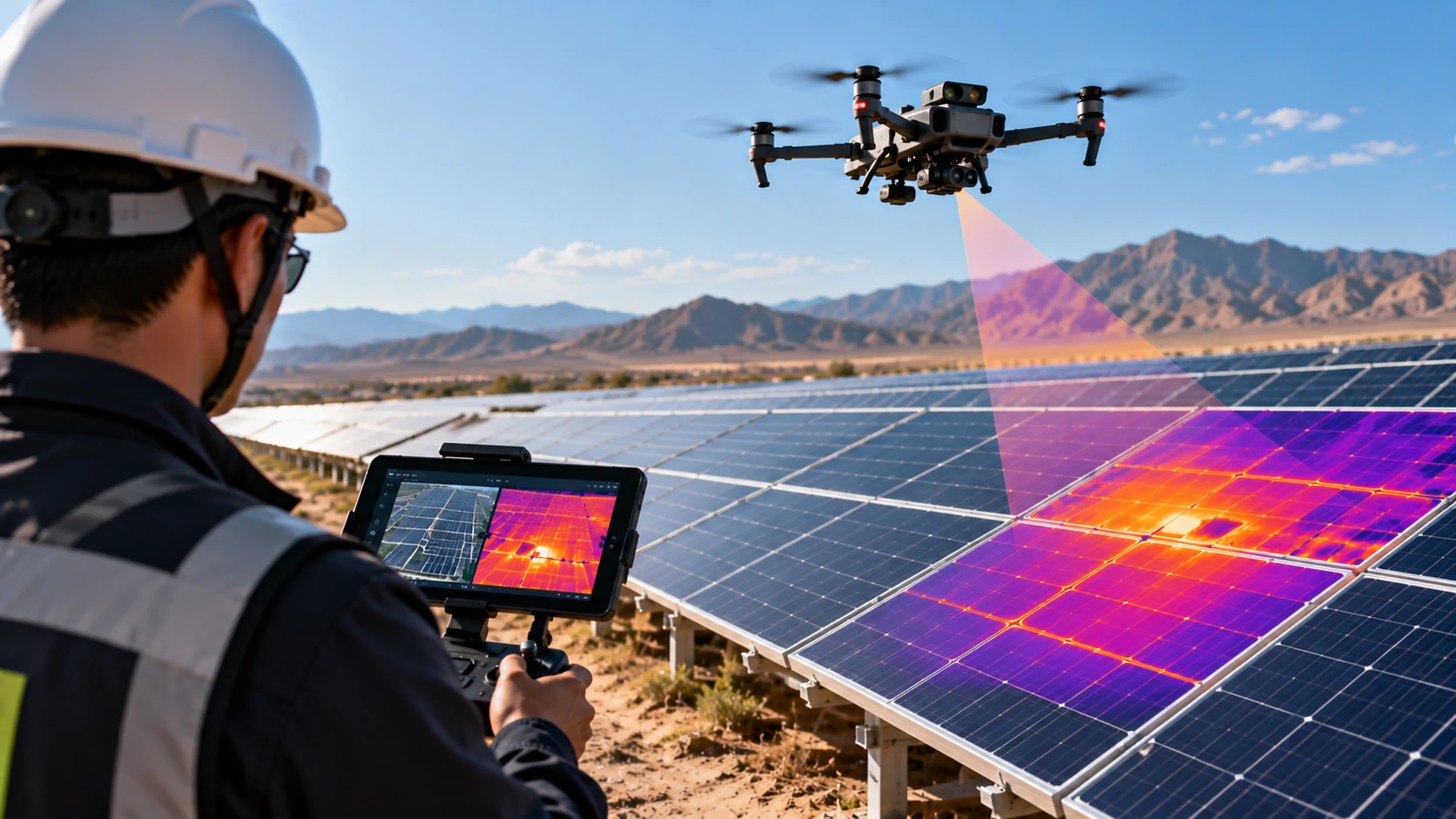
Live PV array inspection, thermal anomaly review, hotspot detection, and centralized solar O&M monitoring in one workflow.
Wind farms
Real-time blade inspection, turbine condition monitoring, remote supervision, and AI-assisted defect detection at the fleet level.
Power transmission lines
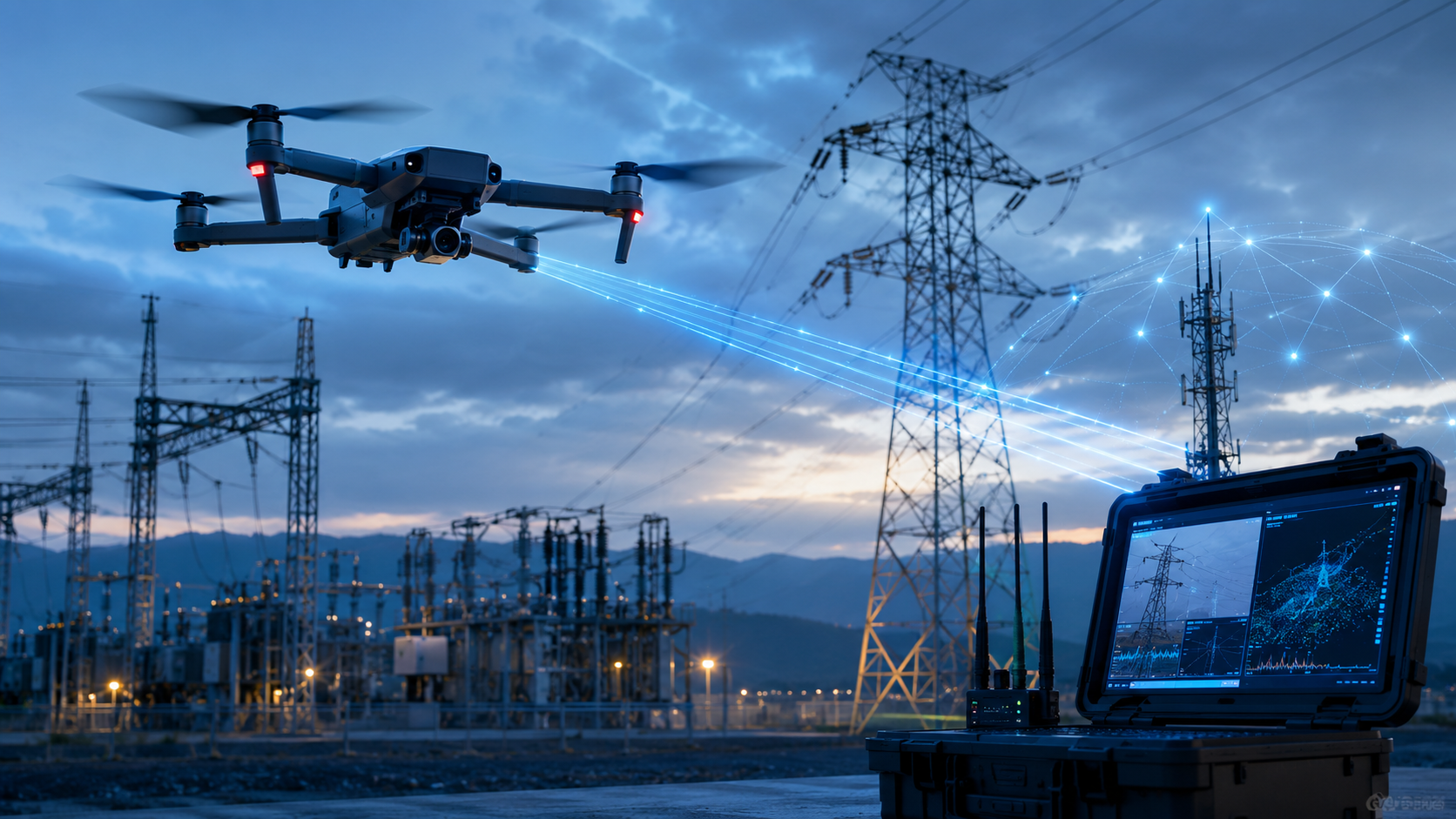
Long-distance corridor inspection, tower monitoring, insulator defect detection, and vegetation risk assessment across every mile.
Substations
Ties together drone docks, autonomous routes, live video, equipment monitoring, and digital twin inspection workflows.
Industrial sites
Safety monitoring, fire and smoke detection, restricted-area inspection, and remote visual supervision without putting people at risk.
Emergency response
Live aerial visibility during incidents, giving responders the picture they need to size up hazards and coordinate fast.
Benefits for inspection teams
Faster decision-making
Real-time video and telemetry let teams evaluate conditions during the mission — no waiting on post-flight review.
Better remote collaboration
Engineers, operators, and asset managers can jump into inspection data from anywhere and back up the field team in real time.
Reduced field exposure
Remote inspection and connected workflows keep personnel out of hazardous or hard-to-reach areas whenever possible.
Better data continuity
Live transmission, telemetry, and platform integration produce inspection records that are actually complete.
Stronger automation potential
5G is the connectivity layer that makes drone docks, autonomous routes, remote supervision, and scalable multi-site programs viable.
More responsive maintenance
AI-assisted findings and real-time alerts help maintenance teams prioritize follow-up before problems get worse.
What operators should think about
5G brings serious advantages, but rolling it out well takes planning. Operators need to weigh network coverage, bandwidth, latency budgets, cybersecurity, device compatibility, local regulations, workflow design, and system integration before committing.
For remote sites, one connectivity stack usually isn’t enough. The right architecture typically blends public 5G, private networks, industrial routers, edge computing, and platform-level management. For critical infrastructure, data security and access control move to the top of the list — right alongside speed and coverage.
WThink’s Industrial AI and 5G IoT portfolio is built for exactly these connected inspection requirements across energy, utilities, transportation, public safety, and industrial operations.
5G is what turns real-time drone inspection into a practical reality — low-latency video, remote control, telemetry streaming, edge AI collaboration, and centralized inspection management, all working together. Combine it with Industrial AI, edge computing, autonomous inspection systems, and smart software platforms, and operators finally leave offline data collection behind for genuinely connected, real-time infrastructure intelligence.
Frequently asked questions
Why is 5G useful for drone inspection?
5G delivers the low-latency video, remote control, telemetry, and fast data transfer that make drone inspection responsive and connected — the things older wireless links can’t consistently pull off.
Can 5G handle real-time drone video?
Yes. 5G supports live HD and 4K video from drones to remote operators, inspection platforms, and command centers with the latency headroom to actually be useful.
How does 5G support autonomous inspection?
It’s the connectivity layer behind mission supervision, route data transfer, remote control, drone dock communication, and live inspection feedback — the pieces autonomous workflows depend on.
How do 5G and edge AI work together?
5G moves inspection data fast. Edge AI processes it close to the field. Together they enable faster alerts and quicker decisions than either layer could deliver on its own.
Which industries benefit from 5G drone inspection?
Solar, wind, power transmission, substations, industrial sites, transportation infrastructure, public safety, and emergency response — anywhere real-time visibility and remote coordination change the outcome.