Transmission corridors are long, exposed, and hard to patrol at scale. BVLOS drone inspection gives utilities a smarter way to cover more ground, reduce field risk, and turn remote grid monitoring into a connected, data-driven workflow.
Why transmission line inspection is ready for a reset
Power transmission lines do not sit in convenient places. They run across mountains, forests, deserts, farmland, rivers, highways, and remote areas where access is slow, expensive, or risky. For utilities, those corridors have to be inspected anyway. Towers, conductors, insulators, fittings, grounding systems, vegetation, and nearby environmental risks all affect grid reliability.
Traditional patrol methods still have a role, but they are not built for the way modern utilities need to operate. Ground crews take time. Helicopters are expensive. Climbing introduces safety risk. Fixed cameras leave blind spots. Manual reports are often inconsistent from team to team.
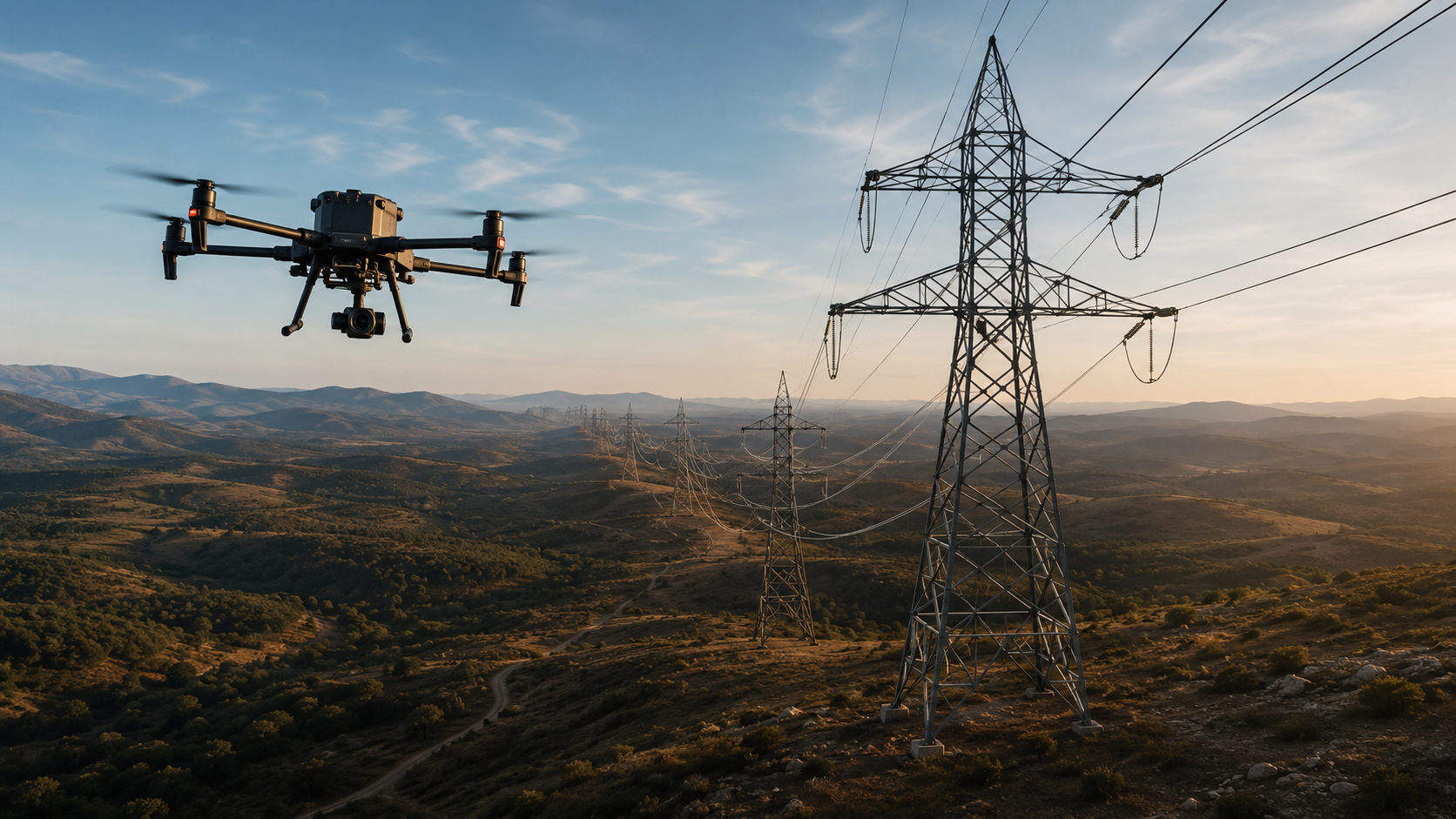
BVLOS drone inspection changes the operating model. Instead of treating each tower as a separate field stop, utilities can inspect longer corridor sections under approved operating conditions, stream data back to control teams, and use AI to help sort what matters from what does not.
For utilities, BVLOS is not just about flying farther. It is about moving from fragmented patrols to connected corridor intelligence.
What BVLOS actually means
BVLOS stands for beyond visual line of sight. In simple terms, the drone operates beyond the direct visual range of the pilot or observer. For power transmission inspection, that matters because the asset itself is linear. One line can run for miles, and the risks are spread across the entire corridor.
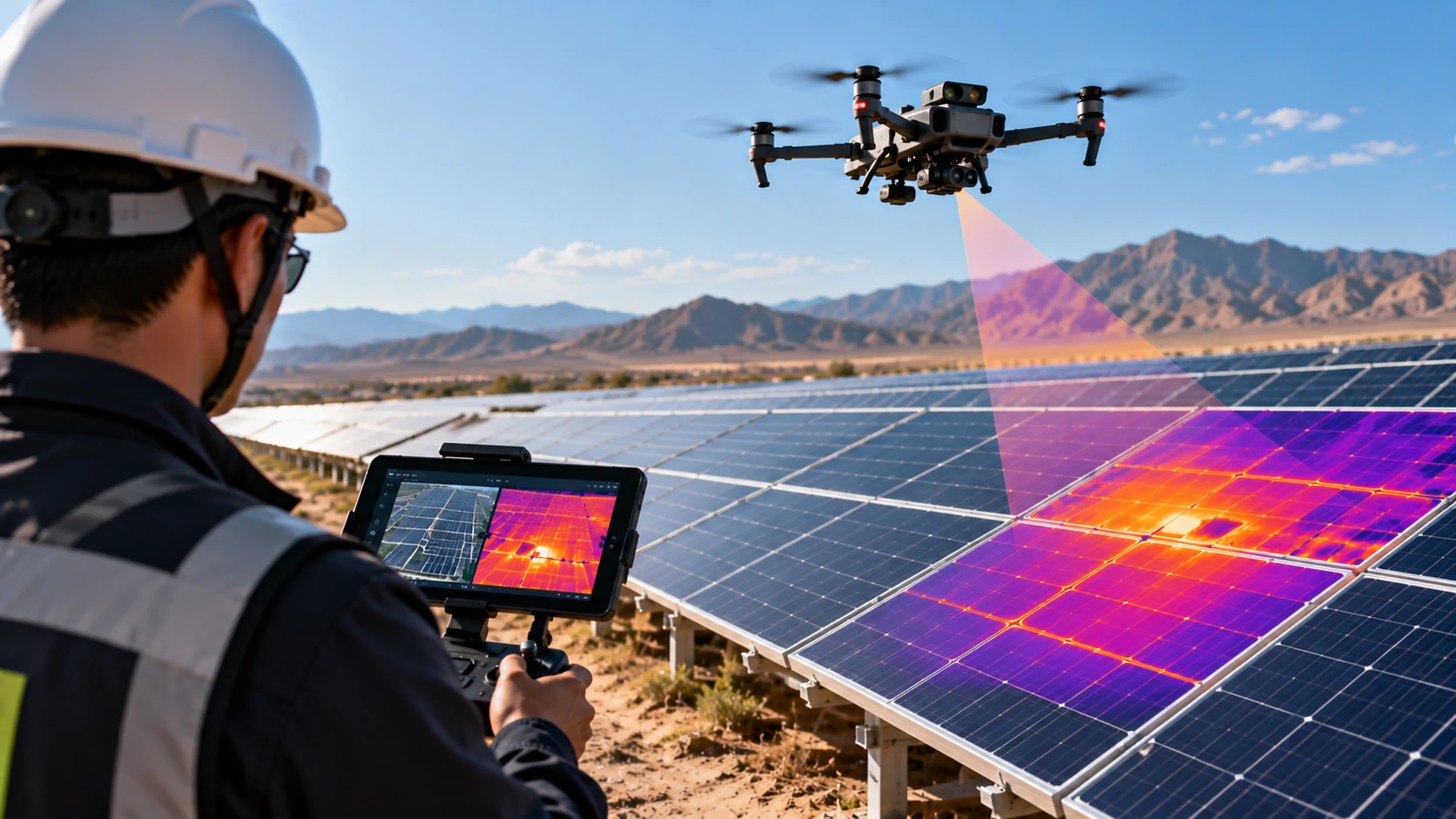
With BVLOS operations, utilities can inspect extended line segments without moving crews from tower to tower. A drone can follow a planned route, capture visual and thermal data, stream status information, and support remote supervision from a control center or field command point.
That does not mean BVLOS is a casual upgrade from a regular drone flight. It requires stronger planning, more reliable communication, clear safety logic, regulatory approval where required, and a complete workflow for turning the flight into actionable inspection results.
Why utilities are paying attention
The biggest reason utilities care about BVLOS inspection is scale. Transmission networks are too large for slow, scattered, manual workflows to remain the only option. A properly designed BVLOS program helps teams cover longer distances, reduce repeated site moves, and inspect remote areas with less field exposure.
It also supports faster response. After storms, wildfires, icing events, flooding, landslides, or major outages, utilities need to know what happened quickly. A connected BVLOS drone workflow can help identify damaged towers, downed conductors, foreign objects, vegetation risks, and access issues faster than broad ground patrols.
Safety is another major driver. Instead of sending teams into difficult terrain or exposing technicians to unnecessary climbing, drones handle the broad screening work. Crews can then focus on confirmed problem areas, verification, and repair.
What a BVLOS utility program needs
A successful BVLOS inspection program is not just a drone with a longer range. Utilities need the full operating stack: aircraft, connectivity, mission planning, AI analysis, safety procedures, data management, and maintenance follow-through.
Reliable command link
BVLOS flights depend on stable communication for remote control, mission supervision, telemetry, and safe aircraft operation.
Live video and telemetry
Operators need real-time visibility into video, flight status, location, altitude, battery level, device health, and mission progress.
Route planning
Routes should account for tower positions, line geometry, terrain, airspace limits, obstacles, and inspection image requirements.
AI defect recognition
AI helps flag damaged insulators, conductor issues, tower defects, foreign objects, vegetation risks, and abnormal corridor conditions.
Emergency logic
Utilities need clear procedures for signal loss, low battery, weather changes, aircraft faults, airspace conflicts, and return-to-home events.
Structured data management
Inspection results should be organized by line, tower, segment, defect type, location, severity, and maintenance priority.
How 5G supports BVLOS inspection
BVLOS inspection lives or dies on communication. The drone has to transmit telemetry, video, command data, device status, and mission information over distance. 5G gives utilities a stronger foundation for that kind of connected operation.
With the right 5G architecture, drones can connect to remote operators, command centers, edge AI devices, and inspection platforms. That supports live video review, mission supervision, route status tracking, and faster response when the system detects something unusual.
WThink supports this type of connected inspection workflow through products such as the M3X 5G drone data link module, which is designed for drone communication, video transmission, telemetry, and remote operation scenarios.
Where edge AI fits in
A long transmission corridor can generate a massive amount of inspection data. One BVLOS mission may produce thousands of images, video clips, thermal readings, location records, and telemetry events. If every frame has to wait for manual review, the speed advantage starts to disappear.
Edge AI helps close that gap by processing data closer to the field. It can support preliminary defect recognition, image quality checks, abnormal event detection, and faster alerting while the inspection is still active.
5G moves inspection data fast. Edge AI helps turn that data into maintenance decisions before the value of real-time visibility is lost.
For transmission lines, AI can help identify cracked or contaminated insulators, missing components, loose fittings, tower corrosion, foreign objects, vegetation encroachment, conductor abnormalities, and other risks that deserve a closer look. WThink’s WD5500 edge AI module and Autonomous Inspection System support workflows where drones, edge devices, AI algorithms, and centralized platforms work as one system.
What BVLOS inspection can help detect
Power transmission inspection is not only about checking the equipment. It is also about understanding what is happening around the corridor. Drone-based visual, thermal, and AI-assisted inspection can help utilities monitor both asset condition and environmental risk.
Insulator damage
Detects cracked, broken, contaminated, missing, or abnormal insulators that may increase electrical and reliability risk.
Conductor abnormalities
Supports inspection of broken strands, sagging, foreign objects, overheating signs, and other abnormal line conditions.
Tower and fitting defects
Helps identify corrosion, loose components, missing bolts, deformation, damaged fittings, and other structural concerns.
Vegetation encroachment
Monitors trees, shrubs, and vegetation growth near the corridor that may threaten line clearance or create outage risk.
Foreign objects
Detects kites, plastic film, branches, bird nests, construction materials, and other objects near conductors and towers.
Post-event damage
Supports inspections after storms, wildfires, flooding, landslides, snow, icing, or other events that may affect the corridor.
A practical BVLOS inspection workflow
Define mission scope and approval requirements
Utilities should confirm the inspection objective, operating area, local rules, risk controls, emergency procedures, and data security requirements before flight.
Build the route and inspection logic
Mission planning should use tower locations, line geometry, terrain data, obstacle information, digital twin models, and required image angles.
Establish communication and monitoring
5G, industrial wireless networks, edge devices, and control platforms support telemetry, live video, command transmission, and mission supervision.
Capture visual, thermal, and corridor data
The drone collects inspection data along the transmission line while sending flight status and mission data back to the operator or control center.
Run AI-assisted defect recognition
AI systems help identify equipment defects, corridor risks, abnormal conditions, and inspection priorities for engineering review.
Prioritize maintenance response
Utilities use inspection results to plan repair, vegetation management, emergency response, or targeted manual verification.
Safety and compliance cannot be an afterthought
BVLOS drone inspection should be treated as a formal utility operation, not a casual flight extension. Before deployment, utilities need to define the operating area, flight altitude, aircraft performance requirements, communication link reliability, emergency landing logic, operator responsibility, airspace coordination, and data security controls.
Teams should also evaluate weather, terrain, nearby roads, populated areas, aviation activity, network coverage, and line safety requirements. For critical infrastructure, cybersecurity and access control should sit inside the system design from day one.
BVLOS rules vary by market, so utilities should work with qualified operators, aviation authorities, and technical partners to build a program that fits local regulatory requirements and internal safety standards.
Benefits for utility teams
More corridor coverage
BVLOS inspection helps utilities cover longer transmission line sections with fewer field relocations and less wasted travel time.
Less field exposure
Drones reduce unnecessary access to remote terrain, climbing tasks, and hard-to-reach corridor environments.
Faster abnormality response
Live data transmission and AI-assisted alerts help teams identify and respond to issues before they escalate.
More consistent records
Planned routes, standardized image capture, and structured reporting make inspection results easier to compare over time.
Smarter maintenance prioritization
Defect type, location, severity, and corridor risk data help utilities focus people and budget where they matter most.
Scalable grid monitoring
BVLOS workflows can support multi-line, multi-region, and multi-site inspection programs across large utility networks.
Where WThink fits in
WThink supports power transmission inspection with Industrial AI, 5G connectivity, edge computing, autonomous inspection systems, and AI-powered software platforms. These technologies help utilities connect drones, field devices, inspection data, and control centers into a more responsive inspection workflow.
For transmission line operations, WThink’s Power Transmission solution can support corridor monitoring, drone inspection, AI defect recognition, live data transmission, and centralized O&M management.
By combining 5G drone communication, edge AI modules, autonomous inspection workflows, and structured reporting, utilities can move away from scattered inspection files and toward a connected grid inspection system.
BVLOS drone inspection gives utilities a safer, more scalable, and more data-driven way to monitor power transmission lines. The real value comes from the full system around the drone: 5G connectivity, edge AI, route planning, regulatory readiness, emergency procedures, data security, and maintenance workflows. When those pieces work together, BVLOS inspection becomes a practical path toward faster corridor awareness and more reliable grid operations.
Frequently asked questions
What is BVLOS drone inspection?
BVLOS drone inspection means the drone operates beyond the direct visual range of the operator or observer. For utilities, it can support longer-distance inspection of power transmission corridors under approved operating conditions.
Why is BVLOS useful for transmission line inspection?
Transmission lines are long, distributed assets. BVLOS inspection helps utilities cover more corridor distance, reduce field movement, and inspect remote or difficult terrain more efficiently.
What role does 5G play in BVLOS inspection?
5G supports live video transmission, telemetry, remote control, mission supervision, and the connection between drones, edge devices, and control centers.
Can AI detect transmission line defects?
AI can help detect insulator damage, foreign objects, conductor abnormalities, tower defects, vegetation risks, and other corridor issues. Human review remains important for final maintenance decisions.
Do BVLOS inspections require regulatory approval?
In many markets, yes. BVLOS drone operations often require specific permissions, safety procedures, or operational approvals. Utilities should follow local aviation rules and project-specific compliance requirements.