

Project Background and the Challenges of Wide-Area Grid Portfolios
Managing a wide-area electricity transmission network requires constant, coordinated supervision over vast geographic expanses. A major power grid utility responsible for thousands of kilometers of high-voltage overhead lines and hundreds of regional substations faced immense operational fragmentation. Historically, the utility operated multiple legacy systems: SCADA for electrical load and substation status, a standalone database for manual and drone flight logs, localized video surveillance for perimeter security, and physical paper-based work orders for maintenance dispatch. This siloed digital architecture forced operators at the central headquarters to constantly jump between isolated software applications, compile manual spreadsheets, and manage field maintenance teams over phone and email.
Operational Obstacles in Siloed Command Environments
This fragmented monitoring approach introduced critical safety risks and prolonged response times. When a localized emergency occurred—such as a transformer thermal anomaly in a remote substation or vegetation encroaching on a major transmission line during a storm—centralized planners remained unaware until site crews manually reported the incident. Furthermore, because drone-based and robotic inspections were scheduled and tracked independently at the regional level, corporate engineers could not monitor overall inspection progress, ensure standard testing quality, or correlate detected physical defects with actual grid performance metrics. To maintain grid stability and optimize operations, the utility required a unified command center.
Implementing WThink’s Centralized Grid Operation Solution
To streamline wide-area operations and enhance overall network safety, the utility deployed WThink’s Centralized Grid Operation Platform. This advanced software unifies data streams from all connected regional substations and transmission sectors into a single digital hub at the central headquarters. By utilizing robust industrial IoT networks and edge-computing processing, the platform aggregates hundreds of thousands of sensor data points, combining daily robotic inspections, real-time safety monitoring, and grid telemetry into a single, high-fidelity command interface.
Wide-Area Telemetry and Multi-Site Integration
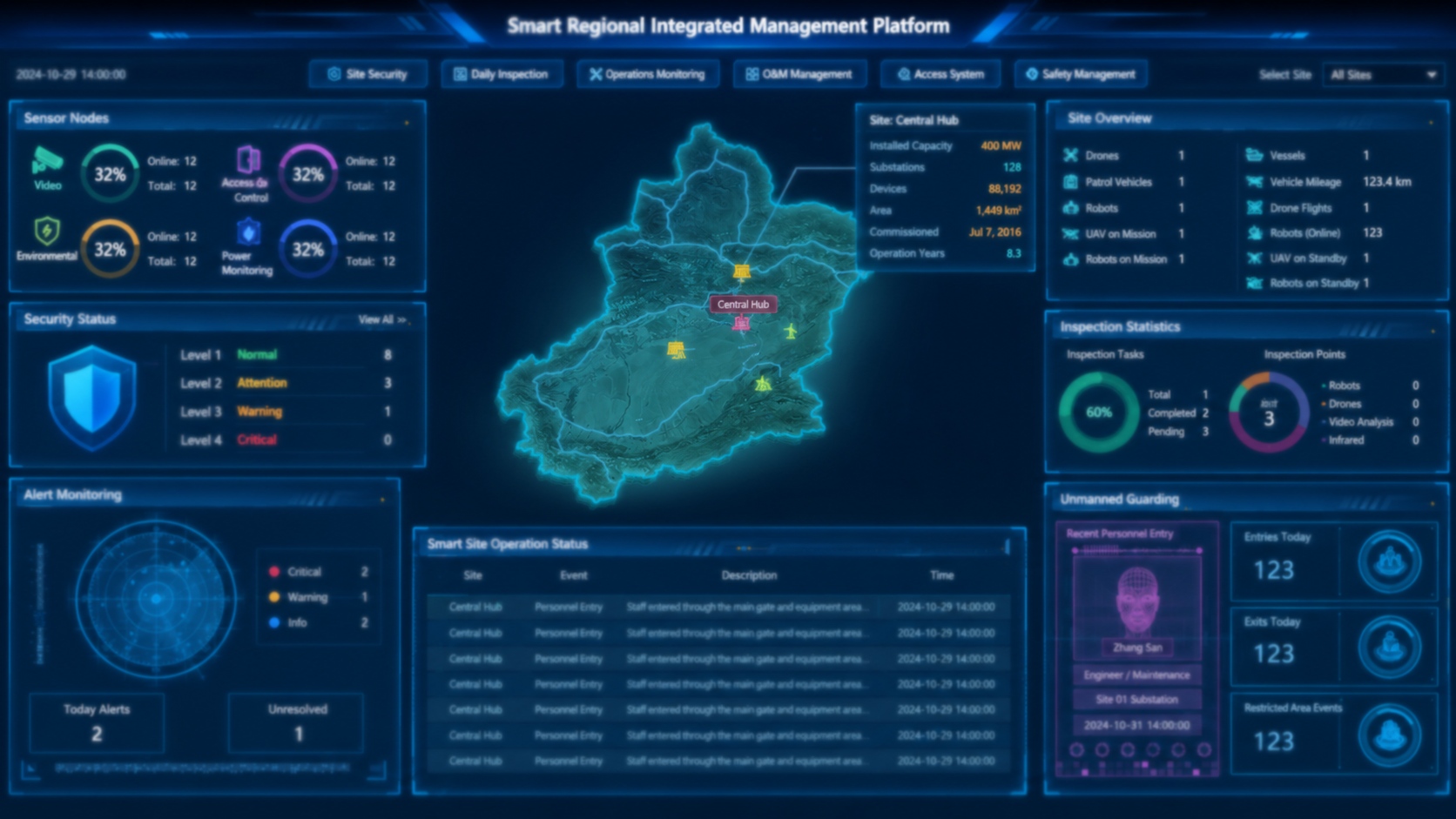
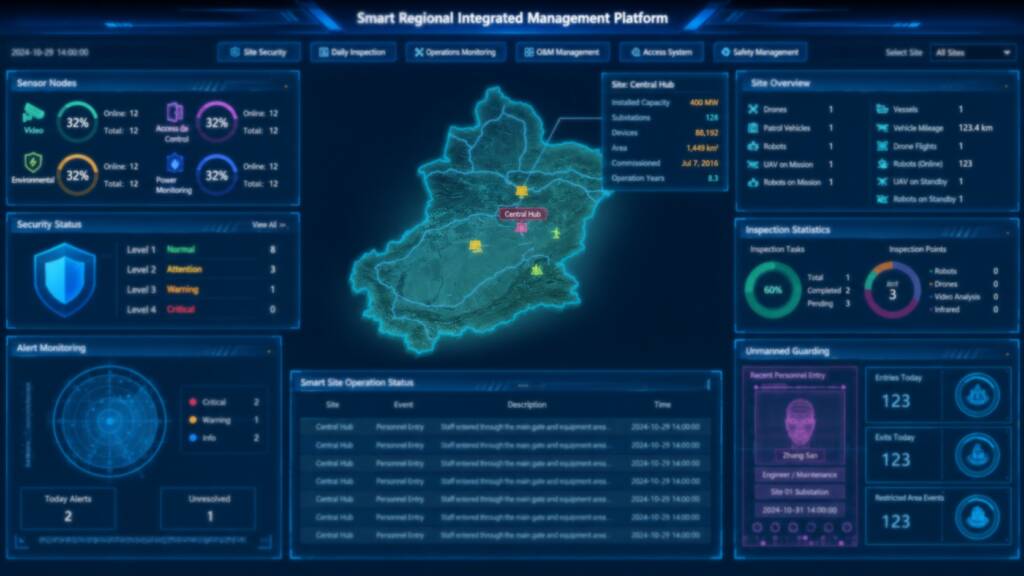
The centralized platform unifies wide-area operations through an interactive visual map displaying the real-time operational status of connected transmission sectors and central substation hubs. The system aggregates real-time indicators from various sensor nodes—including high-definition cameras, environment sensors, access control terminals, and power monitors—and displays their online rates. Under a unified dashboard, operations coordinators can immediately monitor overall security status distributions, review incoming alerts categorized by severity, and track the real-time resolution of active warnings. This instant data correlation allows the central team to monitor physical safety parameters and grid load across multiple regions simultaneously.
Smart Access Auditing and Automated O&M Workflows
The integration of restricted-area access control, automated robotics, and drone patrols within a single system closes the loop between fault detection and field remediation. The platform’s smart site operation panel displays real-time entry and exit logs, performing automated facial recognition and personal protective equipment compliance checks at key entry points like turbine halls and high-voltage substations. Simultaneously, the platform monitors automated inspection tasks and robotic patrol progress, highlighting identified defects. When an anomaly is flagged—such as a motherboard failure or abnormal heat on a feeder line—the system automatically logs the event and coordinates with the local site’s O&M team. The deployment of WThink’s Centralized Grid Operation Platform has successfully unified the client’s fragmented grid operations, reducing reporting delays, minimizing the risk of forced outages, and establishing a scalable, data-driven standard for modern wide-area power grid management.