PV hotspots can indicate hidden electrical and performance problems that are difficult to identify through visual inspection alone. By combining thermal imaging, drones, AI analytics, and operational data, solar operators can detect abnormal heat patterns earlier and make smarter O&M decisions.
Why PV hotspot detection matters
Photovoltaic modules operate outdoors under constantly changing environmental conditions. Over time, cells, connectors, bypass diodes, and other components can develop abnormalities that affect energy production and equipment reliability.
One important warning sign is a PV hotspot — an area of a solar module that becomes significantly hotter than surrounding cells or modules during operation.
Hotspots are not always visible in conventional photographs. This is why thermal imaging has become an important technology for modern solar O&M, especially when inspecting large-scale photovoltaic power plants.
Thermal imaging provides an additional layer of inspection data, helping operators identify abnormal heat patterns that may otherwise remain hidden during conventional visual checks.
What is a PV hotspot?
A hotspot occurs when a portion of a photovoltaic module operates at a higher temperature than the surrounding cells. This can happen when part of a module generates less current while the rest of the module continues operating.
Possible causes include cell cracks or damage, partial shading, soiling, electrical resistance, defective bypass diodes, poor connections, module degradation, and manufacturing defects.
A hotspot is not itself a complete diagnosis. It is an important inspection signal that indicates an area may require further investigation. If abnormal heating continues for an extended period, it can contribute to accelerated module degradation and potentially reduce long-term PV performance.
Why traditional PV inspection can miss hotspots
Standard visual inspections are useful for identifying obvious physical problems such as broken glass, discoloration, damaged frames, or visible wiring issues.
However, many electrical abnormalities are difficult to see with the naked eye. A module can appear normal while showing a significant temperature difference during operation.
For large solar farms, manually checking every module is also inefficient. Thousands of modules may be distributed across a large site, making continuous close-range inspection impractical.
Thermal imaging provides another layer of information by showing how heat is distributed across the PV system.
How thermal imaging detects PV hotspots
Thermal cameras detect infrared radiation and convert temperature differences into visual thermal patterns.
During a properly planned inspection, an operating PV module typically shows relatively consistent thermal characteristics under similar conditions. An abnormal temperature region can therefore stand out from neighboring cells or modules.
Localized hotspots
Thermal imaging can reveal areas with unusually high temperatures compared with surrounding cells or modules.
Abnormal heat distribution
Uneven temperature patterns can provide clues about potential electrical or module-level abnormalities.
Potential connection issues
Abnormal heating may indicate resistance or connection-related conditions that require further technical verification.
Module-level anomalies
Thermal inspection helps maintenance teams identify individual modules or sections that behave differently from nearby assets.
A thermal image does not replace engineering diagnosis. Instead, it helps maintenance teams quickly identify where closer inspection should be performed.
Why drones make thermal inspection more efficient
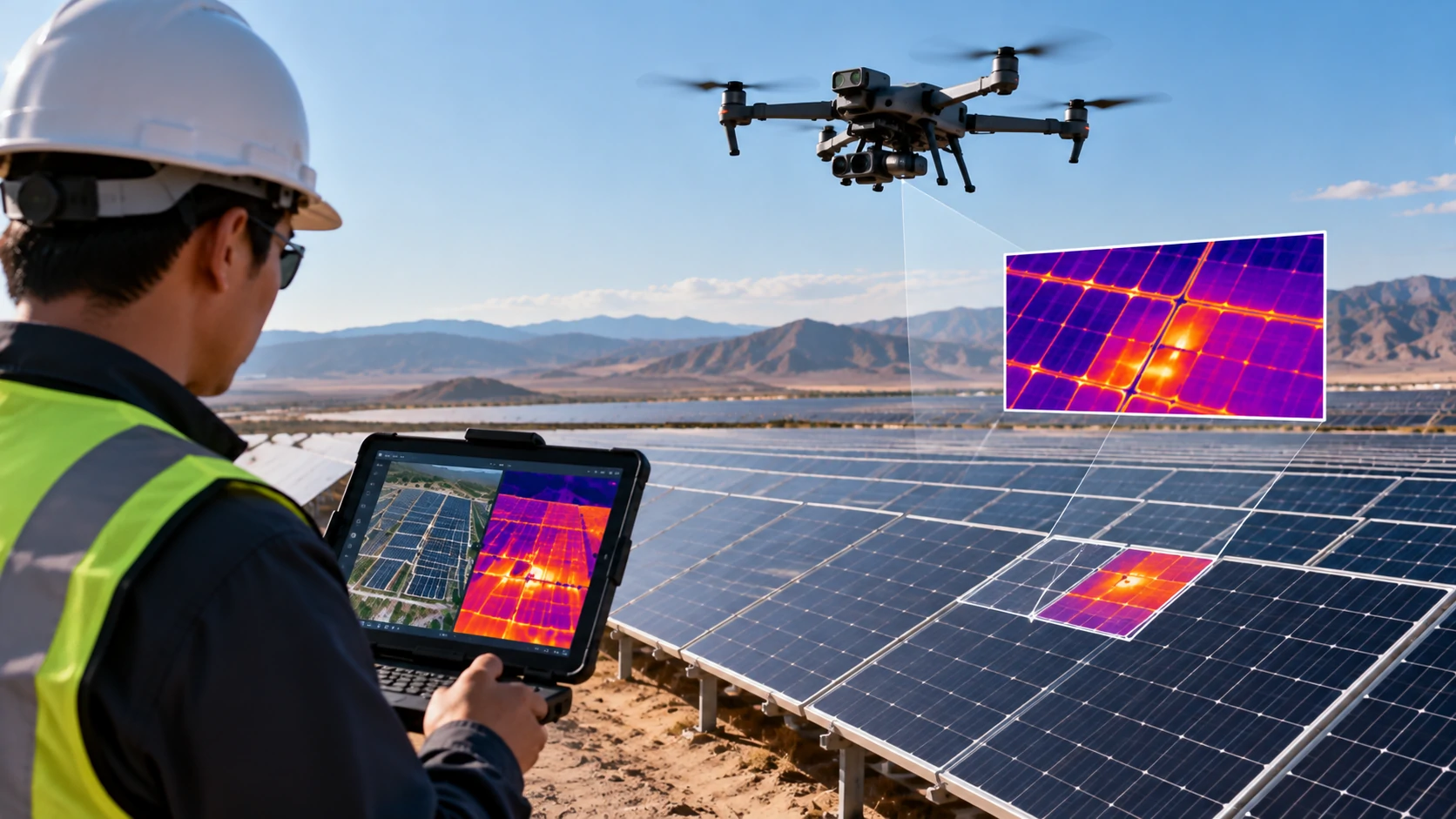
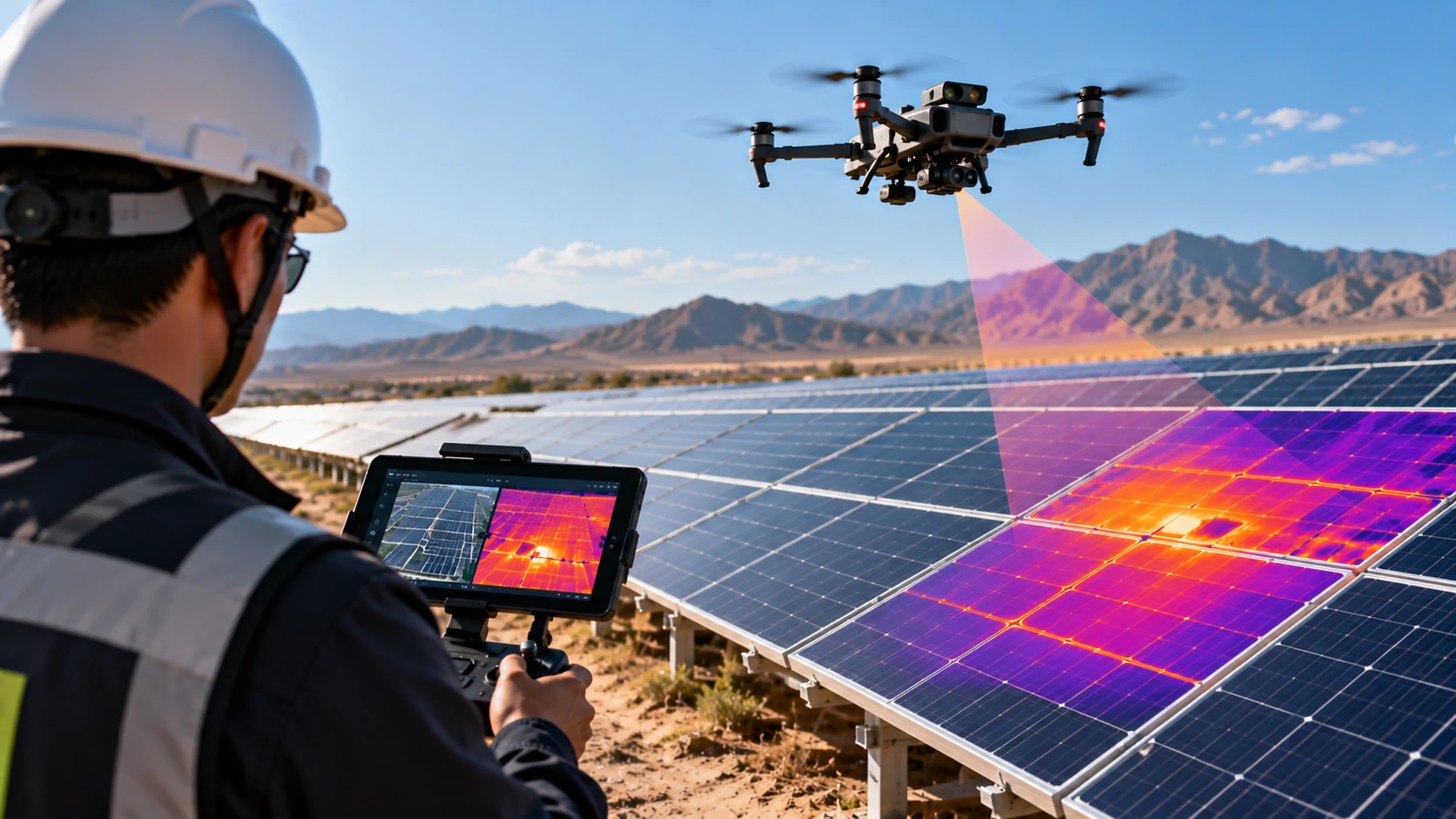
Large-scale solar farms can contain thousands of modules spread across extensive areas. Using drones equipped with thermal and high-resolution cameras allows operators to inspect large sections of a plant efficiently.
A typical drone inspection can collect RGB images, thermal images, GPS coordinates, module location information, and inspection timestamps.
The combination of visual and thermal data is particularly valuable. A thermal image may reveal an abnormal hotspot, while the corresponding RGB image helps operators understand the physical condition of the module.
With accurate positioning, maintenance teams can then locate the affected module in the field without searching through an entire solar array.
How AI improves PV hotspot detection
Thermal inspection can generate thousands of images during a single solar farm inspection. Manually reviewing every image takes considerable time and can introduce inconsistency.
AI helps automate the initial screening process. AI-based inspection systems can analyze thermal and visual images to identify abnormal temperature patterns, potential hotspots, damaged modules, repeated defect patterns, and areas requiring further inspection.
AI can also combine inspection results with operational information.
When thermal anomalies and abnormal power output appear together, combining these signals can provide stronger evidence for targeted field verification.
For example, if a PV section shows abnormal thermal behavior and its power output is also lower than comparable sections, the combined evidence provides a stronger basis for further investigation.
PV hotspot detection workflow
Plan the inspection
Define the inspection area, flight route, environmental conditions, and required image quality before the mission begins.
Capture thermal data
Drones equipped with thermal cameras collect infrared images across the photovoltaic plant together with visual and positioning data.
Analyze temperature patterns
Thermal data is processed to identify abnormal temperature differences and potential hotspot patterns.
Locate potential defects
Thermal anomalies are associated with specific module or array locations using positioning information.
Verify and prioritize
Maintenance teams combine thermal evidence with visual inspection and operational data to determine which issues require attention first.
Benefits of thermal imaging for solar O&M
Earlier problem detection
Thermal imaging can reveal abnormal heating that may not yet be visible through conventional visual inspection.
Faster large-scale inspection
Drone-based thermal inspection allows operators to survey large PV areas more efficiently than conventional manual patrols.
Reduced manual workload
AI-assisted analysis reduces the need for technicians to manually review every thermal image.
Better maintenance prioritization
Potentially serious thermal anomalies can be prioritized for field verification and repair.
Improved asset management
Inspection records can be stored and compared over time, helping operators track recurring problems and long-term module performance.
More targeted O&M decisions
Combining thermal, visual, and operational data helps maintenance teams focus resources on areas with the greatest potential impact.
From thermal images to smarter solar O&M
Thermal imaging is most valuable when it becomes part of a larger solar O&M workflow rather than operating as an isolated inspection tool.
Modern photovoltaic management can connect thermal cameras with drones, AI analytics, plant monitoring systems, and centralized O&M platforms. This creates a continuous information flow from inspection to detection, verification, and maintenance.
WThink’s intelligent renewable energy solutions integrate inspection technologies and digital analytics to help operators turn field data into actionable maintenance information.
The future of PV hotspot detection
As photovoltaic plants become larger, automated inspection will become increasingly important.
Future solar inspection systems will combine thermal imaging, autonomous drones, AI defect detection, edge computing, real-time communication, and centralized asset management.
The objective is not simply to find more defects. It is to identify the right problems earlier, understand their potential impact, and help maintenance teams respond more efficiently.
PV hotspot detection is an important part of modern photovoltaic inspection. Because many electrical and performance problems cannot be identified through visual inspection alone, thermal imaging provides valuable information about abnormal heat patterns across solar modules. When thermal cameras are combined with drones, AI analytics, positioning technology, and operational data, solar operators can detect potential issues earlier, reduce inspection workload, and make more informed O&M decisions.
Frequently asked questions
What is a PV hotspot?
A PV hotspot is an area of a photovoltaic module that operates at a significantly higher temperature than surrounding cells or modules. It can indicate an electrical, component, environmental, or performance-related issue that requires further investigation.
Why is thermal imaging useful for PV inspection?
Thermal imaging reveals temperature differences that may not be visible in conventional photographs, helping operators identify potential hotspots and other abnormal thermal patterns.
Can drones detect PV hotspots?
Yes. Drones equipped with thermal cameras can survey large photovoltaic areas and capture infrared data that can be analyzed to identify potential hotspot locations.
How does AI improve PV hotspot detection?
AI can automatically analyze large volumes of thermal and visual inspection data, identify abnormal patterns, and highlight modules or areas that require further investigation.
Does a thermal anomaly always mean a PV module is defective?
No. A thermal anomaly is an inspection signal rather than a final diagnosis. Operators should consider operating conditions, environmental factors, visual evidence, and electrical measurements before confirming a defect.