WThink helped a 100MW PV station in Sichuan move from slow manual walking inspections to an automated drone inspection workflow, reducing full-site inspection time from about 45 working days to about 2 working days.
Project background
The solar plant includes approximately 400,000 PV modules. Previously, a two-person team walked the site with handheld infrared thermal imaging equipment, checking the array row by row. One full-site inspection took about 45 working days.
This manual approach created long inspection cycles, inconsistent image angles, scattered records, and heavy outdoor exposure for technicians. Once an abnormal module was found, the team still needed extra time to locate the exact component and verify the issue on site.
The customer needed a faster, more repeatable inspection method that could increase coverage without adding inspection staff.
Drone inspection workflow
WThink introduced an automated drone inspection workflow built around fixed flight routes, visible-light imaging, thermal data collection, AI defect recognition, component positioning, and structured reporting.
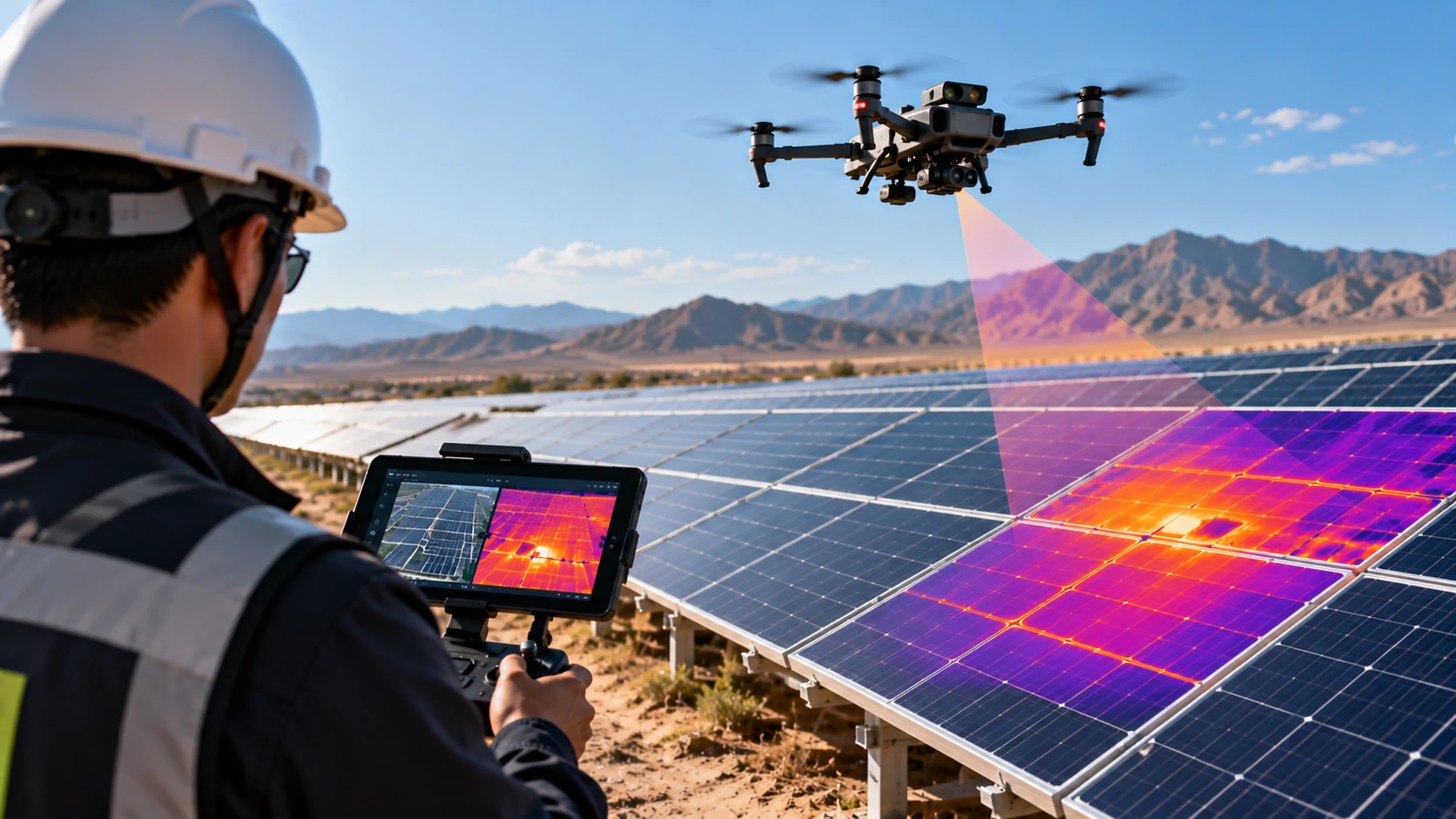
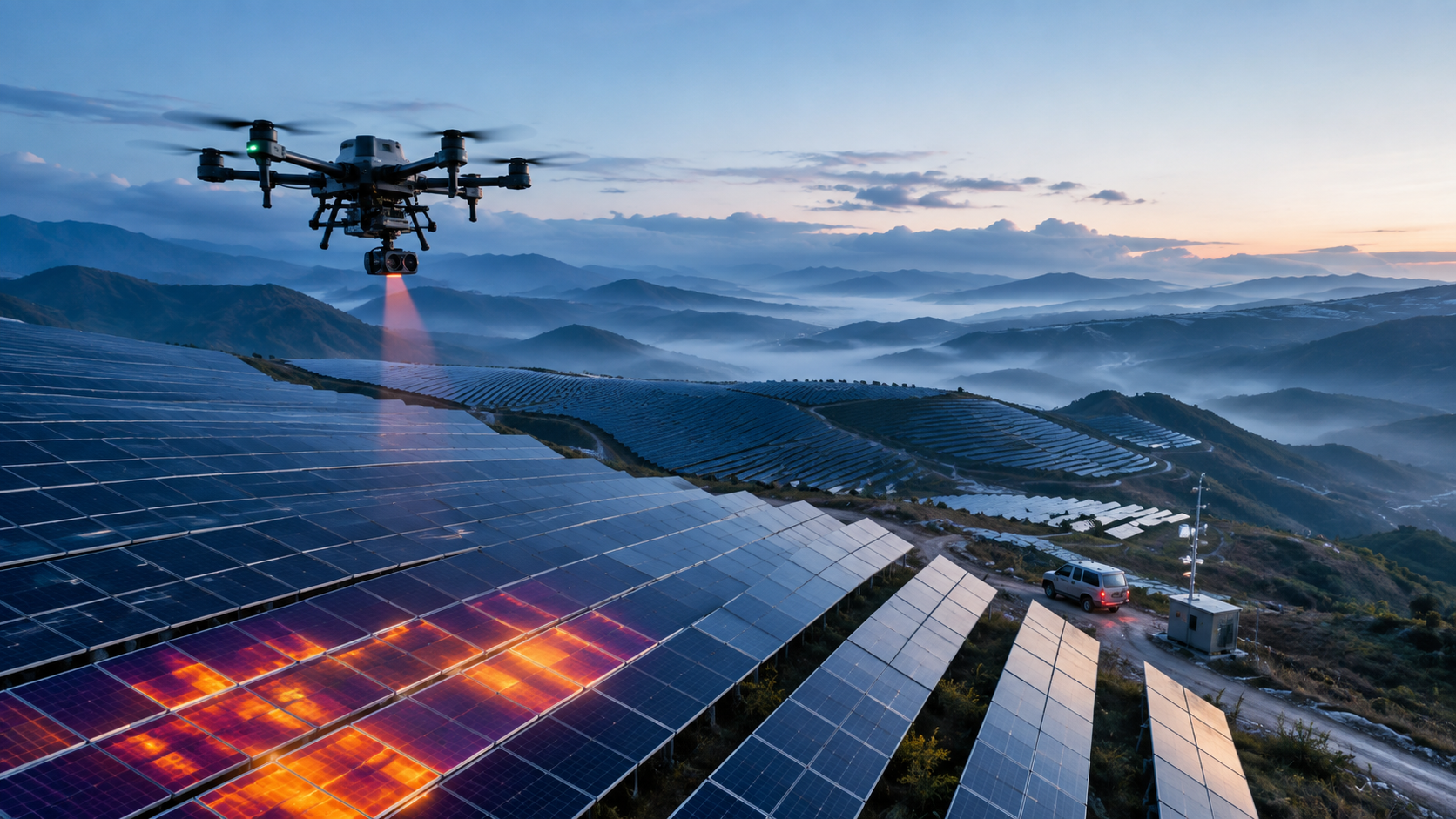
Before flight, routes were planned around array layout, terrain, obstacles, altitude, speed, camera angle, and image overlap. During inspection, the drone followed preset routes and collected visual and thermal images by area. The platform recorded flight tracks, device status, image data, and inspection results in one workflow.
AI analysis helped identify hotspots, shading, soiling, damaged modules, missing components, and other abnormal conditions. Findings were linked to station zones, arrays, and module positions, helping O&M teams locate defects faster and reduce repeated manual searching.
Key capabilities
Fixed flight routes
Standardized routes improve consistency across inspection cycles and reduce variation caused by manual data collection.
Visual and thermal capture
Visible-light and thermal images are collected together to support defect detection, review, and verification.
AI defect recognition
AI helps identify hotspots, shading, soiling, damaged modules, missing parts, and other PV field abnormalities.
Module-level positioning
Defect images are mapped to station areas, arrays, and module locations to support faster maintenance response.
Project results
With the same two-person team, the drone workflow can cover about 2 to 3 square kilometers per day. Full-site inspection time was reduced from about 45 working days to about 2 working days, shortening the inspection cycle by approximately 95%.
Inspection efficiency improved to about 22 times the manual method. Standardized visual and thermal data also made cross-cycle comparison, defect review, and maintenance planning easier. The structured report connects flight tracks, defect statistics, image records, and component locations, shortening the path from issue discovery to field repair.
95% shorter inspection cycle
Full-site inspection dropped from about 45 working days to about 2 working days.
22x efficiency improvement
The same two-person team can complete inspection work much faster through automated drone routes.
Clearer defect location
Inspection findings are tied to images, coordinates, arrays, and module positions for faster field repair.
Lower field exposure
Drone inspection reduces long-distance walking and lowers safety risks in large PV fields.
This 100MW solar drone inspection case shows how automated flight routes, thermal imaging, AI defect recognition, module positioning, and structured reporting can dramatically improve PV inspection efficiency. For large solar plants, drone inspection is not only faster than manual walking patrols; it also creates more consistent data, reduces field safety risks, and gives O&M teams a clearer path from inspection findings to maintenance action.