A solar PV monitoring system gives utility-scale operators the visibility they need to run generation, equipment health, field safety, inspection data, and maintenance priorities across sprawling PV plants. The best systems do more than push alarms — they turn plant data into faster, smarter O&M decisions.
Why utility-scale solar plants need real monitoring
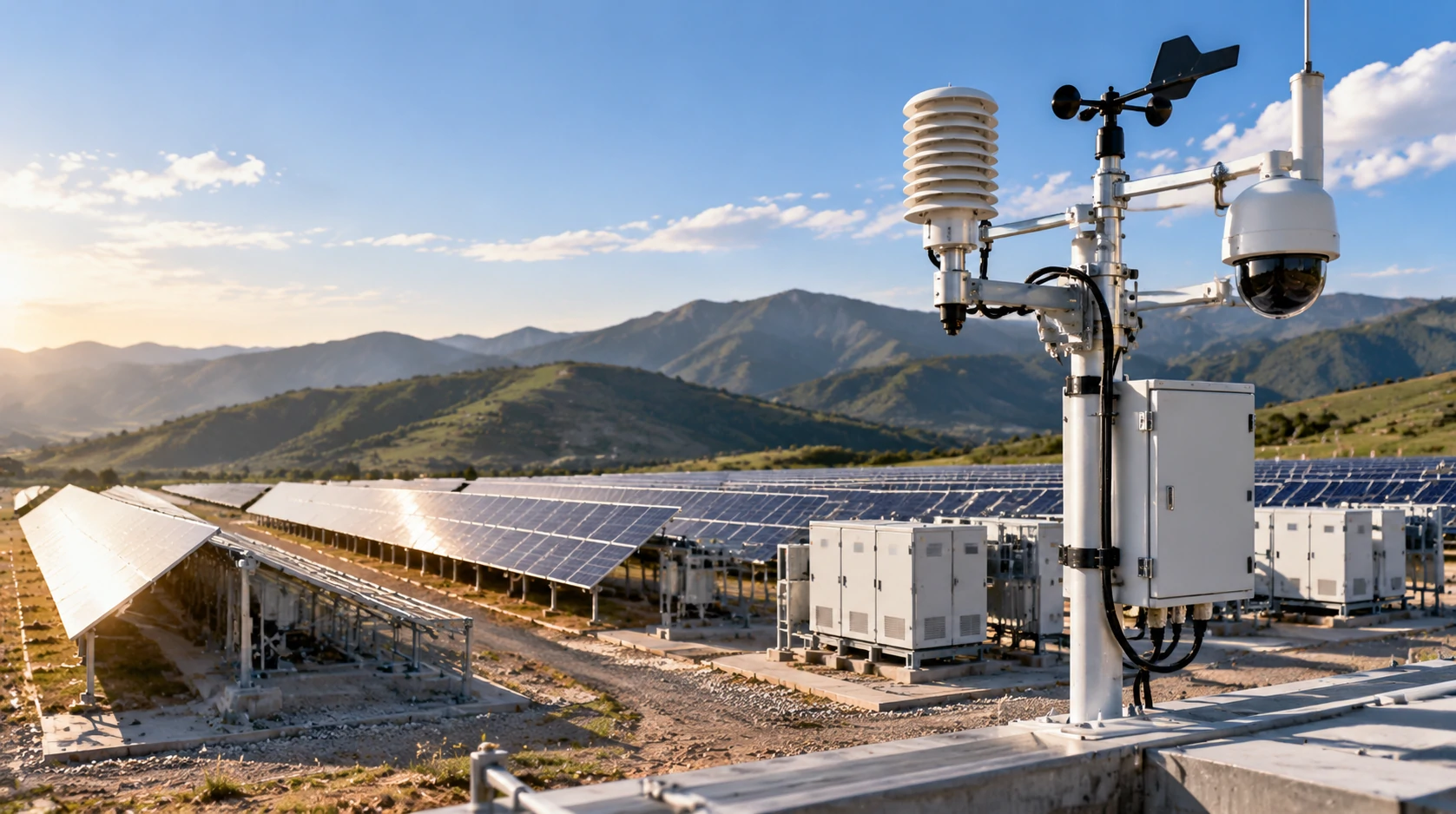
Utility-scale solar plants are large, distributed, and constantly in motion. A single site packs in thousands of PV modules, multiple inverter stations, combiner boxes, field cameras, communication devices, weather sensors, security systems, and O&M crews working across miles of terrain.
Basic monitoring can tell operators something’s wrong. That’s not enough anymore. Modern PV operations need to know where the issue is, what equipment is affected, whether the root cause is electrical, environmental, thermal, safety-related, or a communications failure — and what should happen next.
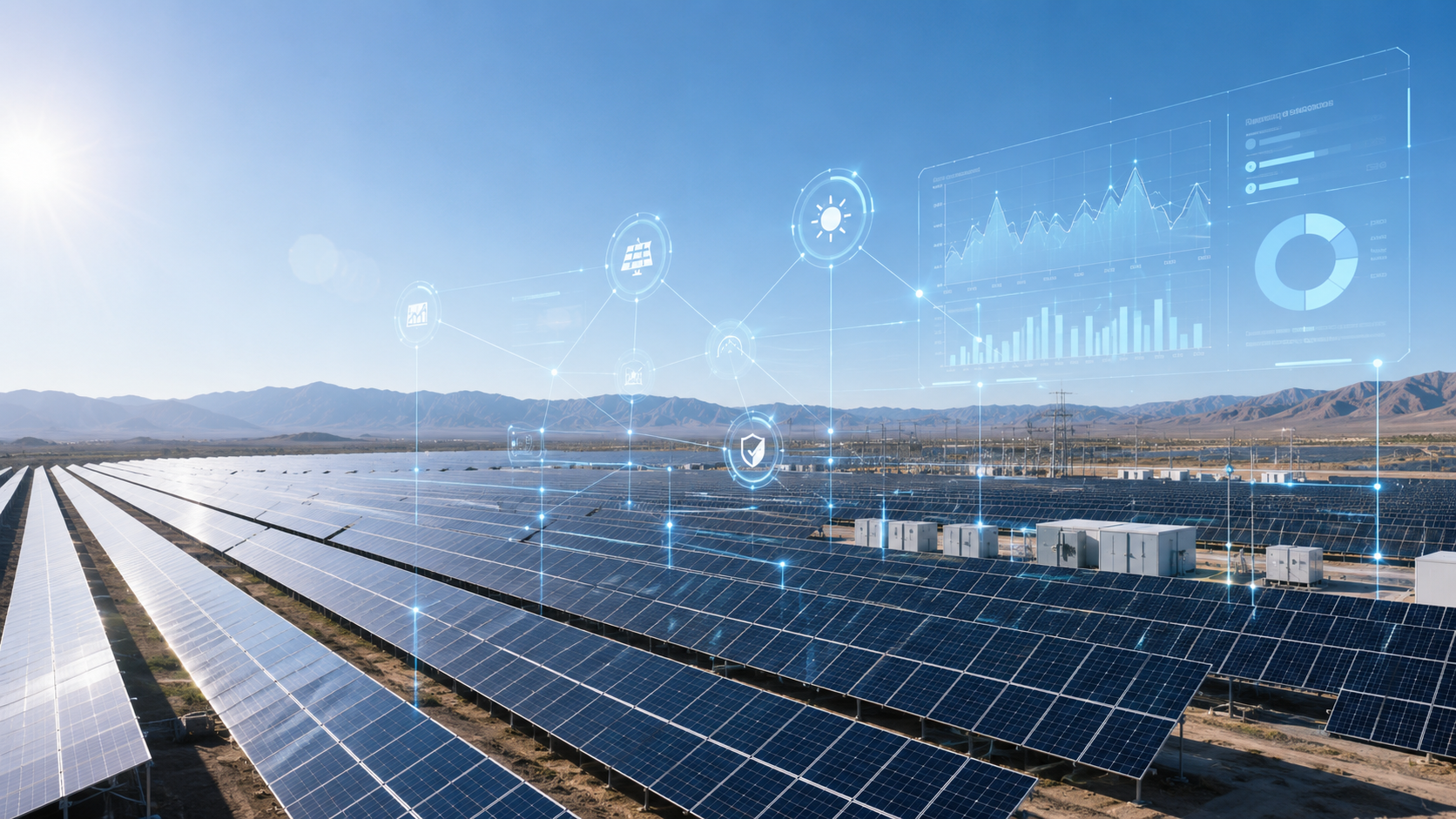
That’s why a solar PV monitoring system has become a core layer of smart solar operations. It ties generation data, device status, inspection findings, AI analysis, video streams, and maintenance workflows into a single operating picture.
For large solar plants, monitoring isn’t about watching performance. It’s about catching the right problem early enough to protect output, safety, and long-term asset value.
What is a solar PV monitoring system?
A solar PV monitoring system is a digital platform for tracking the operating condition of a photovoltaic plant. It pulls data from field equipment, sensors, cameras, inspection tools, and software systems, then organizes it so operators can understand plant performance and respond to issues fast.
At utility scale, that system has to go far beyond a generation chart. It should cover real-time monitoring, equipment fault detection, inverter and string analysis, AI-assisted inspection, safety alerts, asset records, and O&M task management — all in one workflow.
WThink’s solar PV monitoring solution is built for exactly that connected operating model — bringing Industrial AI, 5G IoT, edge computing, autonomous inspection, and centralized monitoring together into smart solar plant workflows.
Key feature 1: real-time plant status monitoring
Real-time visibility is the foundation. Operators need generation output, inverter status, alarms, weather conditions, communication status, camera feeds, and site conditions all viewable from one control environment — not stitched from five different tools.
For utility-scale plants, the system has to work at both levels: whole-plant awareness and zone-level troubleshooting. Teams need to zoom in and out without losing context or opening another interface.
Real-time monitoring gets a lot more useful when it connects directly to alert logic. A drop in output, abnormal inverter behavior, equipment going offline, a smoke event, a site intrusion — none of that should live in a separate system. It all belongs in the same workflow where operators can review, assign, and track the response.
Key feature 2: inverter and string-level performance analysis
Inverters are one of the richest data sources in a solar PV monitoring system. They expose power conversion, system availability, fault events, and production behavior in real time. Combine inverter data with string-level trends and environmental context, and operators can tell whether a performance issue is isolated or part of a broader pattern — quickly.
One underperforming string could point to a module issue, a wiring problem, shading, soiling, a connector fault, or equipment degradation. A good monitoring system narrows the search for you. It doesn’t leave engineers manually cross-referencing scattered data points to work out what’s going on.
The goal is faster root-cause analysis. Not just “output is down” — a clear path to why it’s down and where the problem probably lives.
Key feature 3: AI-assisted defect detection
AI is becoming central to solar PV monitoring because large plants generate more data than any manual team can review at pace. Drone images, thermal scans, camera feeds, alarms, and equipment logs pile up fast — enough to overwhelm operators if the platform doesn’t structure it intelligently.
AI catches PV hotspots, module damage, cracked glass, discoloration, delamination signs, soiling, shading, abnormal temperature patterns, and suspicious site activity. It also ranks findings by location, severity, and operational impact — turning raw detection into an actionable queue.
AI doesn’t replace solar O&M teams. It gets them to the findings that matter — instead of grinding through every image, alarm, and data point looking for one.
Key feature 4: drone inspection integration
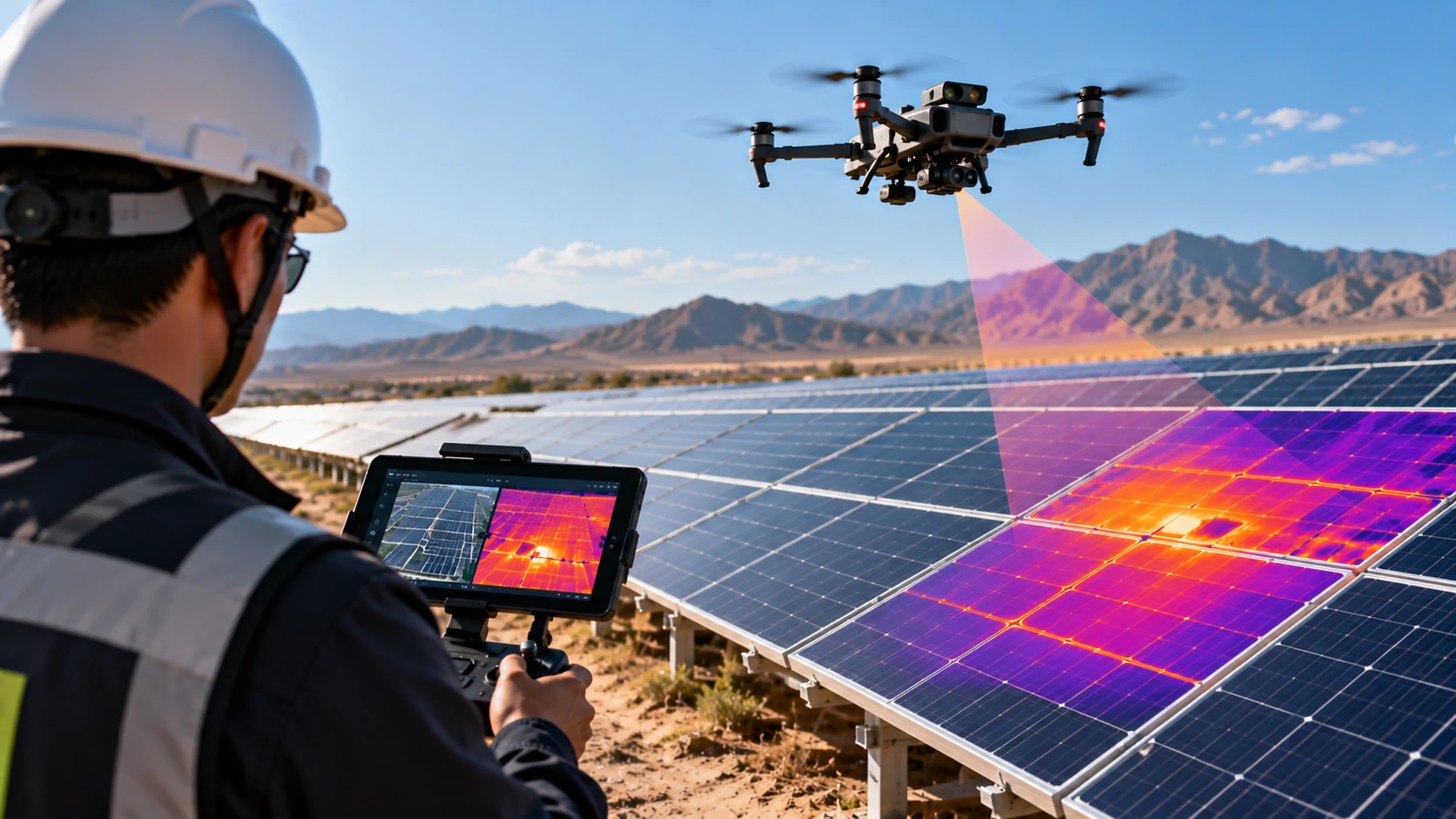
Drones are one of the most effective inspection tools at utility scale. They cover large field areas fast and capture visual and thermal data from consistent angles — exactly the kind of coverage that surfaces hotspots, module defects, soiling patterns, row-level issues, and site-wide anomalies.
But drone inspection shouldn’t operate as its own file folder off to the side. A strong solar PV monitoring system links drone findings directly to field zones, asset IDs, historical inspection records, and the maintenance workflow.
WThink’s Autonomous Inspection System is designed for exactly that connected workflow — tying route planning, image capture, AI findings, reporting, and O&M decision-making into a repeatable process.
Key feature 5: AI video analytics for site safety
Solar PV monitoring isn’t only about generation. Utility-scale plants also need safety and security visibility, and most PV sites are remote, unmanned, or genuinely hard to patrol on any regular schedule. That’s what makes cameras and AI video analytics an essential part of the operating system.
AI video analytics detects fire, smoke, intrusion, abnormal movement, restricted-area entry, missing PPE, unauthorized vehicles, and any unusual activity around field stations and critical equipment.
When safety monitoring runs in the same PV monitoring workflow as everything else, operators respond faster and keep cleaner records of site events. That’s especially valuable at remote sites, where response time and situational awareness are the whole game.
Key feature 6: edge computing and field-side intelligence
Many solar plants get built in open, remote, or harsh environments where network quality is anything but consistent. If every video stream, image, alarm, and sensor record has to make the trip to the cloud before anything gets analyzed, response times take a beating.
Edge computing moves processing closer to the field. It runs preliminary AI analysis, image quality checks, video event detection, data filtering, and local alerting — right on-site. Operators respond faster, and the pressure on network bandwidth drops significantly.
For smart PV operations, edge intelligence pays off most when paired with 5G IoT, industrial communication devices, field cameras, drones, and centralized monitoring software all pulling in the same direction.
Key feature 7: maintenance task and O&M workflow management
A monitoring system gets a whole lot more valuable when it connects directly to maintenance action. Catching a hotspot, inverter fault, security event, or equipment anomaly is only step one. Someone still has to own the response, plan the work, verify it’s done, and keep the historical record straight.
A strong solar PV monitoring system turns findings into tasks. It creates work orders, assigns inspection priorities, tracks unresolved events, records maintenance notes, compares before-and-after inspection data, and flags recurring issues across cycles.
That closes the loop between monitoring and operations. Instead of piling on more dashboards, the system moves teams from detection to action.
Problems a solar PV monitoring system should handle
At utility scale, a monitoring platform should cover both performance management and site operations. The strongest systems handle a wide range of issues inside one workflow.
PV hotspots
Thermal analysis flags abnormal heat patterns pointing to module defects, string issues, or localized performance loss.
Module defects
AI vision catches cracked glass, broken cells, discoloration, delamination signs, frame damage, and abnormal surface conditions.
Soiling and shading
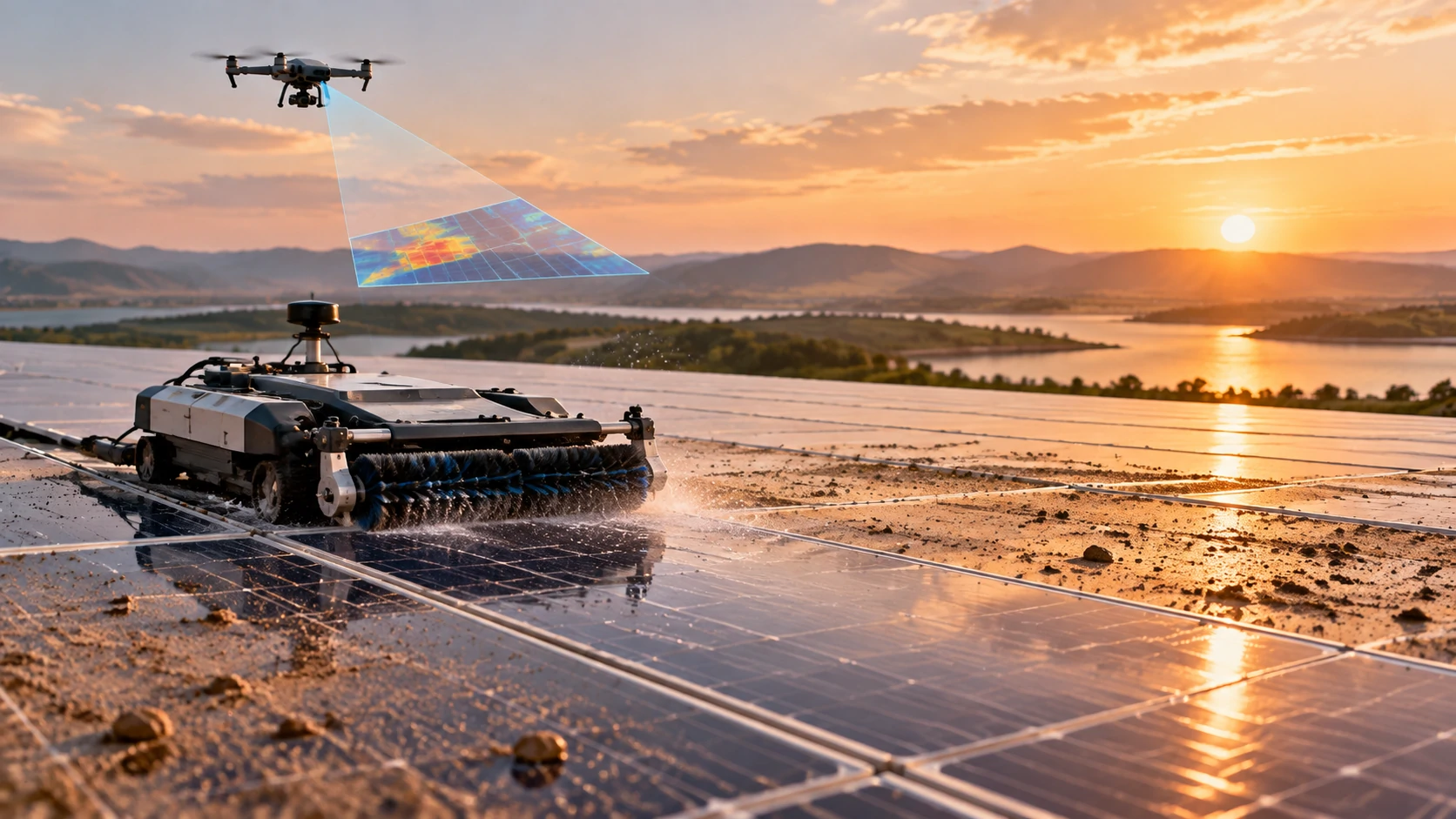
Dust buildup, bird droppings, vegetation shadow, row shading, and other conditions quietly eating into generation numbers.
Inverter faults
Inverter alarms, abnormal performance trends, communication issues, and equipment status changes all tracked in one view.
Fire and smoke risk
AI video analytics detect smoke, flame, abnormal temperature, and risk events near equipment zones and field stations.
Security events
Intrusion detection, perimeter monitoring, restricted-area alerts, and abnormal movement flagged across remote PV sites.
A practical solar PV monitoring workflow
Integrate field devices and plant data
Inverters, sensors, cameras, drones, edge AI devices, weather stations, and communication modules tie into one monitoring framework.
Track plant condition in real time
Generation output, equipment status, video streams, alarms, environmental data, and inspection records all monitored from a single platform.
Use AI to identify abnormal conditions
AI catches hotspots, module defects, soiling, shading, fire risk, intrusion, inverter issues, and abnormal operating patterns.
Rank findings by operational impact
Findings organized by location, severity, equipment type, safety risk, generation impact, and recommended O&M priority — ready to dispatch.
Assign and track maintenance response
Operators spin up tasks, assign follow-up, verify completion, and keep maintenance records linked to the original findings.
Build long-term performance intelligence
Historical monitoring and inspection data surface recurring issues, validate maintenance outcomes, and sharpen future O&M planning.
Benefits for utility-scale solar operators
Better plant visibility
Performance, equipment status, inspection findings, and safety events all in one connected view — not scattered across systems.
Faster fault detection
AI-assisted analysis surfaces hotspots, module defects, inverter issues, and abnormal conditions long before they hit generation numbers.
Smarter O&M planning
Maintenance teams prioritize tasks by severity, location, generation impact, and safety risk — so crews go where they’ll do the most good.
Less manual workload
Drones, AI vision, and centralized monitoring take routine screening off the O&M crew’s plate.
Improved site safety
AI video analytics watch for fire, smoke, intrusion, restricted-area entry, and abnormal activity across remote solar plants.
Stronger asset management
Historical data helps owners track recurring faults, compare inspection cycles, and evaluate maintenance effectiveness over years — not just quarters.
What to think about before choosing a PV monitoring system
Before picking a solar PV monitoring system, operators need to be clear on what they’re solving for first. Some plants need stronger inverter monitoring. Others need AI inspection, safety monitoring, drone integration, centralized multi-site control, or faster fault response. Trying to solve everything at once usually means solving nothing well.
Integration is the other big question. A monitoring platform shouldn’t be another isolated dashboard. It has to hook into existing plant assets, inspection workflows, asset records, and O&M processes — anything else just adds another screen to babysit.
For large portfolios, scalability is where the math really pays off. The monitoring system has to enforce consistent standards across every plant, every region, and every operating team — not deliver a different experience at each site.
Where WThink fits in
WThink builds utility-scale solar monitoring on Industrial AI, 5G IoT, edge computing, autonomous inspection, AI video analytics, and centralized software platforms. Together they help PV operators connect field data, catch risks, sharpen inspection workflows, and manage solar assets with the kind of visibility manual O&M can’t match.
By tying drones, cameras, sensors, edge AI devices, communication modules, and software platforms into one system, WThink helps operators move from manual solar plant management to genuinely automated PV operations. Explore WThink’s Industrial AI and 5G IoT products to see what’s available for smart field deployment.
A solar PV monitoring system is essential for utility-scale solar because operators need more than basic alarms and generation charts. They need connected visibility across performance, inspection, safety, equipment health, and maintenance workflows. Bring AI analytics, drone inspection, edge computing, 5G IoT, and centralized O&M management together, and solar operators catch problems earlier, cut manual workload, tighten site safety, and manage PV assets with the kind of confidence that used to require twice the crew.
Frequently asked questions
What is a solar PV monitoring system?
It’s a digital platform that tracks performance, equipment status, alarms, inspection findings, safety events, and maintenance workflows across a photovoltaic power plant — in one connected view.
Why do utility-scale solar plants need PV monitoring?
Utility-scale plants are big and complex. PV monitoring helps operators catch issues earlier, sharpen O&M efficiency, cut performance loss, and manage assets with consistency that manual patrols can’t deliver.
What features should a solar PV monitoring system include?
Real-time plant monitoring, inverter analysis, AI defect detection, drone inspection integration, safety alerts, edge computing, and maintenance workflow management — the whole stack, not just a subset.
How does AI improve solar PV monitoring?
AI catches PV hotspots, module defects, soiling, shading, abnormal equipment behavior, fire risk, intrusion, and other issues — pulling them out of massive field datasets at a speed no manual team can match.
How do drones support PV monitoring?
Drones capture visual and thermal data across large solar fields — surfacing module damage, hotspots, soiling, row-level issues, and field-wide patterns faster than any ground patrol.