

Project Background and the Challenge of Inconsistent Troubleshooting
Managing utility-scale solar farms involves keeping track of countless interconnected electrical components, including inverters, DC switches, energy storage batteries, and PV strings from various manufacturers. At a large multi-site solar power company, operations managers faced high variability in the efficiency and quality of maintenance work. When an electrical fault or a communication error occurred on-site, the troubleshooting process depended heavily on the individual experience of senior technicians. Junior field technicians often struggled to interpret complex fault codes, leading to prolonged repair times, repeated diagnostic visits, and inconsistent repairs. Furthermore, because valuable field insights were rarely documented in a structured way, the company lacked a unified method to store and share this operational knowledge.
Operational Obstacles in Legacy Knowledge Management
Without a centralized repository of historical diagnostic data and standardized resolution steps, the maintenance process remained highly reactive. Traditional paper manuals and disjointed email threads made it difficult for technicians to access relevant information while working in the field. When a complex issue arose—such as a DC arc fault or abnormal string current backfeed—technicians often spent hours diagnosing the problem through trial and error, during which the affected PV strings remained offline, causing significant power generation losses. To minimize this downtime and build a highly scalable operational model, the organization required an intelligent, data-driven system that could translate real-time alarms into actionable, standardized troubleshooting steps.
Implementing WThink’s Intelligent Site Management System
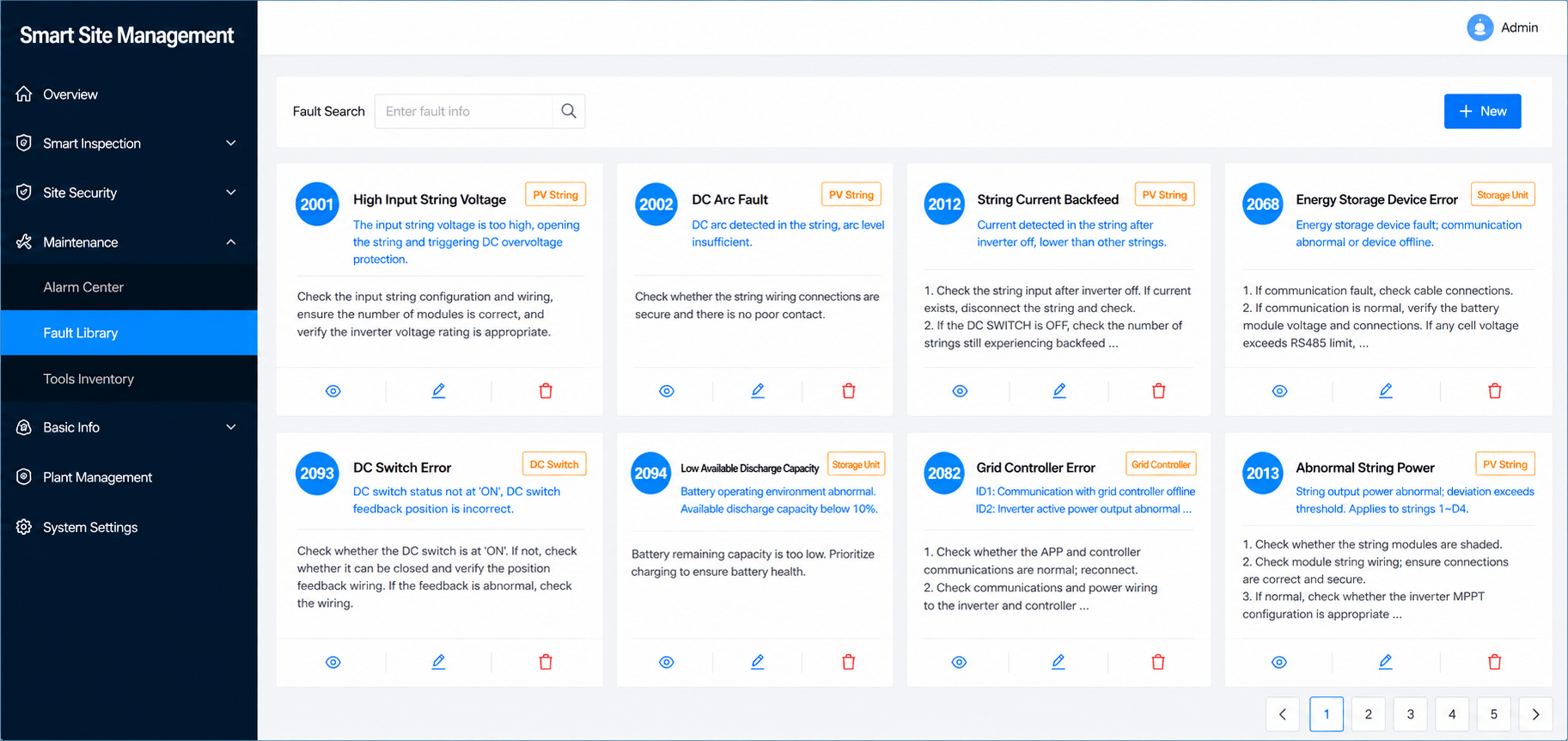
To bridge this operational gap, the company implemented WThink’s Smart Site Management system, incorporating a centralized Fault Library and dynamic Knowledge Base. This software platform acts as an organizational brain, capturing historical sensor logs, drone inspection data, and manual repair records, and transforming them into a structured digital repository. When an alarm is triggered anywhere across the solar facility, the platform does not merely display a generic error code. Instead, it correlates the live warning with the centralized Fault Library, instantly providing the operations team with a detailed diagnostic card that outlines the error definition, potential root causes, and standard step-by-step troubleshooting instructions.
Standardized Troubleshooting and Mobile Knowledge Delivery
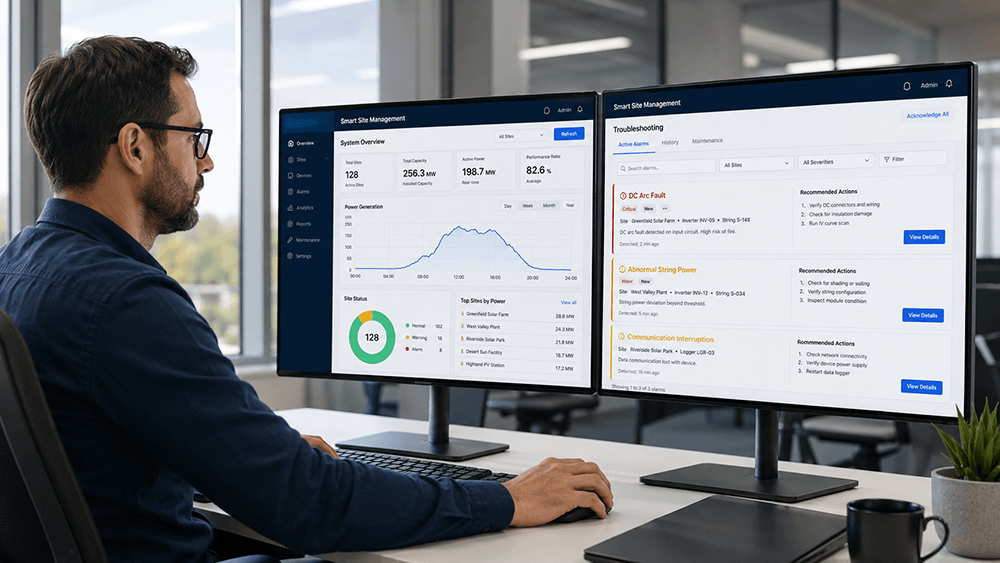
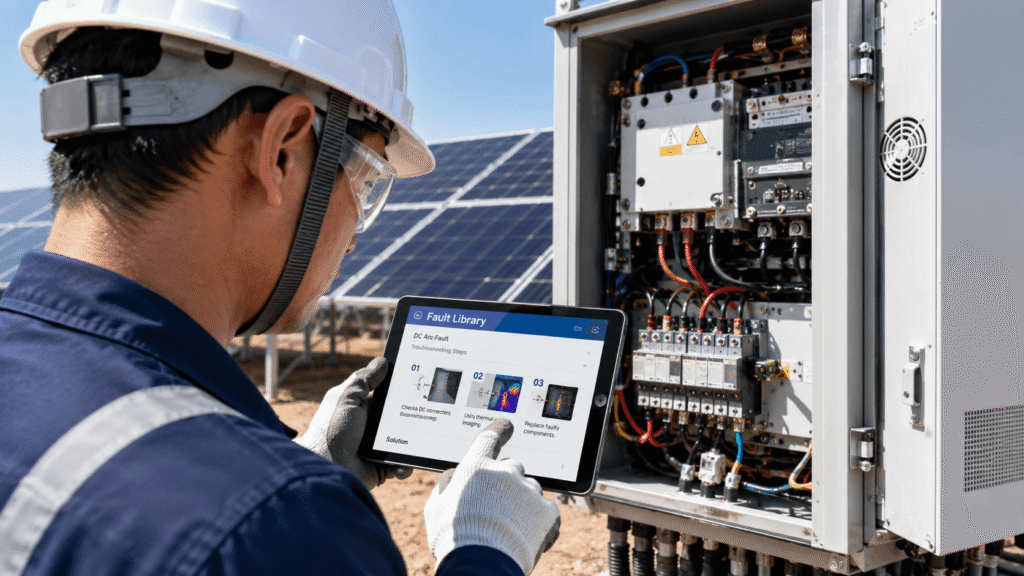
The integration of the Fault Library has successfully standardized the field maintenance workflow across all regional sites. For instance, when a “High Input String Voltage” or an “Abnormal String Power” alert is detected, the platform automatically presents the associated diagnostic card to the dispatch coordinator. This card specifies exact verification tasks, such as checking string configurations, checking for shading, and verifying the inverter voltage rating. Because the platform is fully accessible via mobile devices, field technicians can view these step-by-step guides directly on their tablets or smartphones while standing next to the physical equipment. This instant access to collective organizational knowledge allows junior technicians to perform complex electrical diagnostics with the precision and confidence of senior engineers.
Predictive Insights and Continuous Optimization
Over time, this data-driven approach facilitates continuous optimization and enables predictive maintenance. As technicians complete their repairs, they log their actual findings and successful resolutions back into the Smart Site Management system, constantly enriching the central knowledge base. By analyzing historical fault patterns, such as recurring “DC Switch Errors” or “Low Available Discharge Capacity” in battery storage systems, the platform’s predictive algorithms can identify underlying wear and tear before a catastrophic equipment failure occurs. This transition from reactive repairs to data-driven predictive maintenance allows the company to optimize its spare parts inventory, schedule proactive maintenance campaigns during low-generation hours, and significantly extend the lifespan of their solar assets.
Business Value and Operational Results
The deployment of WThink’s data-driven platform has successfully converted unstructured operational data into an invaluable corporate asset. The average time to repair critical electrical faults has been dramatically reduced, directly improving the overall energy yield and uptime of the solar farms. By standardizing the diagnostic process, the company has minimized its reliance on a small number of specialized senior technicians, establishing a highly resilient and scalable workforce. Ultimately, the integration of a dynamic Fault Library has created a sustainable, continuous improvement model, ensuring that as the company’s clean energy portfolio grows, its operational efficiency grows with it.