

Project Background and the Challenge of Invisible Grid Anomalies
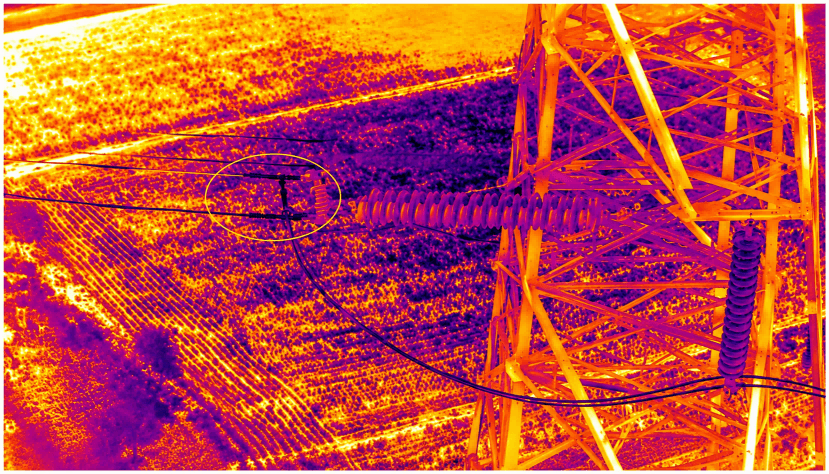
High-voltage power transmission networks composed of thousands of steel lattice towers, conductors, insulator strings, and metal fittings are exposed to extreme weather conditions year-round. At a major grid operator managing a 500kV transmission network, ensuring the mechanical and electrical integrity of these components was a continuous, high-stakes task. Power lines are highly prone to gradual, invisible degradation. Under continuous high-current loads, connection clamps, splices, and joint sleeves can develop high resistance due to rust, loose bolts, or material aging, causing localized overheating. If left undetected, these hotspots can melt the conductors, causing power lines to drop and triggering catastrophic grid blackouts.
Limitations of Manual Multi-Spectral Inspections
To detect these hidden hazards, the utility company regularly deployed helicopters or drones equipped with visible-light and thermal infrared cameras. However, the subsequent analysis phase was severely bottlenecked by manual review. Engineers had to spend weeks manually sorting and analyzing thousands of optical photos and thermographic infrared scans. Identifying a tiny hotspot next to a massive steel tower structure required meticulous attention, and human fatigue often led to missed anomalies. Furthermore, manually correlating optical physical damage, such as a chipped glass insulator disk or a corroded damper, with thermal hotspots was highly inconsistent, making it difficult to plan preventive repairs before a critical failure occurred.
Implementing WThink’s Intelligent AI Vision Solution
To streamline the diagnostic process, the grid utility implemented WThink’s AI-Based Defect Detection solution. This advanced platform utilizes deep-learning-based AI vision models specifically trained on massive datasets of power grid anomalies. The system automatically processes drone-captured multi-spectral (optical and thermal infrared) imagery, running real-time convolutional neural networks to identify, categorize, and locate defects down to the millimeter level. By processing both thermal and optical data streams simultaneously, the platform eliminates the need for tedious manual image review, providing the maintenance team with immediate, objective diagnostic reports.
Multi-Spectral Image Analysis and Hotspot Identification
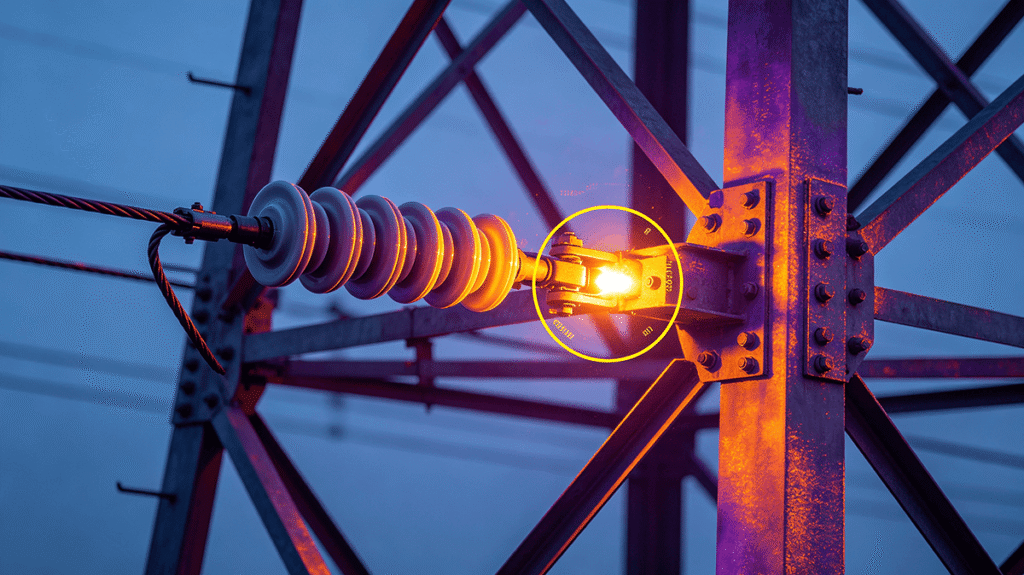
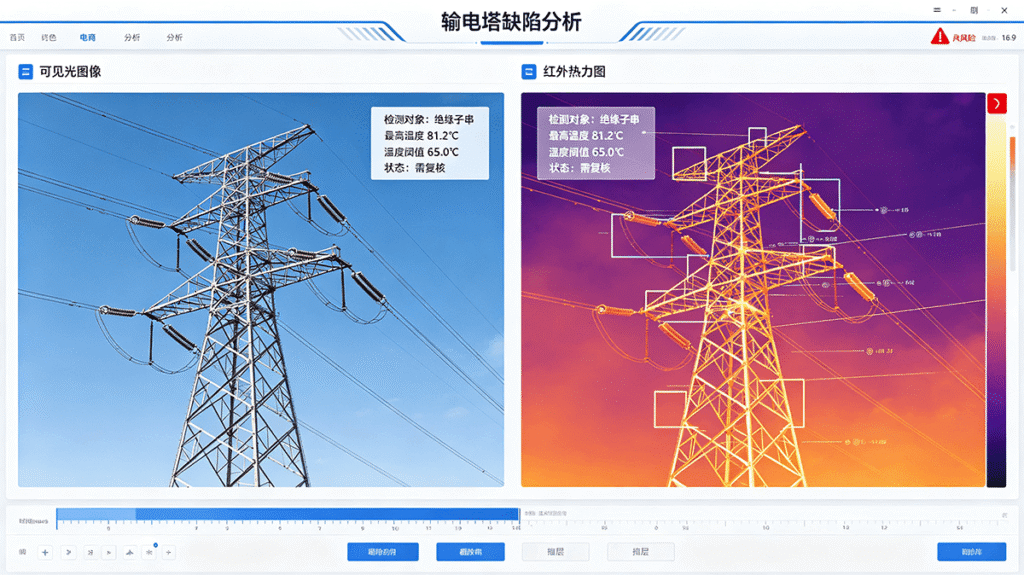
The intelligent detection system performs automated target segmentation and anomaly mapping on the aerial imagery. When drone datasets are uploaded, the AI models instantly segment the tower structure, conductors, and insulator strings. For thermal infrared datasets, the AI algorithms automatically detect radiometric temperature anomalies, calculating the temperature difference between the connection clamp and the adjacent conductor. If the temperature differential exceeds safety limits, the system highlights the thermal anomaly with a digital bounding box, flagging it as a hotspot. Simultaneously, the visible-light AI models analyze high-definition photos to detect physical anomalies, such as broken insulator disks, hardware corrosion, loose bolts, and bird nests, categorizing each defect by severity.
Proactive Repairs and Grid Optimization
The prioritized diagnostic reports generated by WThink’s AI platform allow the utility company to transition from reactive repairs to a highly organized, predictive maintenance model. Each identified defect is tagged with its precise coordinate location and severity level, automatically creating a prioritized work order. Instead of manually reviewing thousands of image files, maintenance planners can quickly view the health status of entire corridors on their dashboards and coordinate targeted repairs. Replacing a corroded clamp or a damaged insulator disk before it fails has minimized the risk of physical line drops, significantly improved grid uptime, and reduced emergency repair costs.
Business Value and Long-Term Results
The deployment of WThink’s AI-Based Defect Detection system has successfully transformed the grid operator’s transmission maintenance workflow. The time required to analyze complete corridor inspection datasets has been reduced from several weeks of manual review to just a few hours of automated processing. The detection rate for invisible hotspots and micro-structural defects has improved markedly, allowing the engineering team to resolve issues proactively. Ultimately, this AI-driven approach has protected high-value transmission infrastructure, minimized the risk of widespread power outages, and established a modern, highly reliable standard for digital grid maintenance.