

Project Background and the Challenges of Long-Distance Grid Patrols
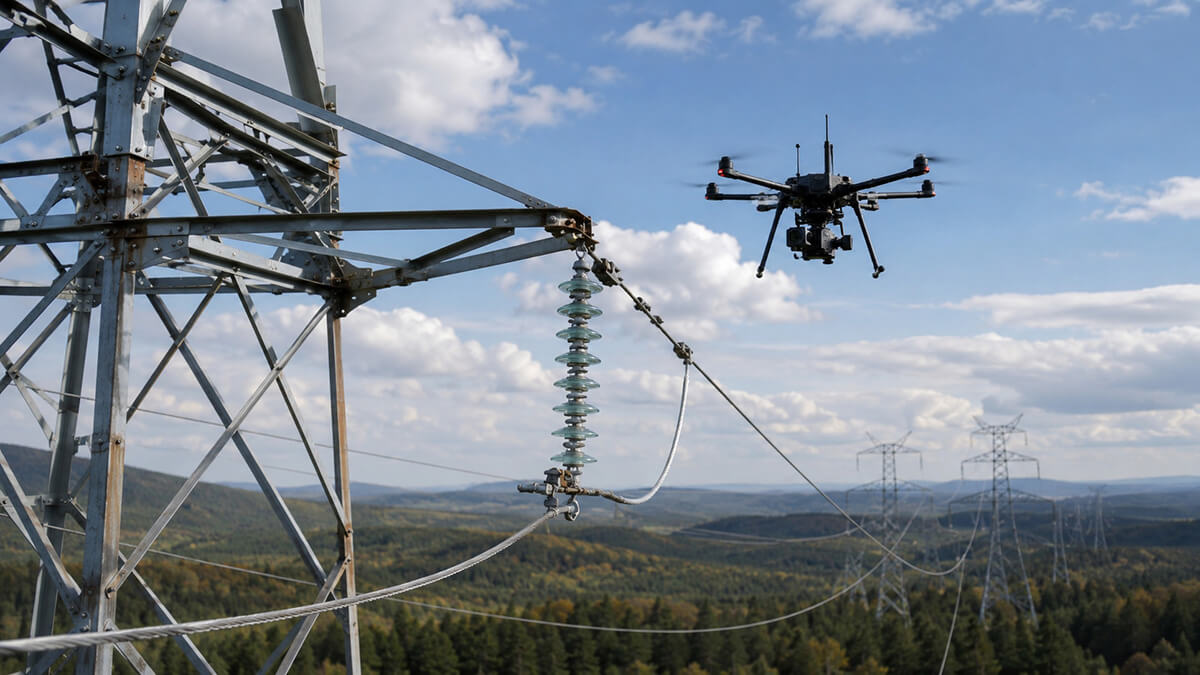
An electrical grid company responsible for managing long-distance high-voltage transmission corridors faced a massive logistical challenge in keeping their networks secure. Stretching over hundreds of kilometers of dense forests, mountain ranges, and wetlands, these high-voltage corridors (such as 500kV transmission lines) require frequent, meticulous inspections to detect structural wear and prevent catastrophic power outages. Under traditional Visual Line of Sight (VLOS) drone inspection standards, pilots are legally and technically constrained to operate within a physical radius of under two kilometers. This limitation forced field crews to spend most of their days driving along rugged access roads or hiking on foot through difficult terrains just to manually launch and retrieve the aircraft for every few towers, making grid-wide inspections slow, physically exhausting, and highly expensive.
Severe EMF and Manual Flight Risks
Beyond the logistical challenges of limited range, manual drone flights close to energized transmission towers presented high operational risks. High-voltage power lines generate powerful electromagnetic fields (EMF) that can severely interfere with a drone’s internal compass and GPS receivers, leading to sudden signal loss and catastrophic mid-air collisions. Because manual piloting under these conditions requires constant, high-stress split-second adjustments from pilots on the ground, human fatigue was a constant risk factor. To improve operational safety and scale their inspection capabilities, the grid operator required a fully automated, long-range solution that could navigate safely within the high-EMF zones of energized corridors without requiring on-site pilots.
Implementing WThink’s long-Range BVLOS Solution
To resolve these inspection constraints and safety hazards, the grid utility implemented WThink’s BVLOS Autonomous Drone Operations solution. This advanced system integrates long-range industrial UAVs, automated weatherproof charging docks, and WThink’s 5G intelligent terminals to execute long-distance automated inspection missions over dozens of kilometers without visual line-of-sight constraints. Utilizing high-precision RTK positioning and advanced electromagnetic shielding, the drones fly fully autonomously along pre-programmed 3D corridors, maintaining a consistent, safe distance from energized conductors and tower structures.
Automated Precision Navigation and Real-Time Multi-Sensor Capture
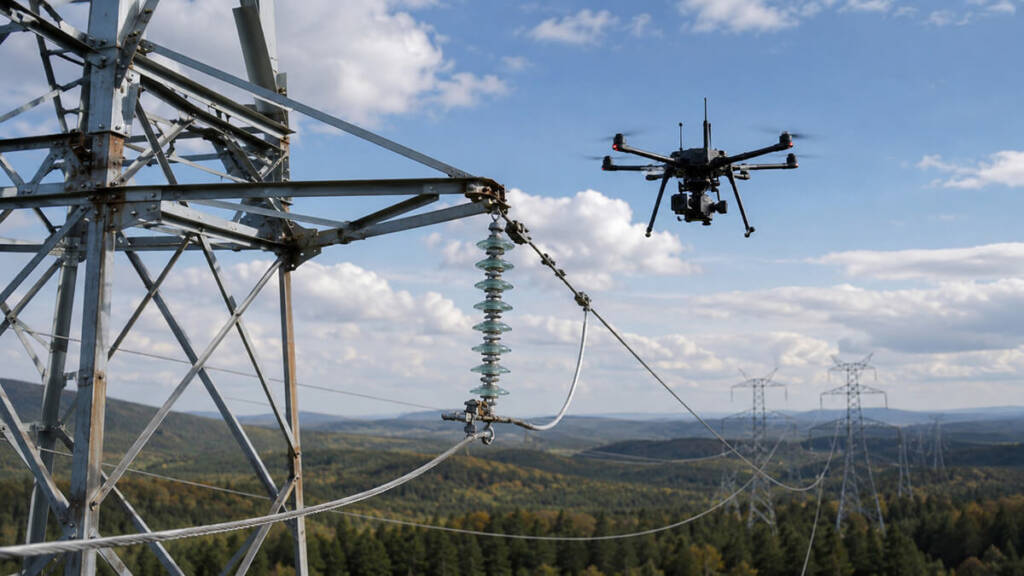
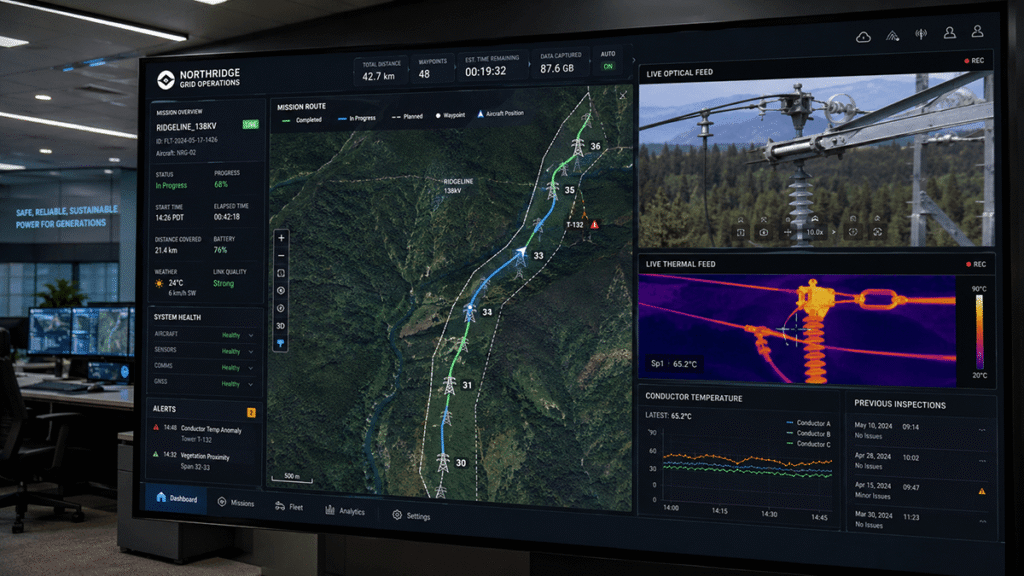
The autonomous flight profiles are established using highly detailed 3D LiDAR point cloud models of the transmission corridors. Armed with these precise spatial maps, the drone takes off autonomously from its remote docking station, flies along the transmission lines, and captures multi-angle imagery of critical components. When hovering next to a tower, the drone’s camera focuses directly on the vertical glass or composite insulator strings, searching for minor physical defects. The on-board edge AI analyzes the high-definition visual and thermal infrared feeds in real-time, instantly identifying insulator cracks, broken conductor strands, or localized hot spots on connection clamps that indicate high electrical resistance.
Operational Results and Business Value
With the implementation of WThink’s BVLOS Autonomous Drone Operations, the grid utility has successfully transformed its maintenance workflow from a slow, manual process to a highly efficient, automated operation. The daily inspection coverage along the remote transmission corridors has grown exponentially, allowing a small team of operators at the central headquarters to oversee multiple automated flights simultaneously. Field crews are no longer required to hike dangerous, remote terrains for routine checks, dramatically lowering occupational safety risks. Early identification of critical insulator defects and vegetation encroachment has prevented forced grid outages, demonstrating that long-distance autonomous drone operations are a highly reliable and essential approach for modern digital grid maintenance.