

Project Background and the Challenge of Fragmented Thermal Portfolios
For large energy groups managing a diverse portfolio of multiple thermal power plants, coordinating safety, daily inspections, and production oversight across geographically dispersed facilities is a major challenge. At an energy company managing several high-capacity coal-fired plants, operations and safety monitoring were historically highly fragmented. Each facility operated its own localized SCADA systems, physical security gates, and manual patrol schedules. This lack of integration forced corporate management at the headquarters to rely on weekly compiled paper reports and phone calls to track the operational status, safety alerts, and equipment health of distant facilities, making it extremely difficult to maintain a real-time, unified view of overall performance.
Operational Obstacles in Distributed Multi-Site Operations
This siloed operational model created significant safety risks and delayed maintenance dispatch times. When a localized safety alert occurred—such as a critical temperature rise in a high-voltage transformer or an unauthorized entry into a restricted turbine hall—management at the headquarters remained unaware until hours later. Furthermore, because robotic or drone-based inspection schedules were managed independently at the site level, it was highly challenging for corporate engineers to monitor overall inspection progress, ensure standard testing quality, or correlate mechanical defects with actual plant performance. To eliminate these communication gaps and establish a more proactive risk management approach, the company required a unified digital control center.
Implementing WThink’s Integrated Multi-Plant Control System
To streamline operations and enhance overall plant safety, the energy group implemented WThink’s Centralized Multi-Plant Operations Control platform. This advanced software unifies data streams from all regional thermal facilities into a single digital hub at the corporate headquarters, integrating daily robotic inspections, real-time safety monitoring, and overall production oversight. By utilizing robust industrial IoT networks and edge-computing processing, the platform aggregates hundreds of thousands of sensor data points, providing a consolidated, high-fidelity view of the company’s entire thermal power plant portfolio.
Consolidated Sensor Networks and Real-Time Safety Tracking
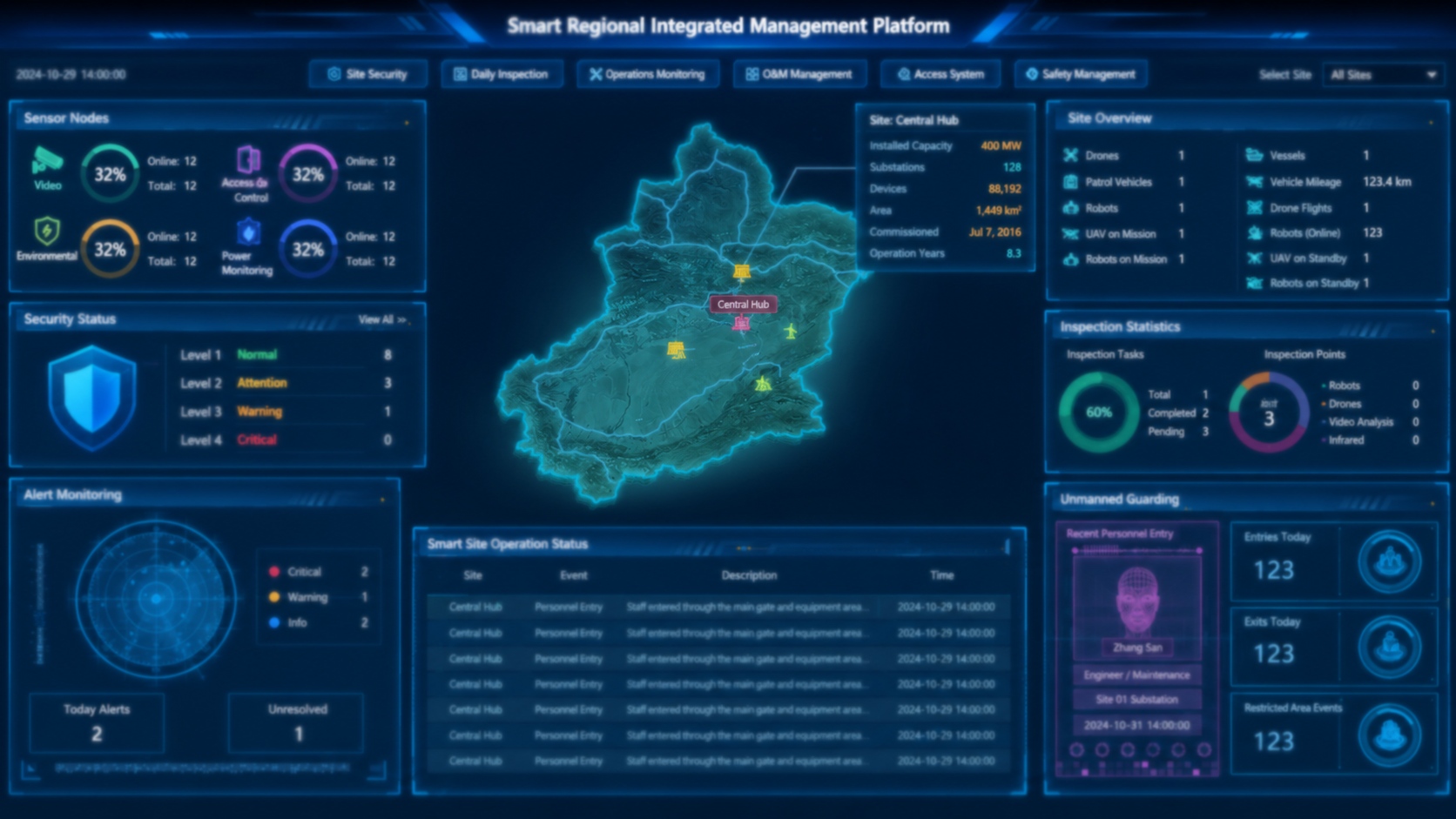
The centralized platform unifies multi-site operations through an interactive visual map displaying the real-time operational status of connected plants and their core hubs. The system aggregates real-time indicators from various sensor nodes—including high-definition cameras, environment sensors, access control terminals, and power monitors—and displays their online rates. Under a unified dashboard, operations coordinators can immediately monitor overall security status distributions, review incoming alerts categorized by severity, and track the real-time resolution of active warnings. This instant data correlation allows the central team to monitor physical safety parameters and equipment temperatures across multiple plants simultaneously, eliminating the need to wait for manual site reports.
Smart Access Auditing and Automated Inspection Workflows
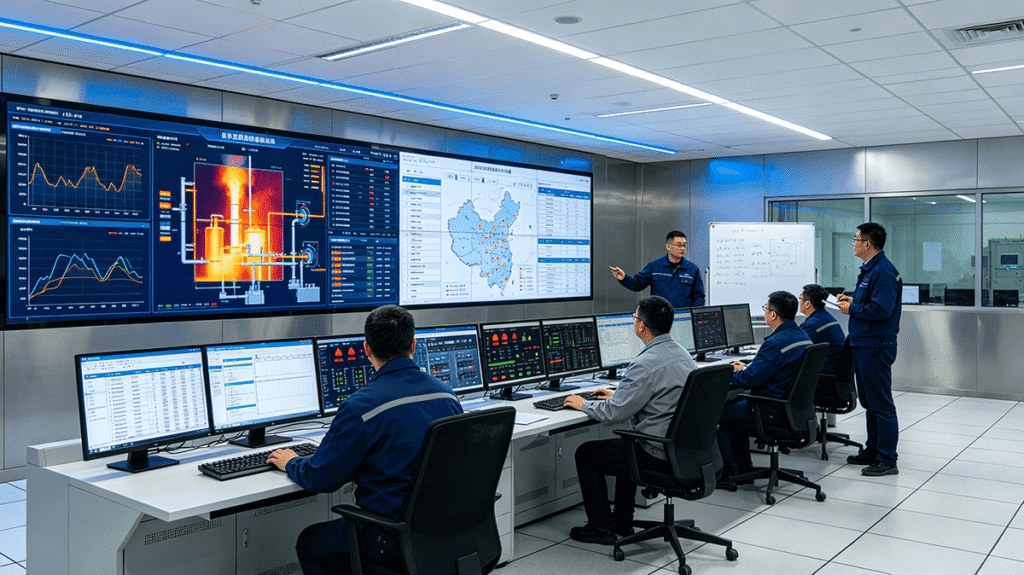
The integration of restricted-area access control, automated robotics, and drone patrols within a single system closes the loop between fault detection and field remediation. The platform’s smart site operation panel displays real-time entry and exit logs, performing automated facial recognition and personal protective equipment (PPE) compliance checks at key entry points like turbine halls and high-voltage substations. Simultaneously, the platform monitors automated inspection tasks and robotic patrol progress, highlighting identified defects. When an anomaly is flagged—such as a minor oil leak or an insulation crack—the system automatically logs the event and coordinates with the local site’s O&M team. The deployment of WThink’s Centralized Multi-Plant Operations Control system has successfully unified the client’s fragmented thermal operations, reducing reporting delays, minimizing the risk of forced outages, and establishing a scalable, data-driven standard for modern multi-site thermal plant management.