

Project Background and switchgear Room Monitoring Challenges
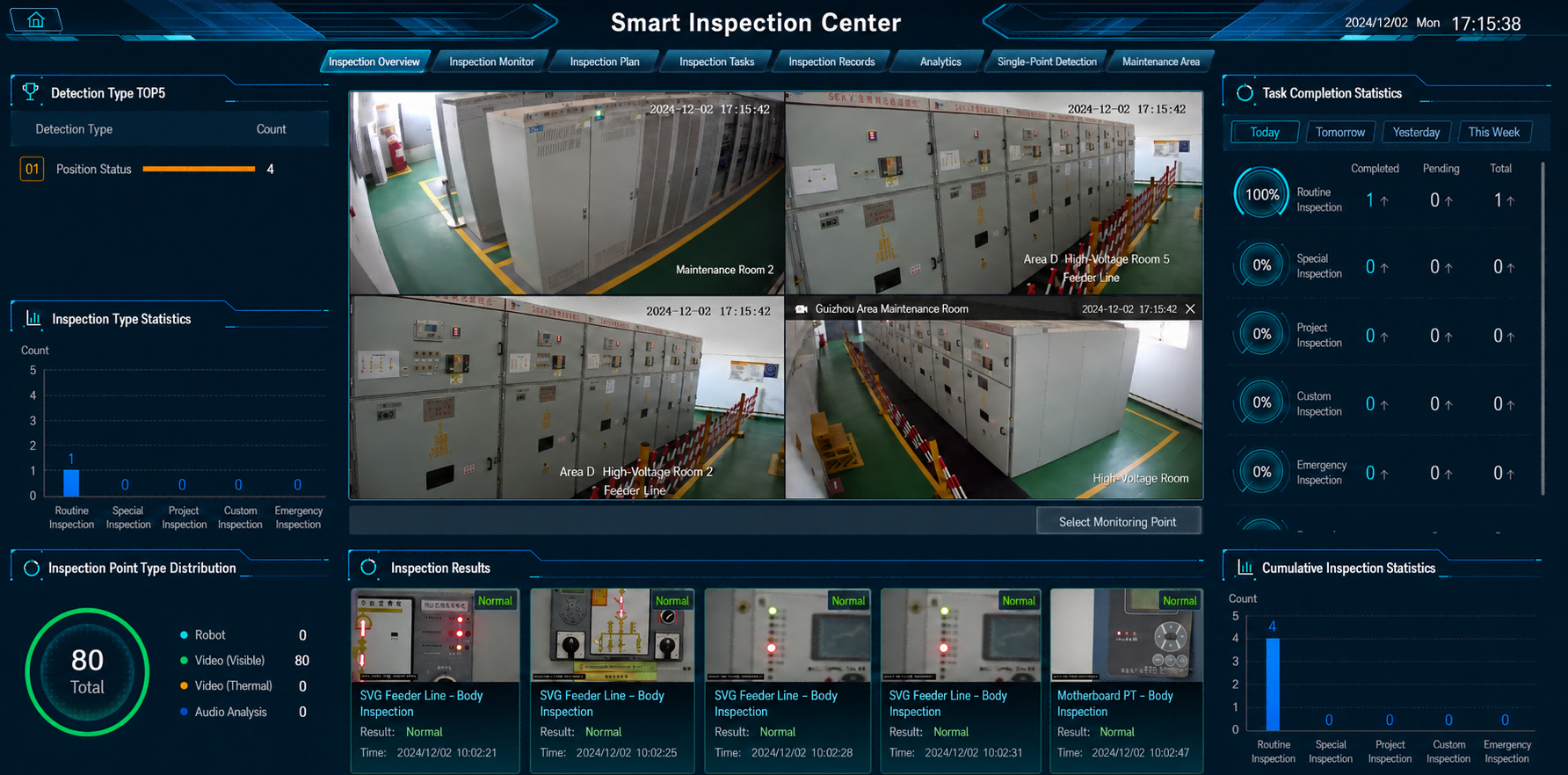
At a high-capacity power generation group managing several regional thermal power plants, keeping continuous track of internal switchgear and maintenance rooms was a major operational undertaking. At each individual facility, key indoor areas—including gas-insulated switchgear (GIS) rooms, Static Var Generator (SVG) feeder lines, motherboard maintenance rooms, and high-voltage distribution spaces—require continuous visual and thermal monitoring to ensure grid-connection stability and early fault detection. However, these rooms house thousands of active components, and monitoring them continuously generates massive volumes of high-definition video, thermal infrared imagery, and acoustic sensor data. Attempting to transmit this immense volume of raw data back to a centralized corporate cloud over remote networks caused severe network latency, high data costs, and frequent bandwidth bottlenecks.
Operational Obstacles of Siloed Power Plant Networks
The lag in raw data transmission created significant operational risks for the power generation group. In high-voltage environments, a critical defect—such as localized overheating along an SVG feeder line or an abnormal indicator status on a switchgear motherboard—needs to be identified immediately. Under the previous network framework, transmitting high-resolution optical and thermal feeds over long distances to a central server resulted in delayed analysis, meaning that critical alarms were sometimes flagged hours after the heat buildup had already occurred, increasing the risk of major electrical trips or forced shutdowns. Furthermore, if the regional power plant temporarily lost its external WAN connection, the facility was left without real-time, automated fault detection capabilities.
Implementing WThink’s Cloud-Edge Integrated Solution
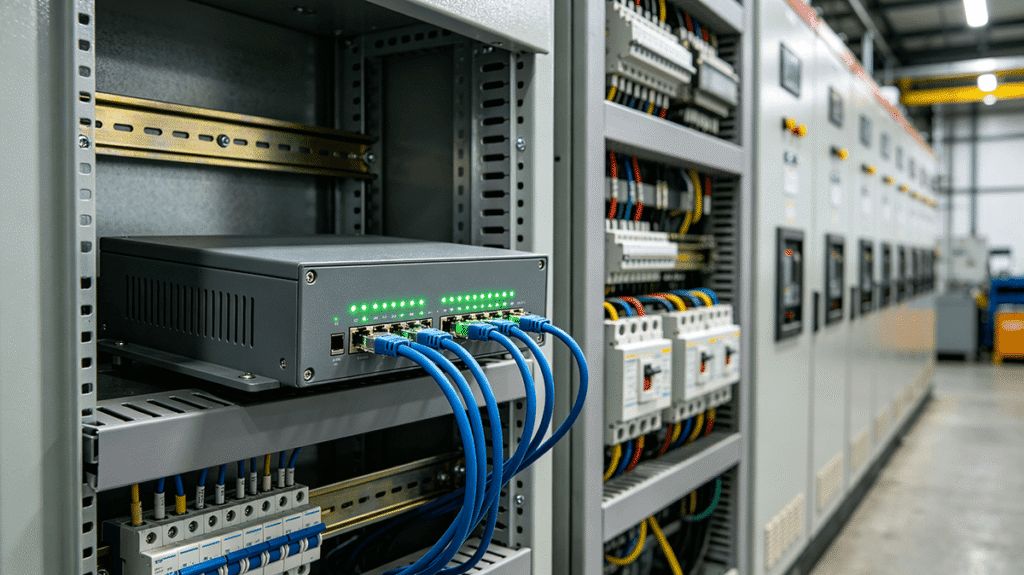
To overcome these latency and bandwidth limitations, the energy group deployed WThink’s Cloud-Edge Collaborative Architecture across its entire portfolio of thermal plants. This advanced framework deploys intelligent, on-site edge-computing nodes (AI analysis hosts) locally at each individual facility, while linking all regional hosts to a centralized cloud-level platform at the corporate operations headquarters. By allocating the computational workload, the system ensures that high-volume, real-time image processing occurs on-site, while high-level strategic supervision, long-term analytics, and resource coordination are managed centrally in the cloud.
Localized Real-Time Processing and Bandwidth Optimization
The core operational workflow begins with the edge-computing nodes deployed inside the plant’s switchgear and maintenance areas. As cameras and thermal sensors capture video feeds from Maintenance Room 2, Area B High-voltage Room, Area D High-voltage Room, and the GIS Room, the local edge host analyzes the data in real-time using built-in deep learning algorithms. The edge host automatically reads analog dial indicators, verifies panel switch statuses, and scans SVG feeder lines and motherboard targets for structural and thermal anomalies. Because the processing occurs locally, defect identification is instantaneous. Crucially, the edge node filters out the redundant, normal footage, compressing the results into lightweight metadata and small thumbnail images of flagged anomalies. This lightweight telemetry is then uploaded securely to the central cloud platform, reducing WAN bandwidth consumption by over ninety percent.
Centralized Supervision and Global Maintenance Coordination
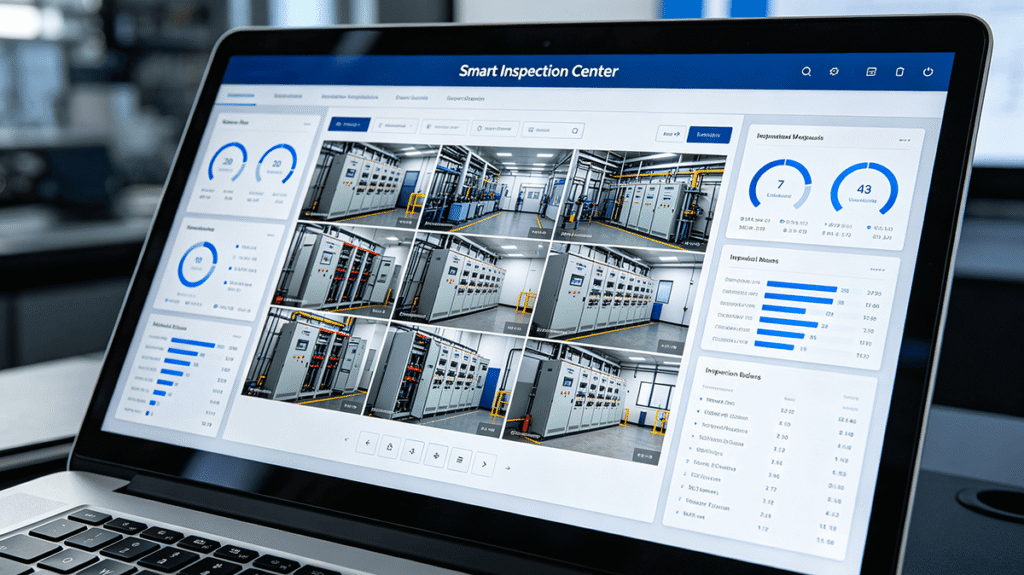
At the corporate operations headquarters, the cloud-based Smart Inspection Center compiles the lightweight metadata from all connected regional plants. This centralized interface provides corporate managers with real-time supervision, displaying overall task completion statistics, cumulative inspection progress, and structured summaries of local diagnostic results. From a single screen, operators can monitor scheduled routine, special, and emergency inspection tasks across all remote facilities. If a local edge node flags an anomaly—such as a motherboard failure or abnormal heat on a feeder line—the cloud platform logs the alert and instantly coordinates with the local site’s O&M team. The implementation of WThink’s Cloud-Edge Collaborative Architecture has successfully resolved the bandwidth bottlenecks, reducing diagnostic latency to under a single second, protecting high-value switchgear assets, and establishing a highly resilient, data-driven standard for modern utility-scale thermal plant management.