

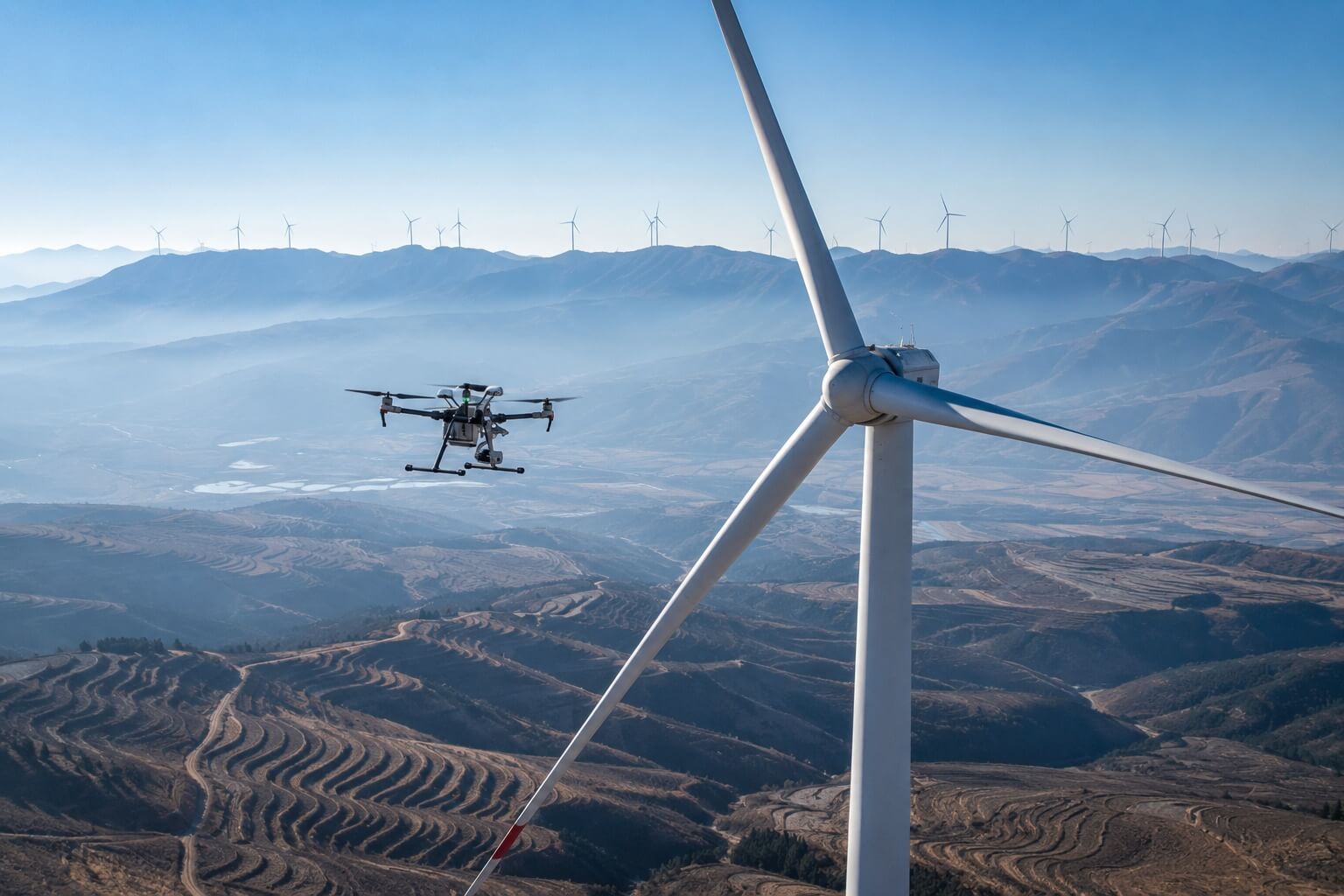
Project Background and the Challenges of Manual Climbing
At a high-capacity 250MW wind farm situated across a rugged and foggy mountain range, keeping up with routine physical inspections was a massive operational hurdle. To check the integrity of wind turbine structures, traditional maintenance protocols required specialized technicians to manually scale the high towers and rappel down the long blades. This manual rope-access method is extremely slow, often requiring a full day to inspect a single turbine. Furthermore, high-altitude climbing presents inherent safety risks for personnel, especially during periods of wet weather, dense mountain fog, or freezing temperatures. Because of these constraints, routine audits were conducted infrequently, leaving minor structural defects undetected for long periods.
The Problem of Post-Storm Emergency Response
The lack of a rapid inspection method became particularly critical following severe weather events. In mountainous regions, wind farms are frequently subjected to intense lightning strikes, high winds, and heavy rainstorms. After such events, operators must verify whether the turbine blades, towers, and nacelles have sustained structural damage before restarting the units. Under traditional methods, coordinating manual climbing teams to inspect multiple affected turbines took several days. This delayed response meant that healthy turbines remained shut down unnecessarily, leading to significant power generation losses, while damaged turbines ran the risk of operating with undetected structural compromises.
Deploying WThink’s Autonomous UAV Inspection Solution
To address these safety risks and operational delays, the wind farm deployed WThink’s Autonomous Drone Inspection System. This advanced solution automates the entire aerial patrol workflow, allowing high-resolution inspections of blades, towers, and nacelles to be executed without manual piloting. Utilizing high-precision GPS positioning and terrain-aware navigation algorithms, the drone flies along pre-programmed, repeatable three-dimensional flight paths that closely follow the complex curves of the turbine blades. The system operates autonomously, ensuring consistent image capture distance and angle, which is critical for tracking defect progression over time.
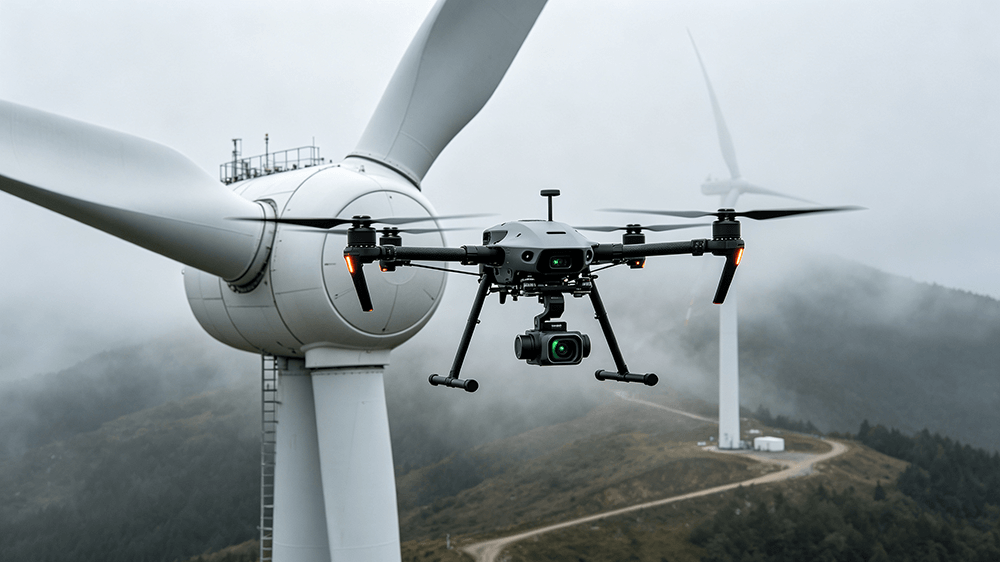
Multi-Angle Inspection and Rapid Emergency Dispatch
The autonomous system performs a comprehensive multi-zone inspection cycle in a fraction of the time required for manual audits. Upon take-off, the drone automatically executes a precise orbital flight around the nacelle to check for oil leaks, loose bolts, and cooling system issues. It then performs a high-resolution optical and thermal sweep along each of the three blades, capturing details of the leading edges, trailing edges, and lightning protection receptors. Following a severe storm, operators at the central control room can initiate a one-click emergency inspection routine. The drone launches instantly to assess critical storm damage, such as delamination or lightning punctures, providing live video feeds and aerial maps directly to the engineering team.
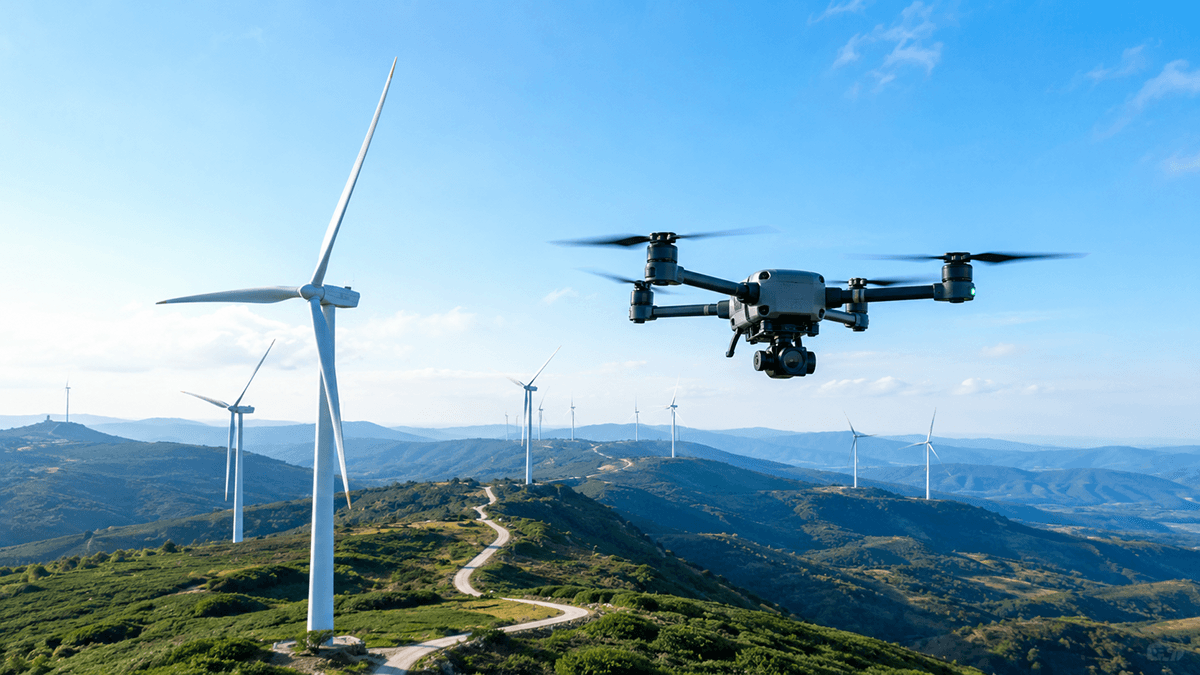
Operational Results and Business Value
The implementation of WThink’s autonomous drone inspection system has successfully transformed the wind farm’s asset management and safety standards. The complete inspection cycle of a single turbine has been reduced from hours of hazardous manual labor to less than thirty minutes of fully automated flight. This efficiency has virtually eliminated high-altitude climbing hazards for routine audits, creating a much safer working environment for the maintenance team. Rapid post-storm deployments have minimized downtime by allowing healthy turbines to be restarted within hours rather than days. Ultimately, the early detection of minor blade delamination and lightning damage has prevented costly catastrophic failures, ensuring stable, reliable energy generation across the entire mountainous facility.