Utility-scale solar plants need accurate, repeatable, and efficient inspection workflows. Comparing drone inspection with manual inspection helps operators understand where each method fits — and why AI-powered aerial inspection is becoming essential for large solar assets.
Why inspection strategy matters for large solar plants
Utility-scale solar plants are built from thousands or even hundreds of thousands of PV modules. Each module, cable, connector, inverter zone, mounting structure, and access path contributes to long-term plant performance. When defects remain undetected, they can reduce energy output, increase maintenance costs, and create safety risks over time.
For many years, manual inspection has been the default approach. Technicians walk the site, visually check panels, record issues, and follow up with maintenance work. This method is still useful, especially for close-up confirmation and physical repair. However, as solar plants become larger and more distributed, manual inspection alone often struggles to keep pace with operational needs.
Drone inspection changes the inspection model. By using UAVs, thermal cameras, visual imaging, AI analysis, and structured reporting, solar operators can inspect large areas more quickly and identify hidden defects that may not be visible from the ground.
The real question is not whether drone inspection replaces every manual task. The better question is how drone inspection and manual inspection should work together to build a faster, safer, and more accurate solar O&M workflow.
What manual inspection does well
Manual inspection remains valuable because it gives technicians direct physical access to equipment. A field team can check connectors, touch mounting hardware, inspect cable trays, confirm mechanical damage, clean small areas, and perform immediate maintenance tasks when needed.
Manual inspection is especially useful when a defect has already been identified and needs close verification. For example, if an AI drone inspection report identifies a specific module with abnormal heating, a technician may still need to visit that location to confirm the root cause, test electrical connections, or replace the component.
Manual inspection also works well for small sites, newly commissioned systems, or specific troubleshooting tasks where the inspection area is limited and the issue is already known.
Where manual inspection becomes limited
The limitations of manual inspection become clear at utility scale. Walking long rows of PV modules is time-consuming and physically demanding. Inspection quality can vary depending on technician experience, lighting conditions, fatigue, and documentation methods. Some issues may also be missed because they do not create visible surface damage.
Manual inspection is particularly weak for thermal issues. PV hotspots, bypass diode failures, internal cell damage, string abnormalities, and some wiring problems may not be visible in standard visual checks. By the time these issues appear in performance reports, the plant may already have lost output for days, weeks, or longer.
Another challenge is data structure. Manual inspection notes, photos, and spreadsheets can become difficult to compare over time. For multi-site solar operators, this makes it harder to track recurring defect types, compare plant health, and prioritize maintenance across a portfolio.
What drone inspection does differently
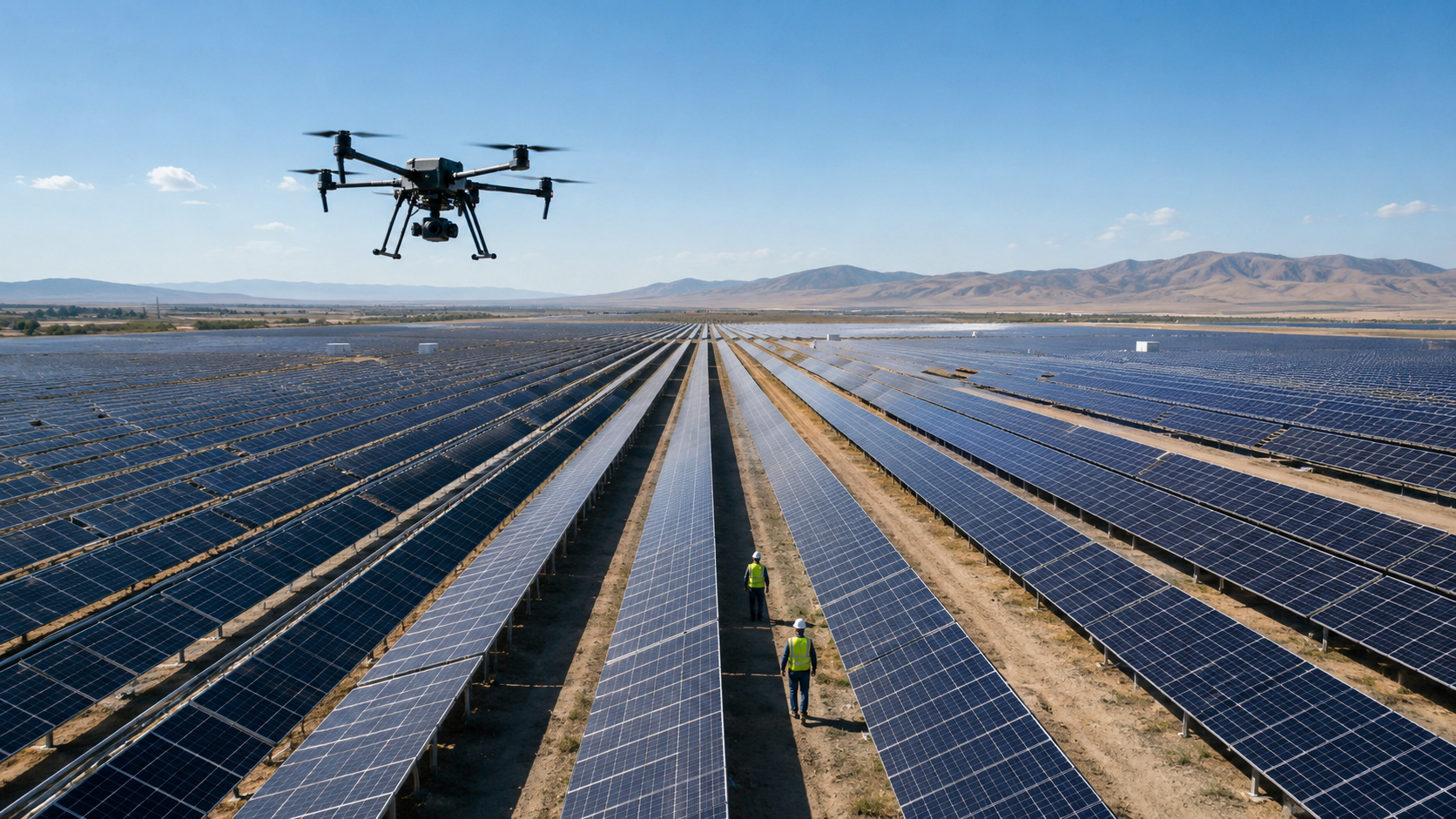
Drone inspection gives solar operators a faster and more consistent way to inspect large PV arrays. A drone can fly planned routes, capture high-resolution visual images, collect thermal data, and generate a complete aerial record of the site. When connected with AI-powered inspection software, this data can be analyzed automatically and converted into structured findings.
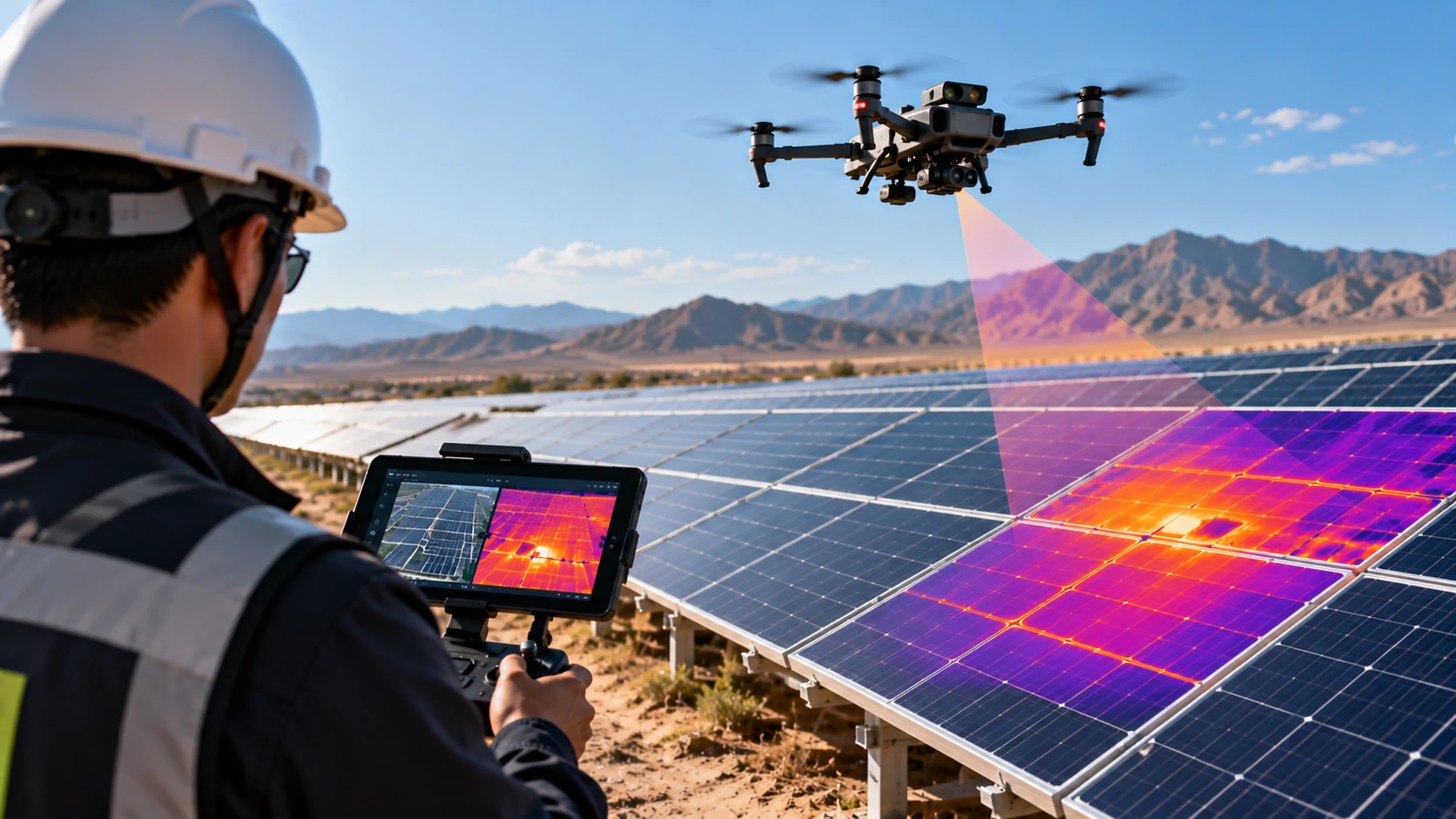
Instead of depending only on what a technician can see from the ground, drone inspection allows operators to view the plant from above and detect patterns across the entire array. Thermal imaging can reveal hotspots, abnormal heating, string-level issues, and module-level performance risks. AI analysis can then classify findings and map them to specific locations.
For utility-scale solar plants, this is a major advantage. The inspection workflow becomes more scalable, repeatable, and data-driven.
Drone inspection vs manual inspection: key differences
What drone inspection can detect in solar plants
Drone inspection is especially valuable when visual and thermal data are analyzed together. RGB images can identify visible surface damage, while thermal images can reveal hidden electrical and performance-related problems.
PV hotspots
Detects localized abnormal heating that may indicate cell damage, shading, dirt, poor connections, or bypass diode issues.
Module cracks and damage
Supports identification of broken panels, cracked surfaces, frame damage, and other visible module problems.
String-level abnormalities
Reveals repeated thermal patterns across multiple modules that may point to wiring, combiner box, or inverter issues.
Soiling and shading
Identifies areas affected by dust, dirt, vegetation, bird droppings, or surrounding objects that reduce energy output.
Safety risks
Helps locate abnormal heating near panels, cables, junction boxes, or other electrical equipment before risks escalate.
Performance loss patterns
Supports solar O&M teams in understanding whether defects are isolated, recurring, or spreading across specific areas.
How AI improves drone inspection results
Drone inspection becomes more powerful when combined with AI analysis. A single solar farm inspection can generate thousands of visual and thermal images. Reviewing that data manually can take significant time and may lead to inconsistent results.
AI-powered inspection software helps classify defects, identify abnormal temperature patterns, reduce false positives, and map findings to specific module locations. This turns drone data into actionable solar O&M intelligence.
Without AI, drone inspection may only create a large image library. With AI, it becomes a structured inspection system that helps teams decide what to repair, where to go, and how urgent the issue is.
For large solar portfolios, AI also supports comparison across sites. Operators can identify recurring defect types, compare plant health, and build a more consistent maintenance strategy.
When manual inspection is still necessary
Drone inspection does not eliminate the need for field technicians. Instead, it helps them work more efficiently. After a drone inspection identifies potential issues, manual inspection is often needed to confirm causes, perform electrical testing, replace components, clean modules, or repair wiring.
This creates a better workflow: drones and AI perform large-area screening and defect prioritization, while technicians focus on targeted verification and maintenance. The result is less time spent searching for problems and more time spent solving them.
A practical inspection workflow for utility-scale solar plants
Drone-based site screening
Drones collect visual and thermal data across large PV arrays using planned routes and consistent image capture standards.
AI defect analysis
AI models identify hotspots, module defects, string-level abnormalities, shading issues, and safety risks.
Structured reporting
Inspection results are organized by defect type, location, severity, and recommended follow-up action.
Targeted manual inspection
Technicians visit specific locations to confirm the root cause, test equipment, and prepare repair work.
O&M execution and tracking
Maintenance teams complete repairs, update asset records, and track whether defects improve or worsen over time.
Benefits of combining drone and manual inspection
Faster plant coverage
Drones handle large-area inspection faster, while technicians focus on confirmed locations instead of walking every row.
Better defect visibility
Thermal imaging and AI analysis help detect problems that may not be visible through ground-level checks.
Reduced field workload
Manual work becomes more targeted, reducing unnecessary site walking and improving technician productivity.
More consistent reporting
AI-assisted inspection creates structured records that are easier to compare across time, plants, and asset types.
Smarter maintenance planning
Teams can prioritize repairs based on defect severity, location, operational impact, and historical trend data.
Where WThink fits in solar inspection workflows
WThink supports solar inspection through Industrial AI, autonomous inspection systems, 5G communication, edge AI devices, and AI-powered software platforms. These technologies help operators collect inspection data, analyze PV defects, transmit field information, and manage O&M decisions more efficiently.
For utility-scale solar plants, WThink’s Solar Power solution supports autonomous inspection, PV defect detection, thermal anomaly analysis, AI safety monitoring, and centralized O&M control. The Autonomous Inspection System can further support multi-site management and inspection workflow automation.
For projects requiring real-time edge analysis or 5G transmission, WThink also provides products such as the WD5500 edge AI module and M3X 5G drone data link module.
Manual inspection remains important for confirmation and repair, but it is no longer enough on its own for utility-scale solar plants. Drone inspection adds speed, thermal visibility, repeatability, and structured data. When combined with AI analysis and targeted manual follow-up, it creates a more accurate and efficient solar O&M workflow. For large solar assets, the best strategy is not drone inspection versus manual inspection — it is using both in the right way.
Frequently asked questions
Is drone inspection better than manual inspection for solar plants?
Drone inspection is better for large-area screening, thermal imaging, and AI-assisted defect detection. Manual inspection is still necessary for close-up verification, testing, cleaning, and repair work.
Can drone inspection detect defects that manual inspection may miss?
Yes. Thermal drone inspection can detect PV hotspots, abnormal heating, string-level problems, and hidden electrical issues that may not be visible from ground-level visual checks.
Does AI replace solar O&M technicians?
No. AI helps technicians work more efficiently by identifying and prioritizing issues. Field teams are still needed to confirm root causes, perform repairs, and maintain equipment.
What is the best inspection approach for utility-scale solar plants?
A combined workflow is usually best: drone inspection for fast site-wide screening and AI analysis, followed by targeted manual inspection for verification and maintenance.
How does drone inspection support solar O&M management?
It creates structured visual and thermal inspection records, maps defects to locations, supports maintenance prioritization, and helps operators track asset condition over time.