

Project Background and the Hazards of Wind Turbine Installation
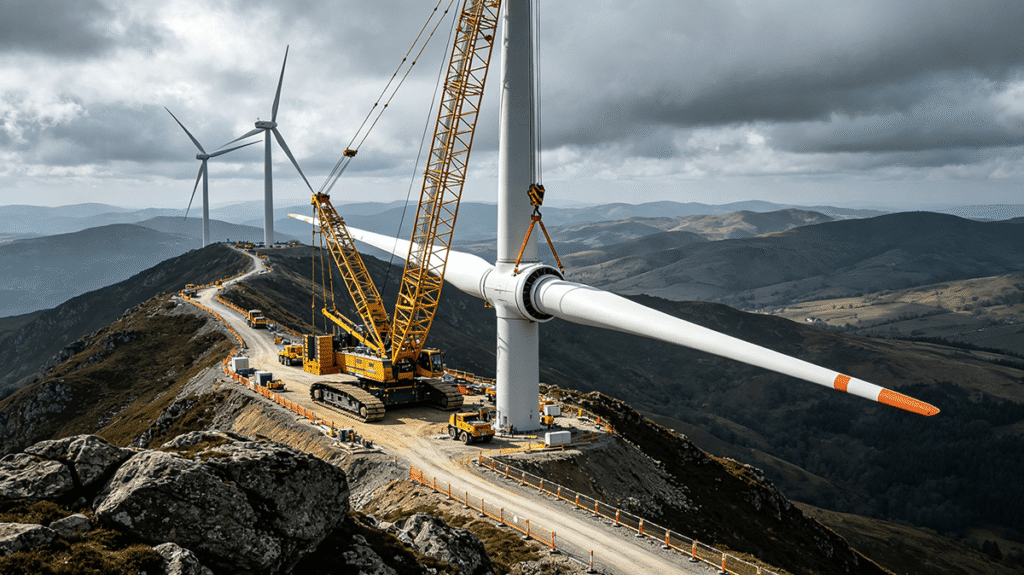
Constructing a utility-scale wind farm, particularly in complex mountain terrains, involves some of the most challenging heavy-lifting operations in the infrastructure sector. At a massive 400MW wind project located on a windy ridge, installing giant wind turbine components—including heavy nacelles, multi-section towers, and blades measuring up to 90 meters—requires colossal crawler cranes and exceptionally precise engineering maneuvers. The hoisting phase is highly vulnerable to environmental factors, especially unpredictable wind gusts that occur at high altitudes. Lifting components like blades, which behave like giant sails in the wind, carries severe risks of load sway, equipment overload, crane tipping, or catastrophic workplace accidents.
Limitations of Traditional Crane Operations
During traditional turbine installation processes, crane operators and site supervisors had to rely on localized manual communication, visual estimation, and basic hand-held anemometers. This lacked a unified, real-time safety network that could cross-reference the physical crane telemetry with precise environmental wind predictions and visual confirmation. Without real-time, consolidated awareness of boom angles, lift heights, and current torque under sudden wind load shifts, operators had to rely heavily on personal intuition. This lack of objective data often led to either taking unnecessary risks during unstable conditions or pausing operations prematurely, which caused costly crane delays and extended construction schedules.
Implementing WThink’s Hoisting Safety Monitoring System
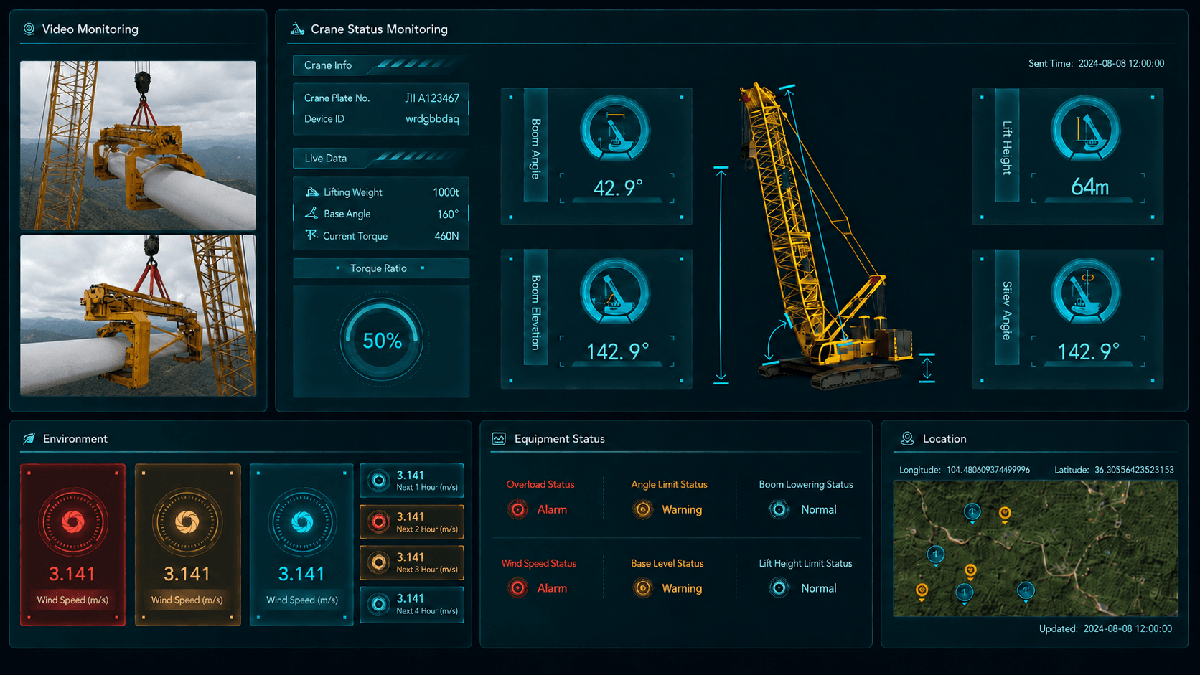
To overcome these lifting hazards, the construction team deployed WThink’s Construction & Hoisting Safety Monitoring system across the active assembly sites. This advanced solution integrates high-precision IoT sensors, crane telemetry systems, on-site anemometers, and aerial surveillance cameras into a unified, high-reliability control platform. The system operates on-site to aggregate critical structural and environmental data, providing operators and safety supervisors with instant, objective awareness of the entire lifting scenario from a single dashboard.
Dynamic Telemetry and Integrated Risk Mitigation
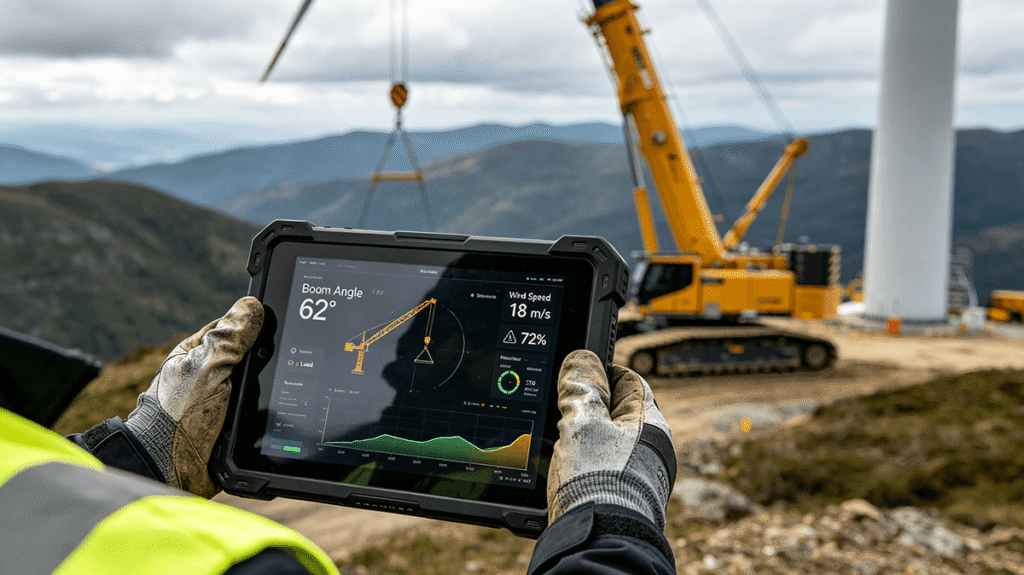
The monitoring system continuously captures and visualizes key crane telemetry, including dynamic boom angle, lift height, boom elevation, and slew angle. High-precision load cells track the exact lifting weight in real-time and cross-reference this payload against the crane’s dynamic safety limits, automatically triggering warnings if overload or tilt thresholds are approached. Simultaneously, environmental sensors feed real-time wind speed data into the platform, calculating instantaneous gusts and predicting wind behavior over a multi-hour window. If wind speed or equipment parameters exceed safety thresholds during a critical lift, the dashboard instantly triggers auditory and visual alarms, allowing supervisors to suspend operations before safety margins are breached.
Visual Integration and Operational Results
To complement the numerical telemetry, high-definition cameras mounted on the crane boom and drone-based aerial surveillance provide operators with multi-angle visual verification of the lifting process. This visual integration allows operators to monitor the precise orientation of the blade relative to the nacelle hub in real-time, even when working at extreme heights of over sixty meters. The deployment of WThink’s Construction & Hoisting Safety Monitoring system has successfully enhanced both safety and efficiency at the construction site. The unified platform has minimized the risk of hoisting accidents by providing supervisors with continuous, objective wind awareness and load telemetry. This predictive capability has allowed project managers to utilize short, safe weather windows for lifting, accelerating the overall construction schedule and reducing costly crane idle times while ensuring strict compliance with safety regulations.