

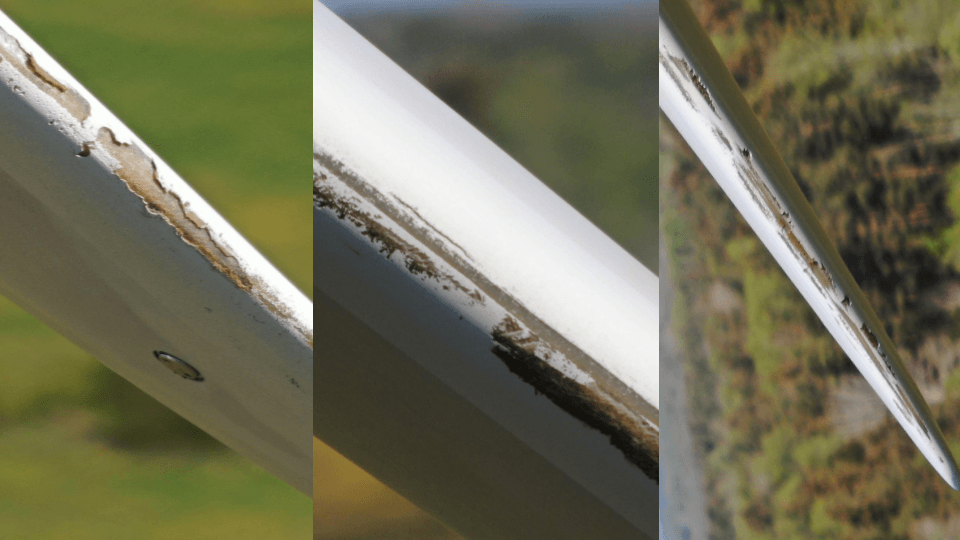
Project Background and the Challenge of Marine Blade Degradation
At a large 300MW offshore wind farm situated in a harsh marine environment, maintaining the structural integrity of giant turbine blades was a constant operational challenge. The combination of high humidity, corrosive salt spray, and extreme wind shear accelerates the physical degradation of the composite materials on the blades. Over time, these forces cause severe leading-edge erosion, peeling of protective coatings, and micro-cracks. If left undetected, these seemingly minor surface defects can quickly grow into deep structural delamination under continuous aerodynamic stress, eventually leading to catastrophic blade failure.
The Obstacles of Manual Image Review
To monitor these risks, the wind farm collected thousands of high-definition close-up photos of the blades during routine drone surveys. However, the subsequent analysis phase was severely bottlenecked by manual review. Engineers had to spend weeks manually sorting and reviewing the massive database of images to identify defects. This manual approach was not only slow and expensive but also prone to human error, particularly when trying to spot tiny micro-cracks or subtle lightning puncture marks. Furthermore, comparing year-over-year inspection photos manually to track the progression of leading-edge erosion was highly inconsistent, making it difficult to plan preventive repairs before severe damage occurred.
Implementing WThink’s AI Vision Solution
To streamline the diagnostic process, the offshore wind facility deployed WThink’s AI-Powered Defect Detection system. This advanced solution leverages deep-learning-based AI vision models specifically trained on thousands of composite material anomalies. The platform integrates directly with the drone inspection workflow, processing high-definition optical and thermal infrared images as soon as they are captured. By analyzing the structural patterns of the blades down to the millimeter level, WThink’s computer vision models can instantly distinguish between harmless surface discoloration and actual material failures, automating a process that previously required weeks of engineering labor.
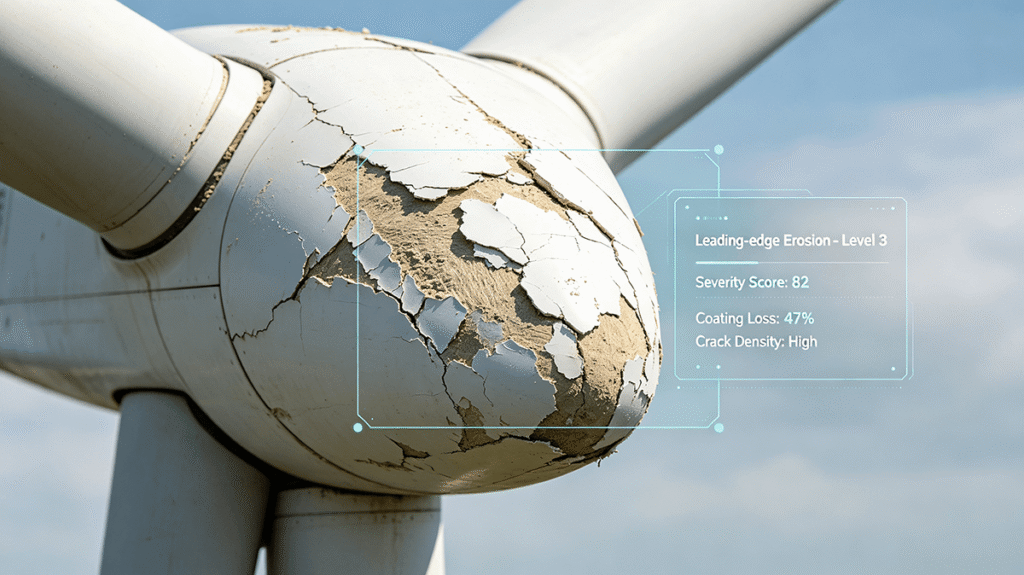
Multi-Class Defect Analysis and Thermal Correlation
The intelligent detection engine performs automated multi-class segmentation to identify, categorize, and measure a wide range of structural threats. As the system processes the visual feeds, it automatically classifies surface defects such as leading-edge erosion, surface peeling, and cracks. Simultaneously, the AI vision models analyze the visible spectrum to detect localized blackening or puncture marks caused by lightning strikes, which are often invisible from the ground. By correlating the visual imagery with thermal infrared datasets, the system can also identify internal structural anomalies, such as subsurface delamination or friction-induced overheating near the rotor hub. Each identified defect is tagged with its precise position along the blade length and categorized by severity, separating cosmetic issues from critical structural hazards.
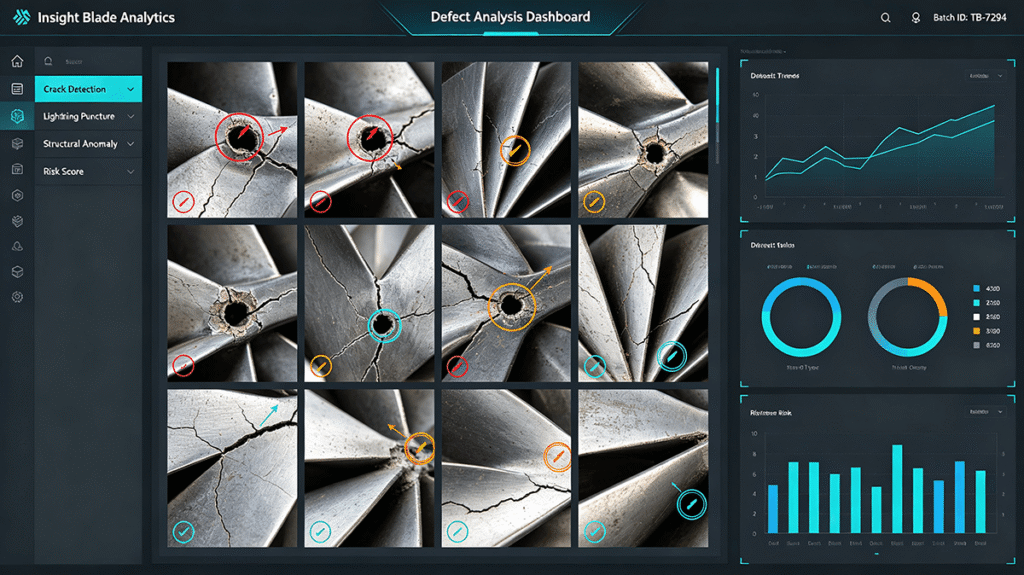
Predictive Maintenance and Structural Optimization
The detailed diagnostic data provided by the AI platform enables the wind farm to transition toward a predictive maintenance model. The system logs the exact dimensions of each erosion patch and crack, comparing these measurements against historical data to track growth trends over time. This trend analysis allows the platform to predict when a defect will exceed safety thresholds, generating automated recommendations for maintenance scheduling. Instead of conducting emergency, high-cost repairs after a blade has suffered severe delamination, operators can schedule targeted composite repairs during low-wind seasons, significantly reducing labor costs and minimizing scheduled downtime.
Business Value and Asset Protection
The deployment of WThink’s AI-Powered Defect Detection system has significantly improved the operational efficiency and safety of the offshore wind farm. The time required to analyze complete site-wide blade inspection datasets has been reduced from weeks of tedious manual work to just a few hours. The detection rate for early-stage cracks and lightning punctures has improved markedly, reducing the incidence of major blade structural failures and the need for expensive full-blade replacements. Ultimately, by maintaining the aerodynamic profile of the turbine blades and preventing major structural failures, the system has stabilized power generation efficiency and protected the long-term health of the physical assets.