Insulator damage and conductor overheating are two of the loudest warning signs on a transmission line. AI-powered drone inspection helps utilities catch visual defects, thermal anomalies, and equipment risks earlier — before small issues escalate into outages or safety incidents.
Why these two defects matter
Transmission lines live outside, exposed to weather, pollution, lightning, mechanical stress, wildlife, vegetation, temperature swings, and the accumulated wear of years in service. Eventually all of that damages insulators, weakens fittings, packs contamination onto surfaces, and pushes electrical stress across line components higher than it should be.
Two problems demand extra attention: insulator damage and conductor overheating. Insulators keep energized components safely isolated from towers and support structures. Conductors carry electricity across long distances. When either one starts to fail, grid reliability slips fast.
Ground crews catch the obvious damage, but plenty of problems don’t show themselves easily. A cracked insulator, contaminated surface, missing hardware, or localized overheating point may be a hundred feet up the tower, hidden behind the wrong viewing angle, or only visible when the imaging conditions cooperate.
AI doesn’t just help utilities see more. It sorts inspection data faster, flags what’s abnormal, and points engineers at the findings that actually deserve their time.
How AI-powered inspection works
AI-powered transmission inspection starts with drone-based data collection. A drone captures high-resolution visual imagery, thermal data, video, GPS coordinates, and — depending on the mission — additional sensor data along towers, conductors, insulators, fittings, and the corridor around them.
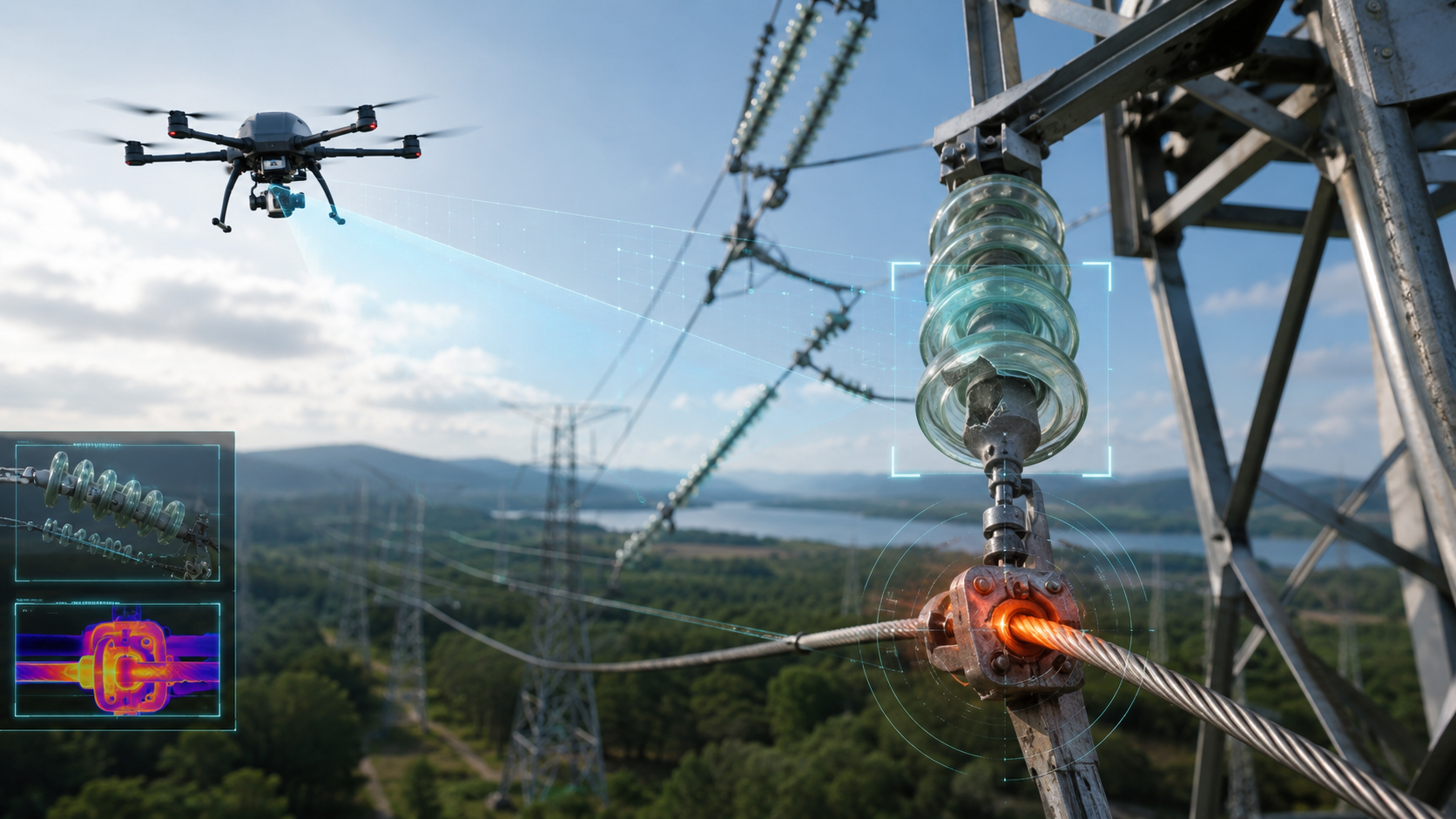
From there, AI vision systems process the inspection data. The algorithms hunt for patterns that indicate defects: cracks, broken parts, contamination, discoloration, missing components, abnormal shapes, thermal hotspots, and temperature differences that stand out from the equipment around them.
The net effect: drone inspection stops being a giant image archive and starts being structured maintenance intelligence. Engineers don’t manually review every frame anymore — AI hands them the locations that actually need review.
WThink’s Power Transmission solution is built around this connected inspection model, tying drones, Industrial AI, 5G connectivity, edge computing, and centralized O&M workflows together for power infrastructure monitoring.
Insulator damage AI can catch
Insulators are exposed by design, which makes them vulnerable to both physical damage and long-term environmental degradation. AI vision systems cover the most common insulator-related failure modes.
Cracked insulators
Visible cracks, fracture lines, chipped edges, and surface patterns that point to mechanical or electrical stress.
Broken or missing units
Damaged strings, missing discs, broken porcelain or glass, and incomplete insulator assemblies.
Contamination buildup
Surface pollution, dust, salt spray, and industrial residue — anything that quietly erodes insulation performance.
Flashover traces
Burn marks, discoloration, carbon tracking, and the other visible fingerprints of electrical discharge or flashover events.
Hardware abnormalities
Loose fittings, missing pins, damaged clamps, abnormal attachment angles, and neighboring component issues.
Abnormal alignment
Unusual insulator position, string deformation, tilted assemblies, and geometry changes worth a closer look.
How AI detects conductor overheating
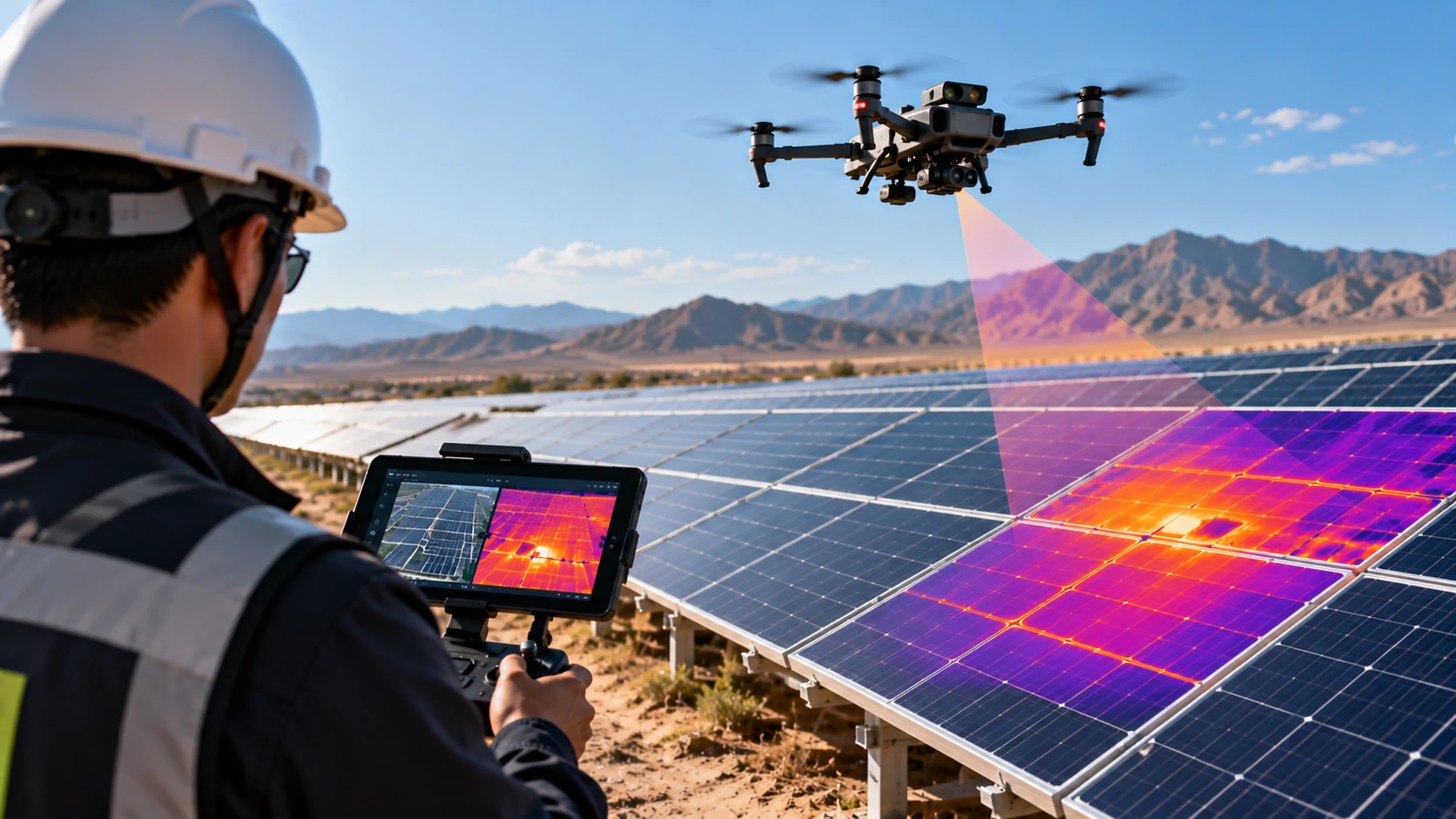
Conductor overheating usually shows up through thermal imaging. A drone with a radiometric thermal camera captures temperature patterns along conductors, connectors, clamps, fittings, and other energized components. AI takes it from there — flagging heat signatures that don’t match the surrounding equipment or the expected operating profile.
The causes are varied: high electrical load, poor contact, damaged fittings, corrosion, conductor strand problems, loose connections, or environmental stress. Most of it doesn’t show up in a standard visual image — definitely not from the ground.
AI-assisted thermal analysis surfaces the suspicious temperature differences and sorts them by location, component type, and likely severity. That gives utility engineers a real starting point for review and maintenance planning — not a pile of thermal frames to sift through.
Visual AI catches what looks wrong. Thermal AI catches what’s running hot. Together they give utilities a genuinely complete picture of line condition.
What thermal anomalies can mean
Not every hot spot equals imminent failure, and not every temperature difference carries the same weight. Utilities still need engineering review, operating context, load data, and site conditions to interpret thermal findings correctly. AI’s job is to get the right locations in front of the right people, fast.
Loose connections
Localized heating near clamps or joints often points to poor contact, loose hardware, or rising resistance.
Corroded fittings
Abnormal thermal behavior around metal fittings can signal corrosion, aging, or accumulated mechanical degradation.
Conductor strand issues
Damaged or broken strands force uneven current flow, showing up as localized temperature shifts along the conductor.
Overloaded components
Thermal patterns often reveal components running under heavier electrical or environmental stress than they were sized for.
Connector defects
Connectors, splices, and junction points heat up when contact quality or mechanical integrity is off — an early warning worth catching.
Post-event risks
After storms, lightning strikes, or fault events, thermal imaging pinpoints the components that need immediate follow-up.
Why drones make detection scalable
Transmission inspection is hard because the assets stretch for miles. Ground teams battle terrain, access roads, tower height, weather, and distance. Drones sidestep most of that — grabbing close-up visual and thermal data from angles no ground crew can reach efficiently.
For insulator inspection, drones capture detailed imagery of strings, discs, fittings, and tower assemblies without anyone climbing. For conductor overheating, drones sweep thermal data from elevation and follow the line route far faster than any manual method.
Fly the same routes on a regular cadence, and comparison over time becomes trivial. Utilities can see at a glance whether a defect is new, stable, or getting worse — the kind of tracking manual inspection never really delivered.
Where edge AI and 5G come in
AI inspection gets a lot more powerful when it’s connected to the field in real time. Edge AI moves processing closer to the drone or field device, cutting latency and enabling faster preliminary alerts. 5G handles the video, imagery, thermal data, telemetry, and mission status streaming back to remote teams or a centralized platform.
That combination matters most on long transmission corridors, at remote substations, in emergency inspections, and in BVLOS workflows where real-time supervision isn’t optional.
WThink supports these connected inspection workflows with products like the M3X 5G drone data link module, WD5500 edge AI module, and Autonomous Inspection System.
A practical AI detection workflow
Define inspection targets
Lock in line sections, tower types, insulator strings, conductor areas, thermal priorities, and known risk points before anyone flies.
Collect visual and thermal data
Drones grab close-up imagery, thermal frames, video, location tags, and the equipment context AI needs to analyze the mission properly.
Run AI-assisted defect recognition
AI processes both the visual and thermal data, flagging suspected insulator damage, conductor overheating, component defects, and abnormal patterns.
Verify findings with engineering context
Engineers review AI findings alongside load conditions, location, defect history, thermal severity, and field context before any maintenance decision.
Rank maintenance urgency
Findings get organized by severity, asset type, corridor location, reliability impact, and recommended action — ready to schedule.
Build inspection history
Repeat inspections show defect progression over time and confirm whether the last maintenance cycle actually solved the problem.
Benefits for utility maintenance teams
Earlier defect discovery
AI surfaces visual and thermal risks while they’re still small enough to fix cheaply — before they become reliability incidents.
Less manual image review
AI narrows massive inspection datasets down to the images and thermal frames that actually deserve attention.
More consistent reporting
Defect categories, locations, thermal findings, and maintenance priorities all get logged the same way, every time.
Less field exposure
Drones handle the elevated and remote inspections so crews aren’t climbing or trekking rough terrain for routine screening.
Better maintenance prioritization
Utilities send crews to the defects most likely to affect safety, reliability, or equipment life — not just the ones that got seen first.
Stronger long-term asset tracking
Historical inspection records reveal whether defects are stable, worsening, or resolved after work is completed.
What utilities should think about
AI-assisted detection pays off when the inspection workflow gets designed carefully. Image quality standards, thermal inspection conditions, flight distance, camera angles, component naming rules, risk categories, and review procedures should all be locked in before deployment — not figured out on the fly.
Thermal inspection also demands operational context. Load conditions, ambient temperature, wind, solar radiation, camera calibration, and distance all affect thermal readings. AI surfaces the anomalies; engineering review makes the final call.
The goal isn’t to replace maintenance teams. It’s to give them better data, faster triage, and a clearer path from inspection to action.
Where WThink fits in
WThink supports power transmission inspection with Industrial AI, 5G connectivity, edge computing, autonomous inspection systems, and AI-powered software platforms. Together they help utilities collect inspection data, catch equipment risks, move field information reliably, and turn findings into maintenance workflows that actually get worked.
For grid operators, WThink’s Power Transmission solution covers corridor monitoring, drone inspection, AI defect recognition, thermal anomaly analysis, live data transmission, and centralized O&M management under one roof.
Bring drones, thermal imaging, AI vision, edge intelligence, and connected platforms together, and utilities move from periodic visual checks toward genuinely predictive transmission line maintenance.
AI helps utilities catch insulator damage and conductor overheating by analyzing visual imagery, thermal data, and abnormal patterns collected during drone inspections. Visual AI flags cracks, broken units, contamination, missing hardware, and flashover traces. Thermal AI pinpoints overheating around conductors, connectors, clamps, and fittings. Wire it up with drones, 5G, edge AI, and a centralized inspection platform, and utilities find problems earlier, reduce field risk, and prioritize maintenance with a lot more confidence.
Frequently asked questions
How does AI detect insulator damage?
AI analyzes drone-captured imagery for visual patterns — cracks, broken units, contamination, flashover marks, missing parts, and abnormal insulator alignment — and flags them for engineering review.
How is conductor overheating detected?
Thermal imaging is the workhorse. Radiometric thermal cameras capture temperature data along the line; AI flags abnormal heat signatures around conductors, connectors, clamps, and fittings.
Can AI replace utility inspection engineers?
No. AI screens massive inspection datasets and flags likely issues, but engineers still own the interpretation, severity call, and maintenance decision.
Why use drones for insulator and conductor inspection?
Drones capture close-up visual and thermal data on elevated assets without routine climbing or difficult ground access — making inspection safer, faster, and scalable across long corridors.
What role does 5G play in AI inspection?
5G moves the live video, telemetry, image transmission, and remote supervision data that tie drones, edge AI devices, and centralized inspection platforms together in real time.