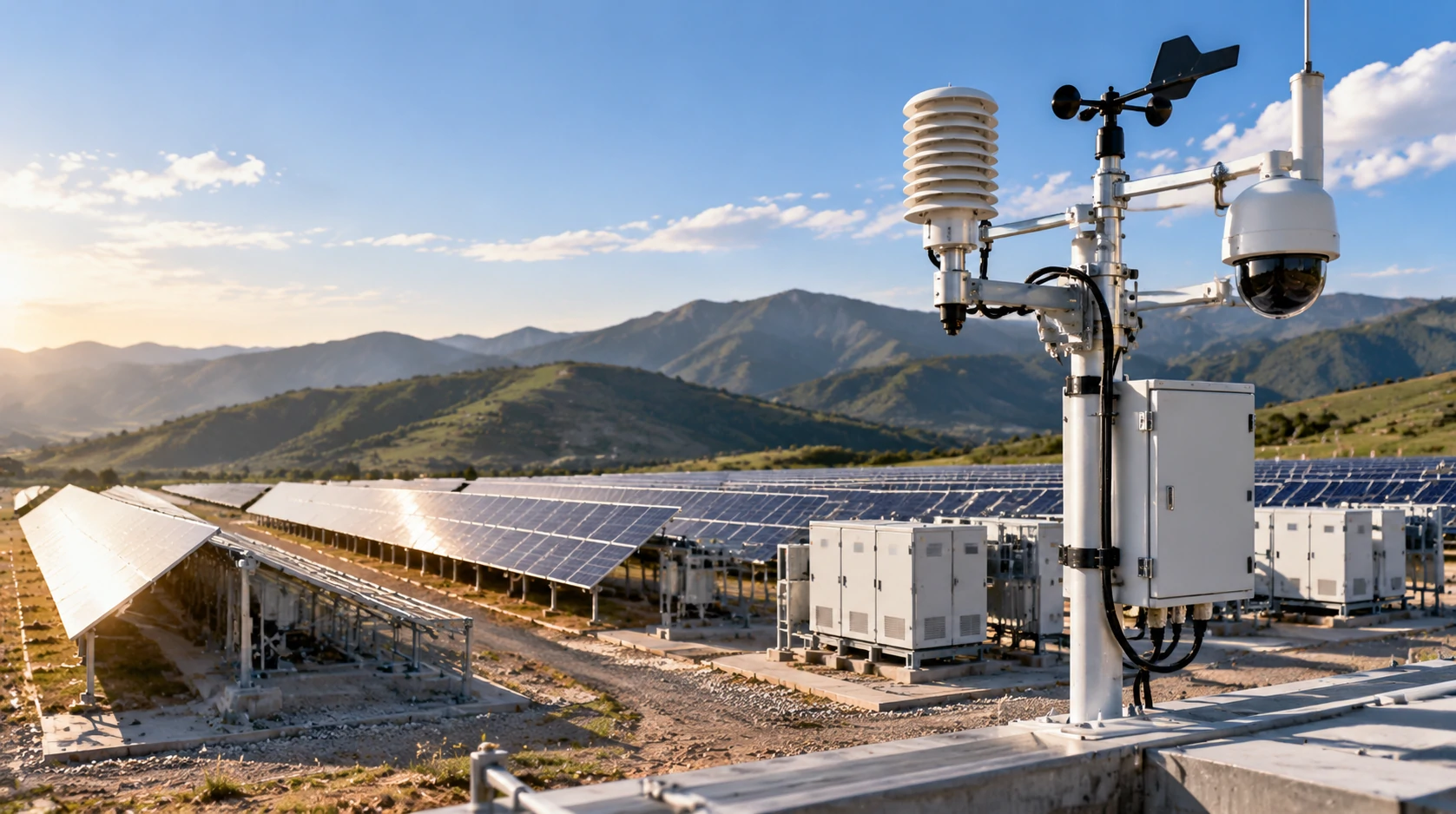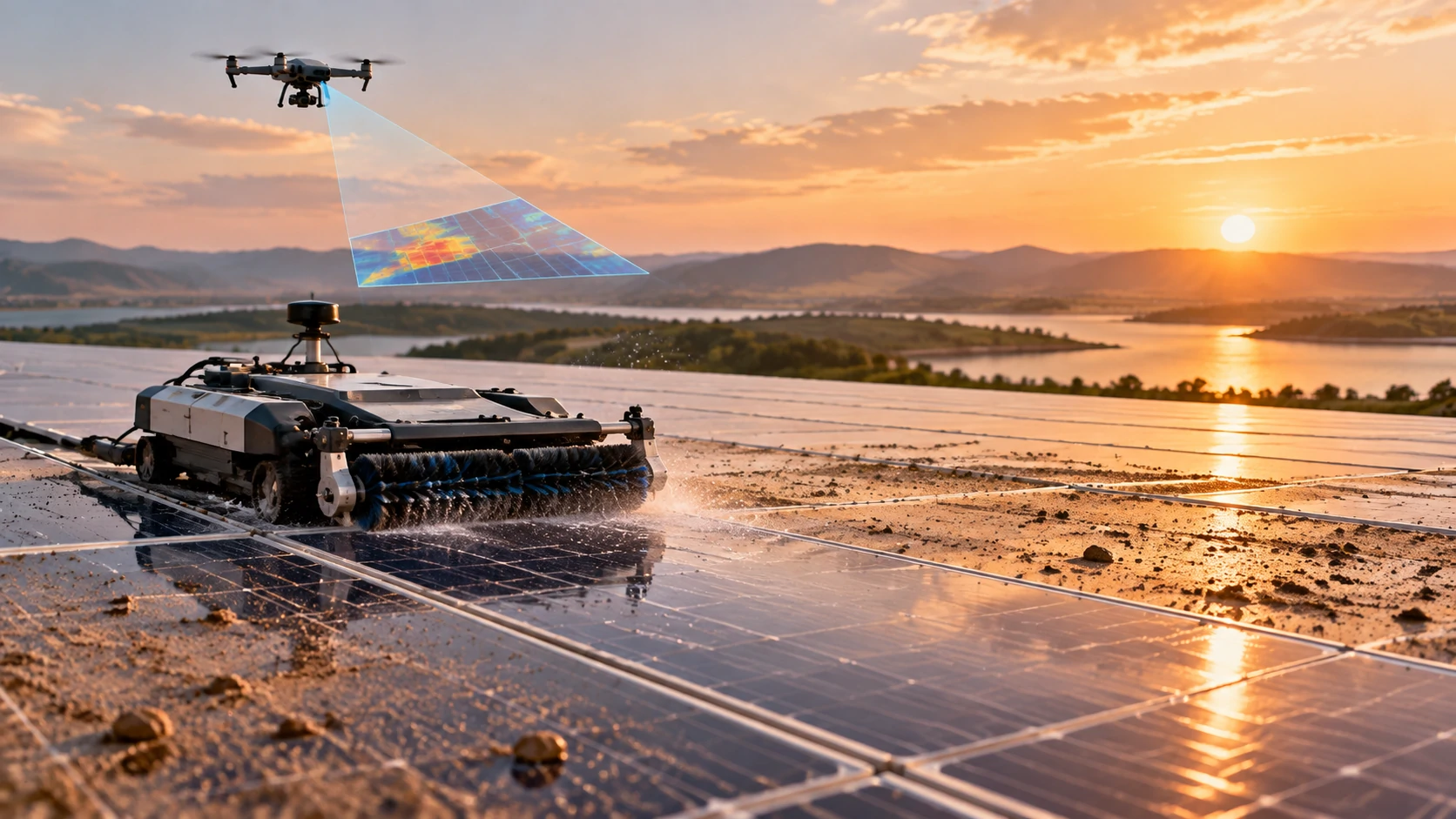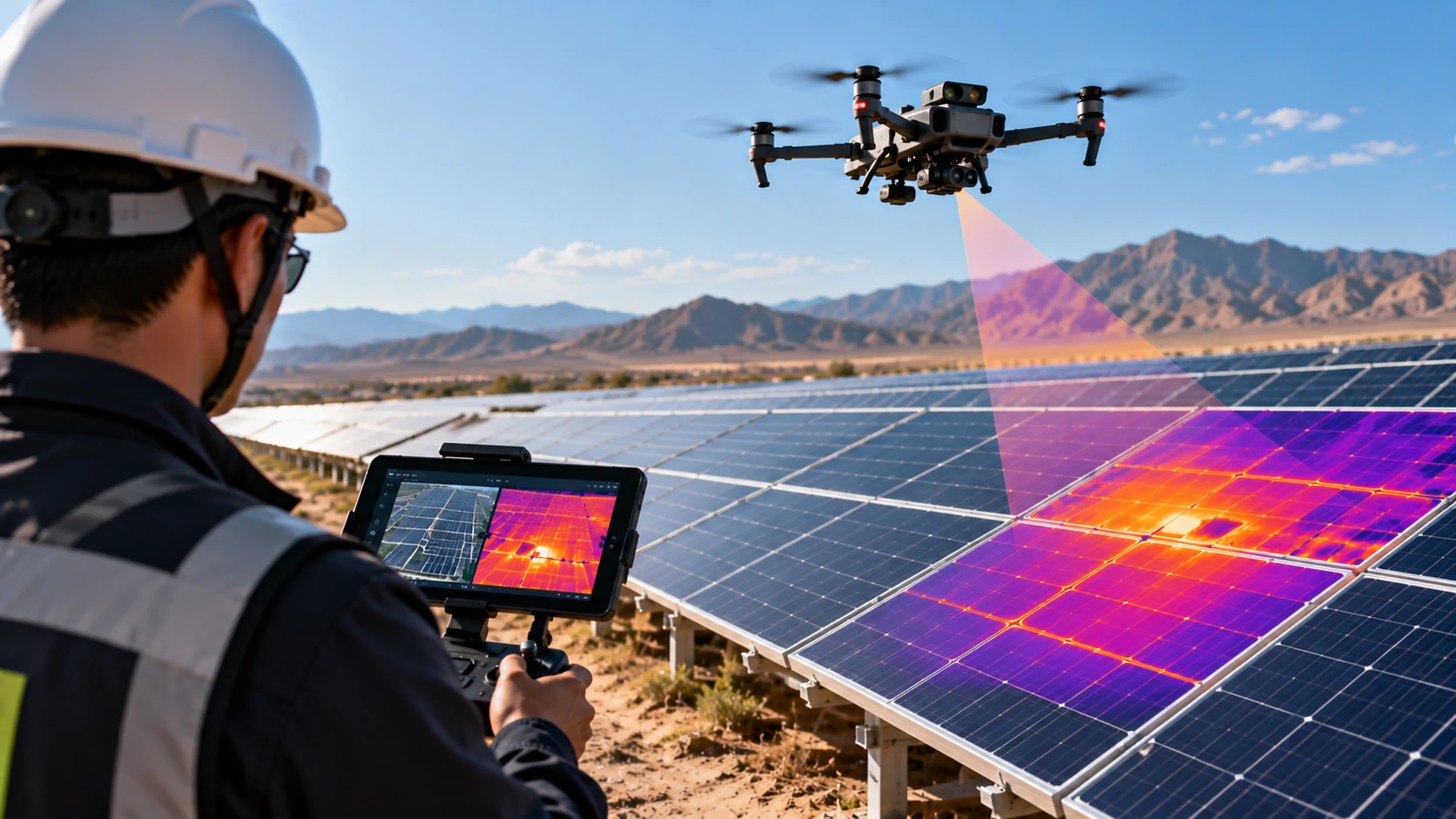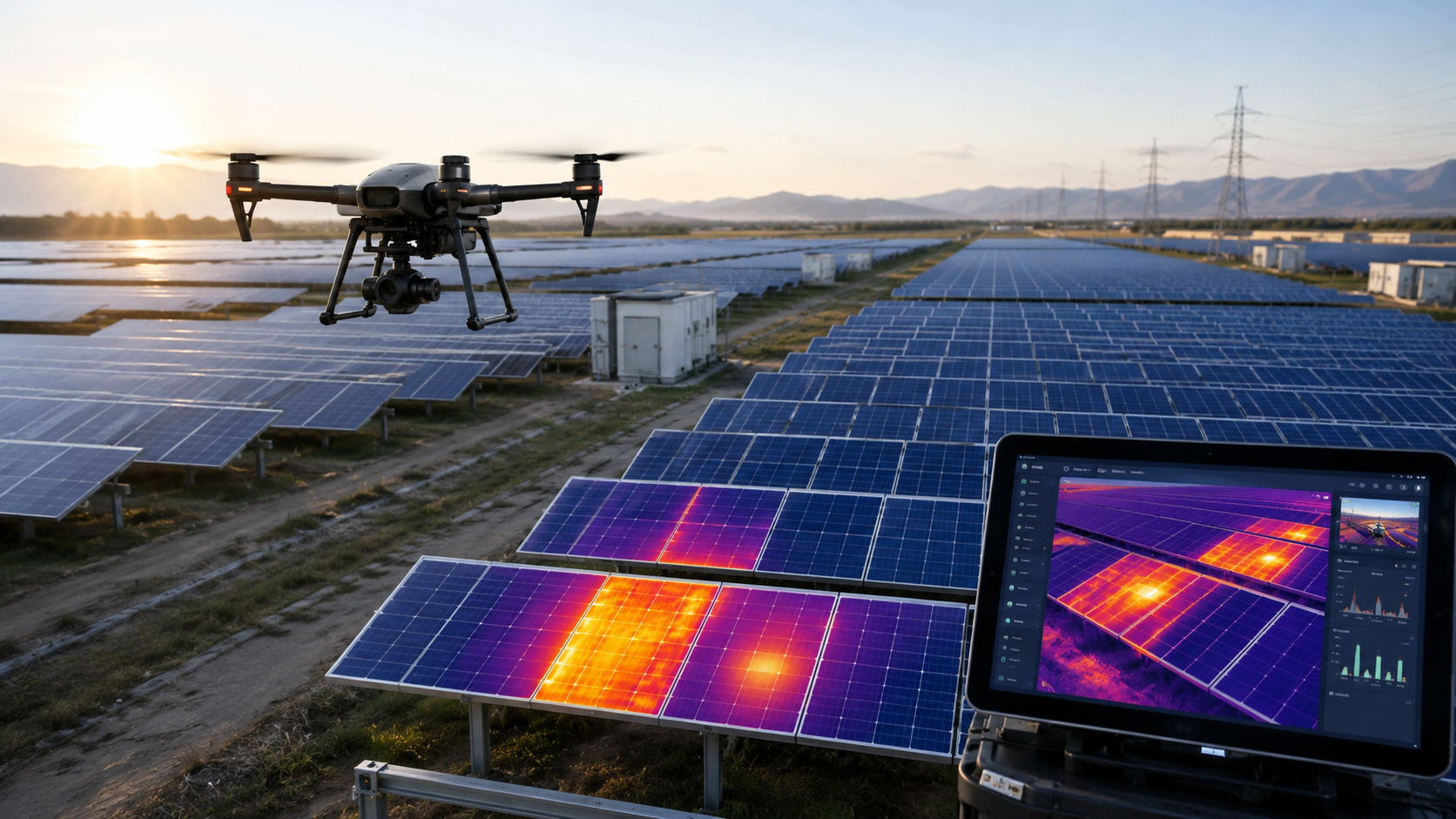
Thermal imaging helps solar operators detect PV hotspots, hidden module defects, abnormal heating, and performance risks that are often invisible in standard visual inspection.
Why visual inspection alone is not enough
Solar panel inspection has become a critical part of utility-scale solar operations. As solar farms grow larger and more distributed, operators need faster and more accurate ways to identify performance risks, module defects, and safety issues before they affect energy output.
A solar panel may look normal from the ground while still having internal problems. Small cracks, defective cells, poor soldering, partial shading, damaged bypass diodes, or loose electrical connections may not be obvious in a standard photo. In many cases, the first visible sign of a problem appears only after the defect has already reduced output or caused long-term module degradation.
Thermal imaging improves solar panel inspection by showing how each PV module behaves under operating conditions, not just how it looks on the surface.
How thermal imaging works in solar panel inspection
During a thermal solar panel inspection, a drone equipped with a radiometric thermal camera flies over the PV array and captures temperature data from each module or module group. The thermal camera records heat patterns, while the drone provides aerial coverage across large solar sites.
A healthy PV module usually shows a relatively consistent thermal pattern compared with neighboring modules under similar sunlight and operating conditions. When one area becomes much hotter than surrounding areas, it may indicate a hotspot or defect.
AI inspection software can analyze these thermal patterns, compare temperature differences, classify abnormal zones, and map findings to specific panel locations. This combination of drone inspection, thermal imaging, and AI analysis allows O&M teams to move from manual observation to structured defect detection.
What thermal imaging can detect
Thermal imaging gives solar operators a more complete view of PV module health by revealing heat-related issues that visual inspection may miss.
PV hotspots
Detects localized abnormal heating caused by cell damage, shading, dirt, bird droppings, poor connections, or bypass diode failure.
Module defects
Helps identify abnormal temperature patterns related to cracked cells, damaged modules, delamination, and internal electrical faults.
String and wiring issues
Reveals repeated thermal abnormalities across panel groups, which may indicate wiring, combiner box, inverter, or string-level problems.
Soiling and shading
Shows uneven heating caused by dust, vegetation, nearby structures, or other shading factors that reduce energy output.
Fire and safety risks
Identifies abnormal heating near modules, cables, junction boxes, or electrical equipment before small issues become larger failures.
Performance loss patterns
Supports solar O&M teams in locating underperforming areas and understanding whether faults are isolated or recurring.
How AI improves thermal inspection accuracy
Thermal images are powerful, but large solar farms generate huge volumes of data. A single drone inspection mission may produce thousands of thermal and visual images. Reviewing all of them manually can be slow and inconsistent.
AI improves thermal inspection accuracy by automatically analyzing image data, identifying abnormal temperature differences, filtering out false positives, and classifying potential defects.
An AI solar inspection platform does more than show a heat image. It helps answer where the defect is, how severe it may be, what type of issue it represents, and whether it requires immediate action.
When thermal imaging is combined with AI, GPS data, panel layout information, and historical inspection records, operators can build a more accurate and repeatable solar inspection workflow.
The role of drones in thermal solar inspection
Drones make thermal imaging practical for large solar farms. A ground-based inspection team may need hours or days to cover a site, while a drone can capture data across large PV arrays much more efficiently.
Drones also provide consistent viewing angles and repeatable flight paths, which helps improve data quality over time. For utility-scale projects, autonomous flight planning can ensure that the same routes are inspected regularly, making it easier to compare thermal results from different inspection periods.
WThink’s Solar Power solutions combine autonomous inspection, Industrial AI, edge computing, and 5G connectivity to support more efficient solar plant monitoring and O&M workflows.
What a reliable thermal inspection workflow includes
Mission planning
Inspection routes should be planned based on PV layout, module rows, inverter zones, sunlight conditions, and required image resolution.
Thermal and visual data collection
Drones collect radiometric thermal images and visual images to support both heat-based analysis and visual defect confirmation.
AI defect detection
AI models compare temperature differences, identify abnormal heat patterns, and classify defects by type, location, and severity.
Structured inspection results
Findings are organized into reports with module locations, thermal images, issue categories, and recommended follow-up actions.
Long-term asset tracking
Historical inspection records help operators compare defects over time and improve solar O&M planning across multiple plants.
Why timing and conditions matter
Thermal solar panel inspection must be performed under suitable environmental conditions. Temperature readings can be affected by sunlight, wind, cloud cover, humidity, and panel operating status.
For accurate results, inspections are usually performed when solar irradiance is strong and stable. If a thermal inspection is performed too early, too late, or during unstable weather, the data may be less reliable.
AI can help improve analysis, but high-quality data collection remains essential. The best results come from combining proper inspection conditions with advanced thermal imaging and reliable AI analysis.
Benefits for solar O&M teams
Higher inspection accuracy
Thermal imaging reveals defects that may not appear in visible images, giving operators a more complete view of PV module health.
Faster defect identification
Drone-based thermal inspection helps teams cover large sites quickly and locate abnormal modules more efficiently.
Better maintenance prioritization
AI-assisted defect classification helps O&M teams decide which issues require urgent repair and which can be monitored over time.
Reduced manual review workload
AI software can process large volumes of thermal images and organize findings into structured inspection reports.
Improved long-term asset management
Centralized records help operators track defect history, compare inspections, and improve maintenance planning across multiple solar farms.
Thermal imaging as part of an Industrial AI system
The real value of thermal imaging increases when it becomes part of a broader Industrial AI system. Thermal cameras, drones, 5G communication, edge AI devices, cloud platforms, and maintenance workflows should work together as one connected inspection process.
With edge AI, some analysis can happen closer to the drone or field device, reducing latency and supporting faster alerts. With 5G connectivity, inspection data can be transmitted more efficiently to the operations center. With AI-powered software platforms, results can be organized, reviewed, and converted into maintenance actions.
WThink supports this connected workflow through solutions such as the Autonomous Inspection System, WD5500 edge AI module, and M3X 5G drone data link module.
Thermal imaging significantly improves solar panel inspection accuracy by revealing heat-related defects that are difficult or impossible to detect through visual inspection alone. When combined with drones, Industrial AI, edge computing, 5G connectivity, and AI-powered inspection software, thermal imaging becomes a powerful tool for protecting solar asset performance, reducing risk, and building smarter solar O&M operations.
Frequently asked questions
What is thermal imaging in solar panel inspection?
Thermal imaging uses infrared cameras to detect temperature differences across solar panels. It helps identify hotspots, abnormal heating, module defects, and electrical issues that may not be visible in standard images.
Why is thermal imaging important for solar farms?
It helps operators detect hidden performance and safety risks early, especially PV hotspots, damaged cells, wiring issues, and abnormal module heating.
Can drones perform thermal solar panel inspection?
Yes. Drones equipped with thermal cameras can inspect large PV arrays quickly and capture temperature data from a wide area, making them useful for utility-scale solar farms.
How does AI improve thermal inspection?
AI analyzes thermal images, identifies abnormal temperature patterns, classifies defects, reduces manual review workload, and helps map findings to specific module locations.
What conditions are best for thermal solar inspection?
Thermal inspections are usually most reliable under stable sunlight and strong irradiance conditions. Cloud cover, wind, low sunlight, and moisture can affect thermal data quality.