AI Drone Inspection Is Changing How Energy Infrastructure Gets Managed
Solar farms, wind turbines, transmission lines, and remote industrial sites are harder to monitor than ever. Here’s how AI-powered drone systems are closing the gap.
What is AI drone inspection?
At its core, AI drone inspection combines unmanned aerial vehicles with machine learning to turn raw field data — photos, video, thermal imagery, sensor readings — into structured intelligence about your assets. A drone flies the site; the AI figures out what’s wrong.
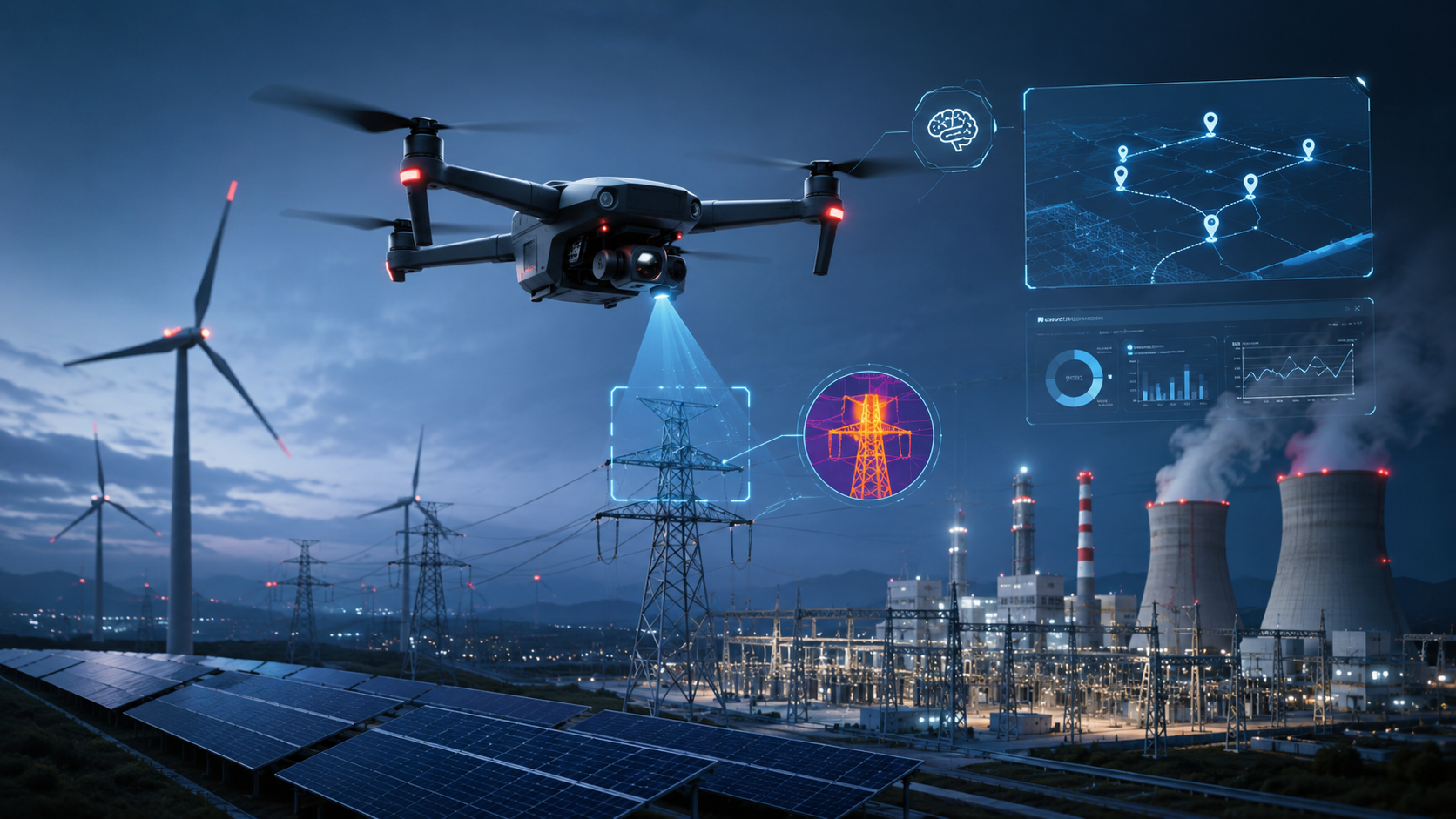
But in practice, it’s more than that. In modern energy operations, a mature AI drone inspection program is part of a larger system: autonomous flight planning, 5G data links, edge computing at the device level, cloud-based analytics, and maintenance workflow integration. It’s less a single tool and more an end-to-end operational capability.
The goal isn’t just better pictures. It’s turning inspection data into decisions — faster, at scale, with less risk to field crews.
Why traditional inspection falls short
Transmission lines run for hundreds of miles across mountains, deserts, and forests. A large solar farm can have tens of thousands of individual PV modules. Wind turbine blades sit a hundred meters off the ground. High-temperature zones in thermal power plants restrict personnel access by design.
Manual inspection works at small scales, but it doesn’t keep up with sprawling infrastructure. Helicopter patrol covers distance, but it’s expensive and not built for detailed defect identification. Conventional drones improve throughput, but without AI analysis, teams still spend hours manually reviewing footage. The bottleneck just moves downstream.
AI drone inspection addresses this by converting high-volume visual and thermal data into prioritized, structured findings — so field teams know exactly what needs attention and why.
How it works: the inspection workflow
Mission planning
Routes are defined based on asset type, site layout, inspection objectives, and regulatory requirements. Modern platforms can generate optimized flight paths automatically.
Data collection
The drone follows its route, capturing visual, thermal, or multi-sensor data. In remote locations, 5G relay or BVLOS-capable systems support real-time video return and control.
AI processing
Models classify findings: hotspots, blade cracks, insulator damage, conductor overheating, vegetation encroachment, fire risk. With edge AI, this analysis can happen locally — cutting response time significantly.
Workflow integration
Results are surfaced in inspection dashboards and routed into maintenance workflows. Findings get logged, prioritized, and tracked — not buried in a folder of unreviewed images.
The real benefits for energy operators
Visibility across remote assets
Get a clear picture of field conditions without dispatching personnel to every site. Especially valuable for long-distance transmission corridors and distributed renewable fleets.
Earlier risk detection
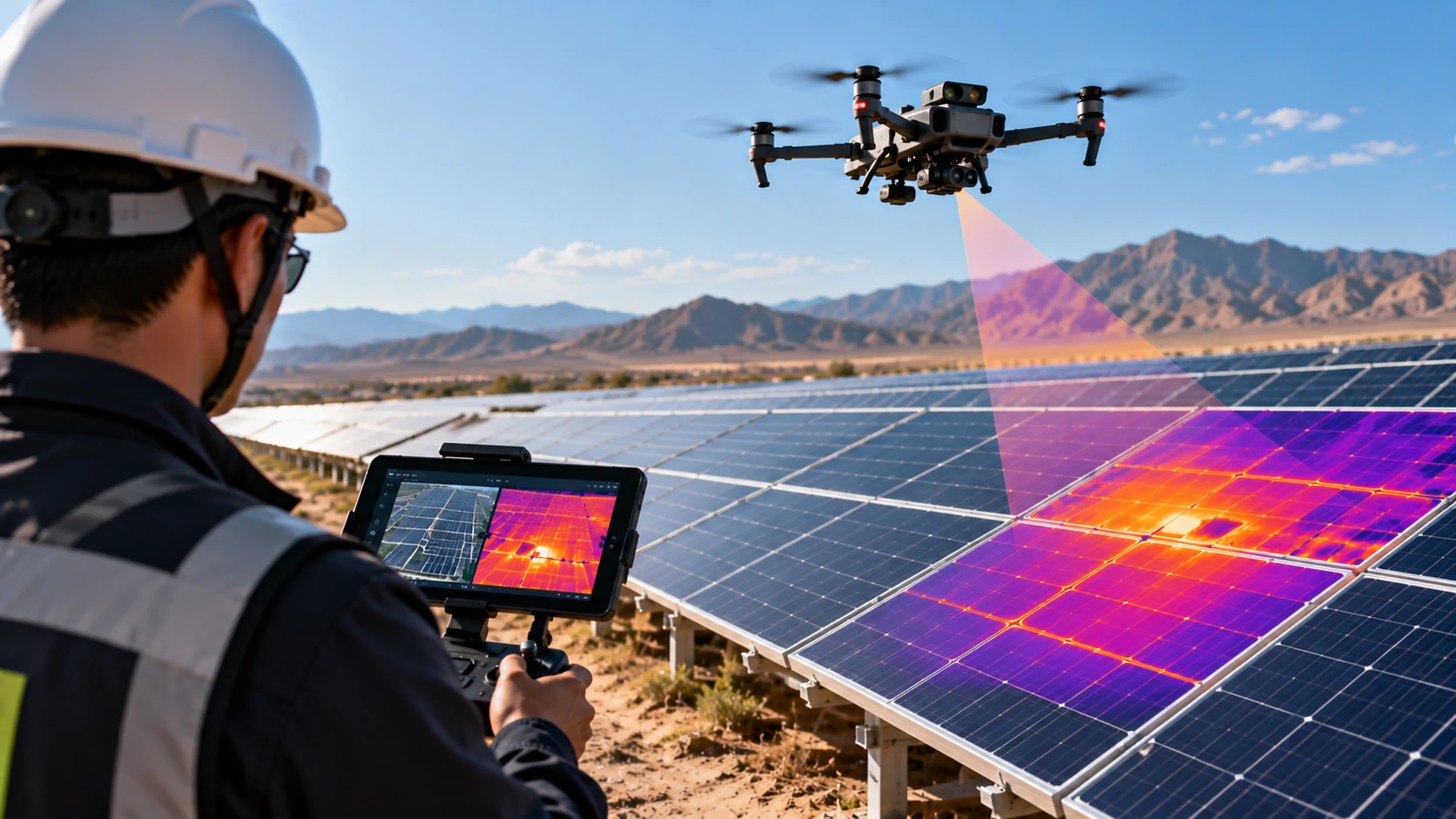
Thermal imaging reveals temperature anomalies invisible to the naked eye. AI vision catches cracks, corrosion, missing hardware, and vegetation risks before they become failures.
Fewer hazardous work orders
High-voltage lines, wind turbine towers, boiler rooms — drones reduce how often crews need to enter dangerous zones. AI monitoring adds another layer of early warning.
Smarter maintenance planning
Prioritize by defect severity, asset criticality, and operational impact — not by inspection schedule. That’s the shift from preventive to predictive maintenance.
Centralized asset intelligence
A strong platform doesn’t just collect data — it builds a historical record. Condition trends, inspection comparisons, defect locations, and maintenance status, all in one place.
Where AI drone inspection fits in the energy sector
It’s not just about the drone
The drone is the sensor. The value comes from what happens to the data afterward. Effective AI drone inspection programs connect the field to the office through a pipeline of edge computing, communication infrastructure, analysis software, and operational workflows.
When evaluating a solution, look beyond the hardware. Key questions to ask: How reliable is the communications link in your operating environment? How accurate is the AI on your specific asset types? Can findings feed directly into your CMMS or work order system? How does the platform handle multi-site operations and longitudinal trend tracking?
A solution that stops at image collection and lets humans do the rest isn’t an AI inspection system — it’s a better camera on a stick.
Frequently asked questions
Is AI drone inspection only for large utilities?
No. Independent power producers, renewable energy operators, industrial facilities, and engineering service companies all use it. If you have assets that need regular inspection and field access is costly, slow, or hazardous, AI drone inspection is worth evaluating.
What does a complete system include?
Typically: drone platform, visual and thermal cameras, 5G or relay communications, edge AI compute, cloud analytics, inspection dashboard, and maintenance workflow integration. The specific stack varies by use case and deployment environment.
Why does edge AI matter?
Running inference closer to the source — on-device or at the site — cuts the time between an anomaly happening and an alert being generated. In remote locations with limited connectivity, it also makes real-time detection possible at all.
How does this support predictive maintenance?
By building a longitudinal record of asset condition — not just one-off snapshots — teams can track degradation trends, model failure timelines, and schedule maintenance based on actual equipment health rather than fixed intervals.
As energy infrastructure grows more distributed and more digital, the ability to maintain visibility across hundreds of sites — and act on what you find — becomes a core operational capability. AI drone inspection is one of the more practical paths there: field-proven technology, real workflow integration, and a clear line from flying the asset to fixing it.