Solar Farm Drone Inspection: How AI Finds Hotspots and Module Defects Before They Cost You
A utility-scale solar farm lives or dies by the health of its modules. Here’s how AI-powered drone inspection is changing the way operators catch problems — and what to look for in a real-world workflow.
The problem with manual inspection at scale
A single utility-scale solar farm can contain hundreds of thousands of PV modules spread across dozens of acres. Walking every row, checking every panel, making sense of every photo — it works, up to a point. But as sites grow larger and fleets grow more distributed, the math stops working. Inspection backlogs build up. Issues that start small go undetected. Output quietly degrades.
The deeper problem is consistency. Two technicians reviewing the same set of images will flag different things. Notes taken in the field get lost between site visit and maintenance ticket. And without thermal imaging, whole categories of risk — hotspots, internal cell damage, bypass diode failures — stay invisible entirely.
Some of the costliest solar failures start as defects that are completely undetectable without thermal data. By the time they show up in generation reports, the damage is already done.
How AI detects PV hotspots
A hotspot forms when part of a module generates less current than its neighbors — a shaded cell, a cracked cell, a soldering defect, a failed bypass diode — and the mismatch forces that section to dissipate excess energy as heat. Left alone, hotspots accelerate cell degradation, damage encapsulant materials, and in rare cases create fire risk.
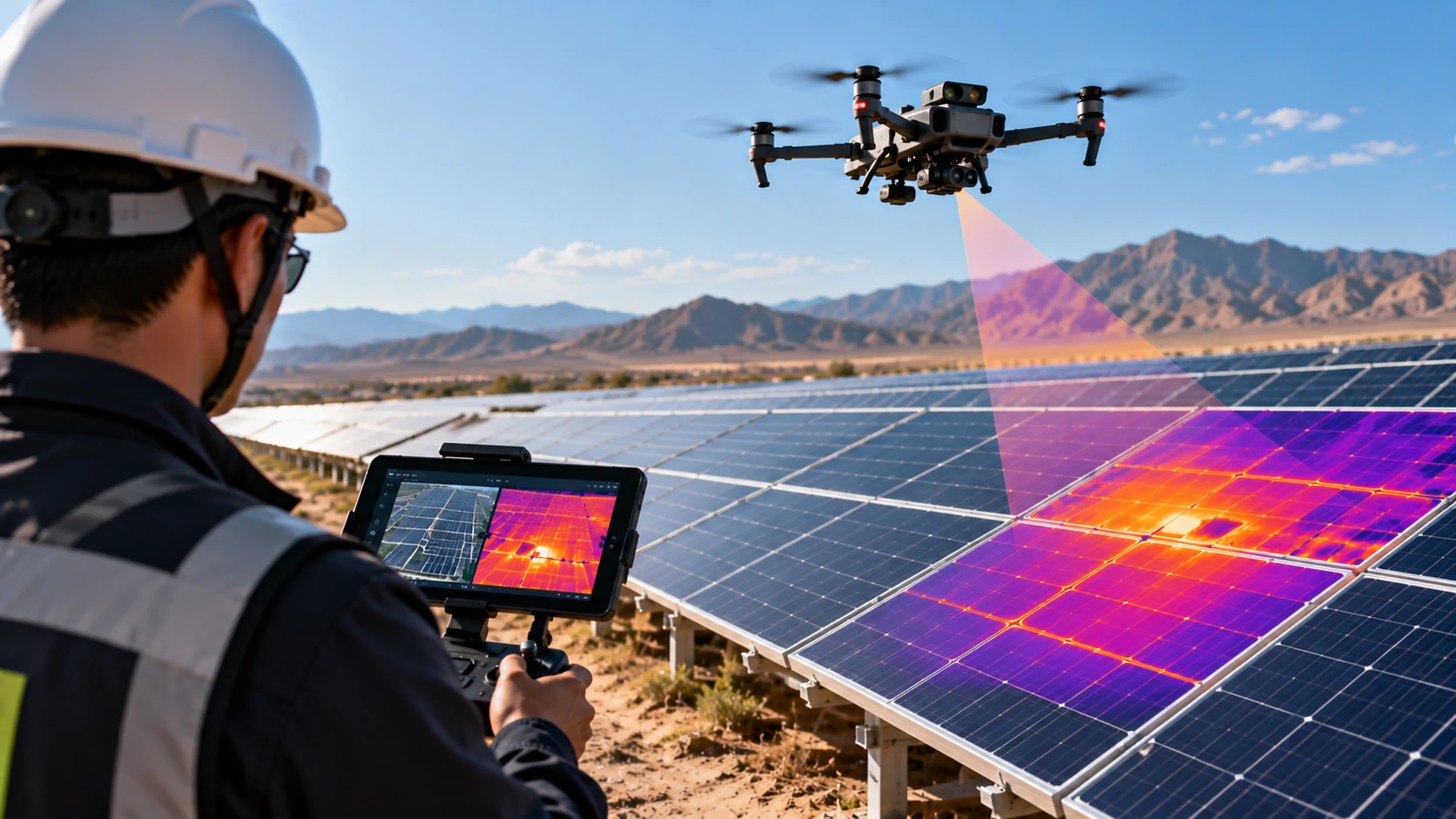
During a thermal drone inspection, a UAV equipped with a radiometric thermal camera sweeps the array and captures temperature data at the module level. AI software then analyzes the thermal imagery, flags anomalies against a baseline, and classifies each finding by type and severity.
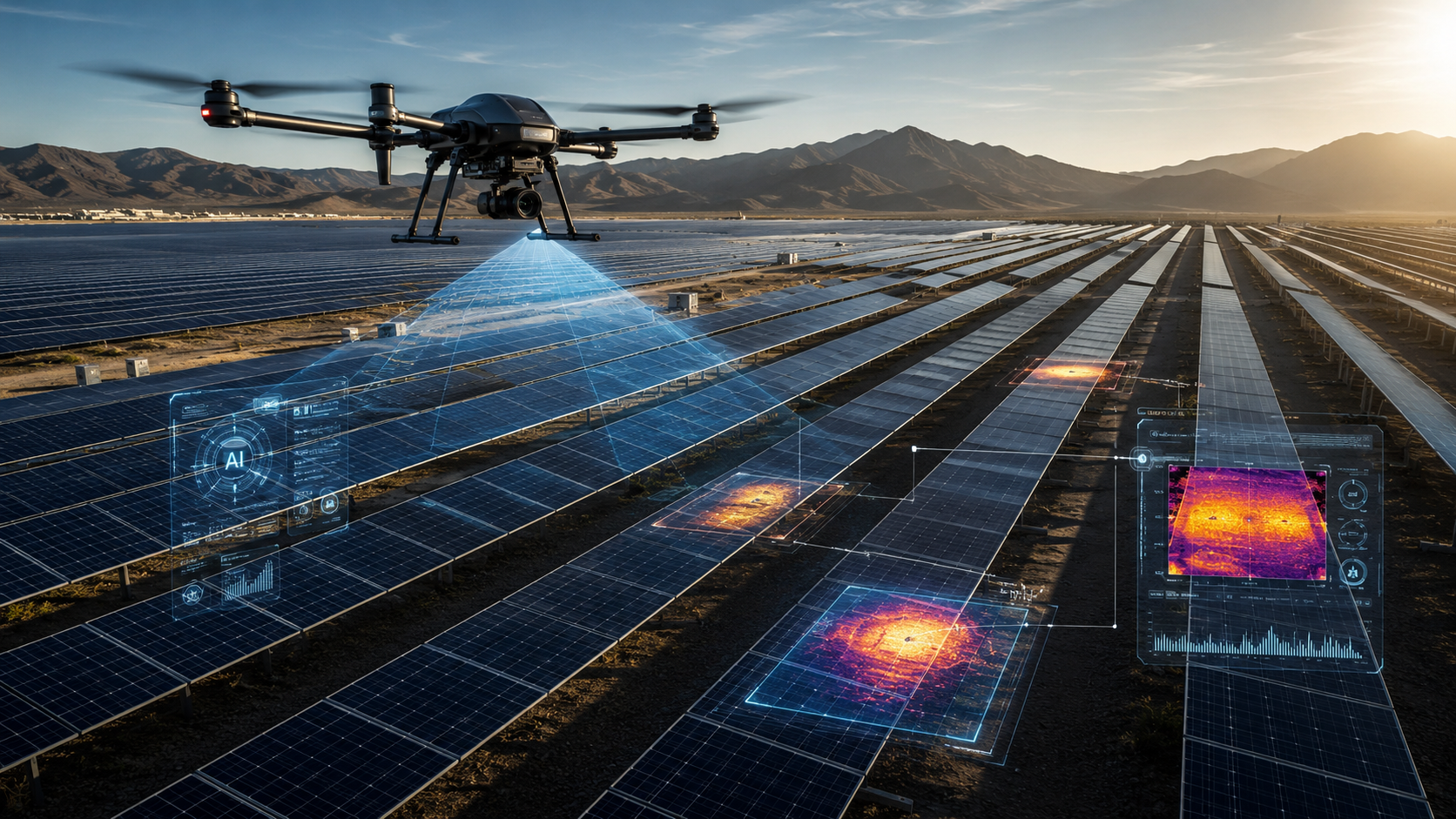
What AI adds over manual thermal review is speed and structure. A 10 MW farm might generate thousands of thermal frames in a single mission. A trained model can process that data in a fraction of the time it would take a human analyst — and return findings mapped to specific module positions, not just flagged images in a folder.
What AI drone inspection can detect
Hotspots are the headline use case, but a well-trained inspection system covers a much wider range of defect types — both thermal and visual.
Hotspots
Localized overheating from cell damage, shading, bypass diode failure, or poor connections.
Microcracks
Hairline fractures from mechanical stress, hail, or handling — often invisible without close inspection.
Delamination & discoloration
Encapsulant breakdown and browning that signals long-term moisture ingress or UV degradation.
String & wiring faults
Abnormal thermal patterns across an entire string often trace back to wiring or combiner box issues.
Soiling & shading
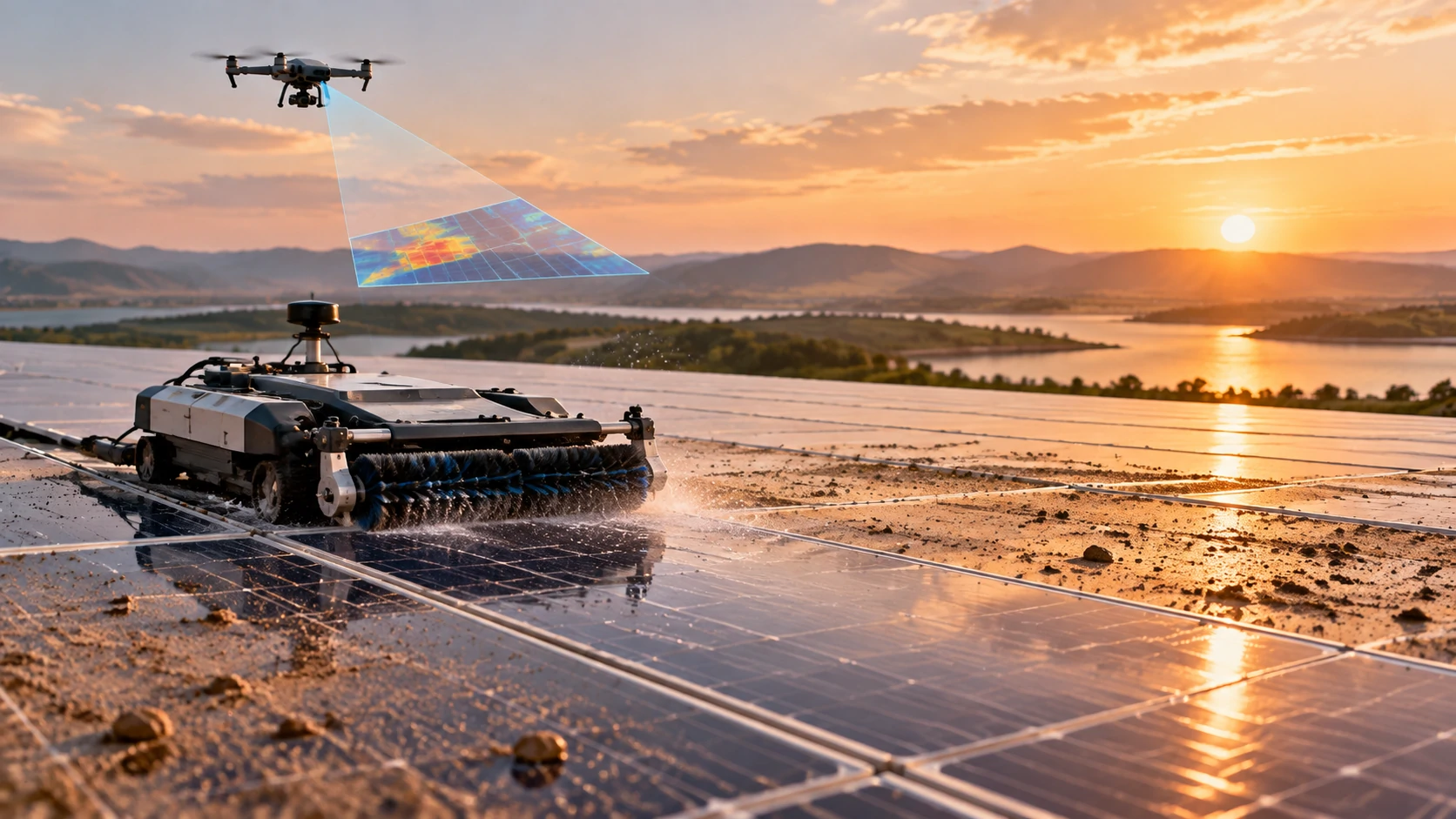
Dirt, bird droppings, and partial shading reduce output and create hotspot conditions if not addressed.
Broken glass & frame damage
Physical damage that exposes cells to moisture and accelerates long-term degradation.
What a real inspection workflow looks like
Mission planning
Flight paths are generated from the site’s PV layout — row spacing, string orientation, inverter zones. A well-planned mission means every module gets covered at the right altitude and angle for thermal accuracy.
Data capture
The drone collects synchronized RGB and radiometric thermal data. Timing matters: thermal inspections work best under high irradiance conditions, typically 2–4 hours around solar noon.
AI defect detection
AI models process thousands of images, classify anomalies by defect type and severity, and map each finding to a GPS-tagged module position in the site layout.
Structured output
Results are delivered as organized defect reports — not raw image dumps. Each finding includes location, category, severity, and a recommended action, ready to feed into a maintenance workflow.
Maintenance prioritization
O&M teams work from a prioritized list rather than a gut-feel checklist. Critical defects get addressed first; lower-severity findings get scheduled or monitored over time.
What operators actually gain
Faster site coverage
A drone can cover hectares of PV array in a fraction of the time it takes a ground crew — and capture data that walking inspection simply can’t.
Hidden defects surfaced
Thermal imaging reveals hotspots and internal cell issues that look completely normal in visible-light photos and don’t show up in SCADA until performance has already dropped.
Consistent, structured findings
AI applies the same classification criteria to every image. The result is a defect dataset that’s comparable across inspections, across sites, and over time.
Longitudinal asset tracking
When inspection data is stored and indexed, you can track whether a defect is new, worsening, or stable — and make maintenance decisions based on actual condition trends, not inspection schedules.
Reduced field exposure
Drone inspection reduces the hours crews spend walking large sites in direct sun — and AI safety monitoring can flag fire, smoke, or intrusion risks in real time.
Where edge AI and 5G fit in
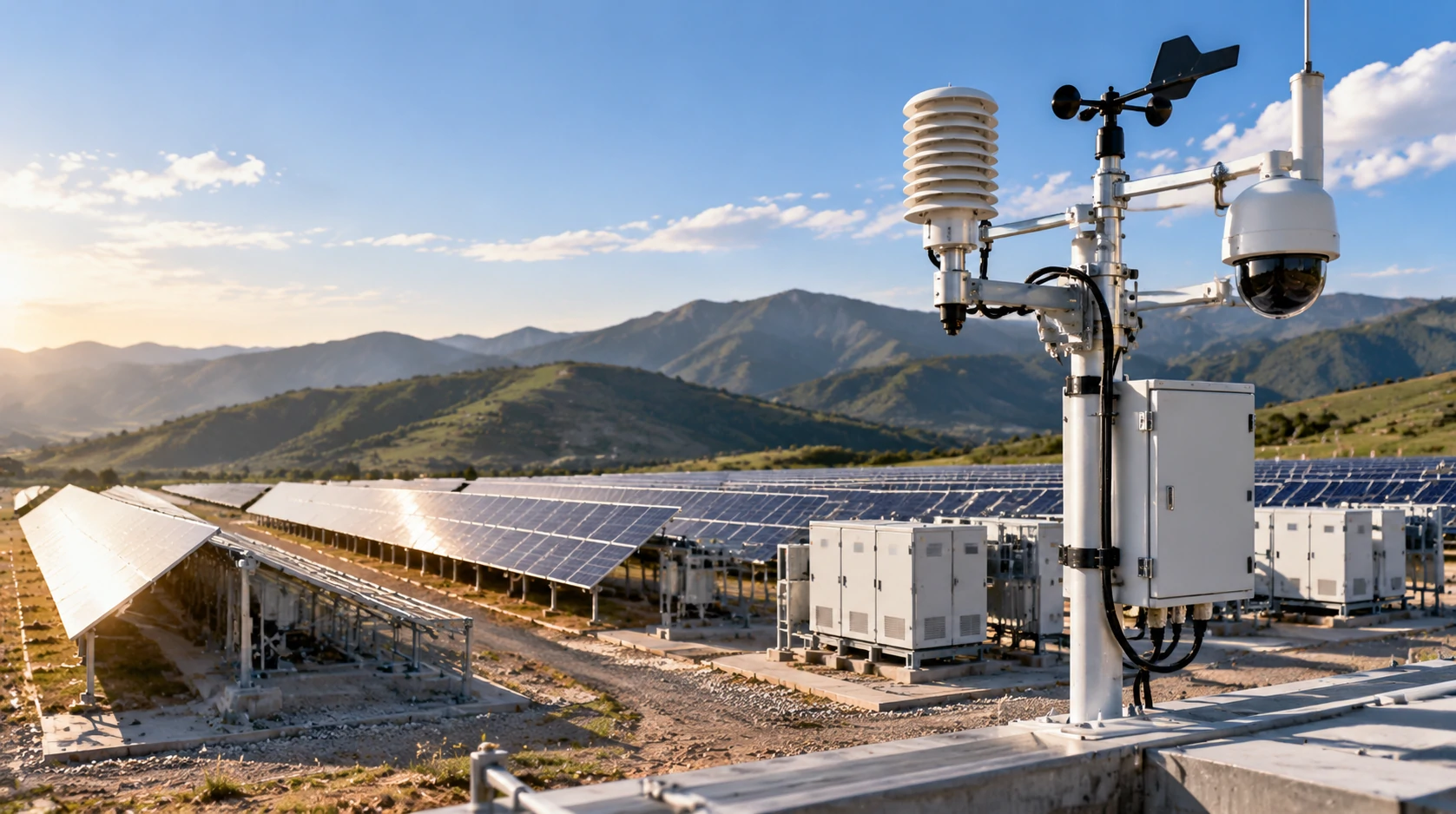
Most utility-scale solar sites are in open, remote locations where connectivity and latency matter more than people expect. 5G-enabled drone data links support real-time video return, remote command, and faster transfer of high-resolution thermal and visual data to the operations center.
Edge AI takes this further by running inference locally — on the drone, the inspection terminal, or a field device — rather than waiting for cloud upload and processing. For solar inspection, that means faster anomaly alerts during the flight, local data filtering that reduces upload volume, and the ability to operate reliably even when connectivity is limited.
For multi-site operators, the combination of edge AI and centralized cloud management means field data from dozens of plants can feed a single operational picture — without every insight depending on a stable uplink.
Solar farm drone inspection has moved well past aerial photography. When you combine thermal imaging, trained AI models, GPS-tagged defect mapping, and a structured reporting workflow, you get something genuinely useful for O&M: inspection results you can act on, asset history you can learn from, and a maintenance process that gets smarter over time. As solar fleets grow larger and more distributed, that capability shifts from a nice-to-have to a core operational requirement.
Frequently asked questions
What is solar farm drone inspection?
It’s the use of UAVs equipped with visual and thermal cameras to inspect PV modules, electrical equipment, and site conditions from the air. Combined with AI analysis, the system classifies defects, maps findings to module positions, and generates structured reports — replacing or augmenting manual ground inspection.
How does AI detect PV hotspots?
The drone captures radiometric thermal imagery across the array. AI models analyze the temperature data, compare it against baseline and neighboring modules, and flag areas showing abnormal heat signatures. Each hotspot is tagged by location, temperature delta, and probable cause category.
What other defects can AI drone inspection find?
Beyond hotspots: microcracks, delamination, discoloration, broken glass, frame damage, soiling, shading, string-level wiring faults, and inverter-correlated anomalies. Some defects are visible in RGB imagery; others require thermal data to detect reliably.
When is the best time to run a thermal drone inspection?
Thermal inspections are most accurate under stable, high-irradiance conditions — typically a 2–4 hour window around solar noon, with irradiance above 600 W/m². Cloudy conditions, low sun angles, and post-rain moisture can all affect the reliability of thermal readings.
Can this integrate with our existing O&M management system?
A well-designed inspection platform should export structured defect data that feeds into your CMMS or work order system. The output shouldn’t be a folder of images — it should be actionable findings mapped to asset records, with severity ratings and recommended actions already attached.